Nutritional Profile: Nutella is a sweet
chocolate and hazelnut spread that is very high in sugar. A standard
serving of
2 Tbsp (37 g) contains about 200 calories,
12 g fat (of which
~4 g is saturated fat from palm oil), only
2 g protein, and
21 g of
sugar. It provides minimal fiber (~1 g) and
small amounts of calcium and
iron (~4% DV each).
Nutella’s primary ingredients are sugar and palm
oil, followed by hazelnuts, cocoa, skim milk powder, and flavorings. In
fact, sugar is the first ingredient—it makes up about 57% of Nutella by
weight (roughly the equivalent of 5 teaspoons of sugar per 2 Tbsp
serving). Hazelnuts (about 13% of the spread) do contribute some
vitamins, healthy fats, and flavor, but the quantity is relatively low.
Potential Allergens: Nutella contains several major allergens: tree nuts
(hazelnuts) and milk (from skim milk powder). It also includes soy
lecithin as an emulsifier. This means Nutella is unsafe for people with
hazelnut or tree-nut allergies and for those with milk/dairy allergies
or lactose intolerance. It is not vegan due to the dairy content.
Nutella’s ingredients are naturally gluten-free (no wheat, barley, or
rye), so it is suitable for a gluten-free diet. Always double-check
labels, but Ferrero—Nutella’s producer—states that Nutella is
gluten-free. In terms of diet suitability, Nutella is not compatible
with keto or low-carb diets at all—the high sugar content (21 g sugar,
~22 g total carbs per serving) is far above what a keto diet allows.
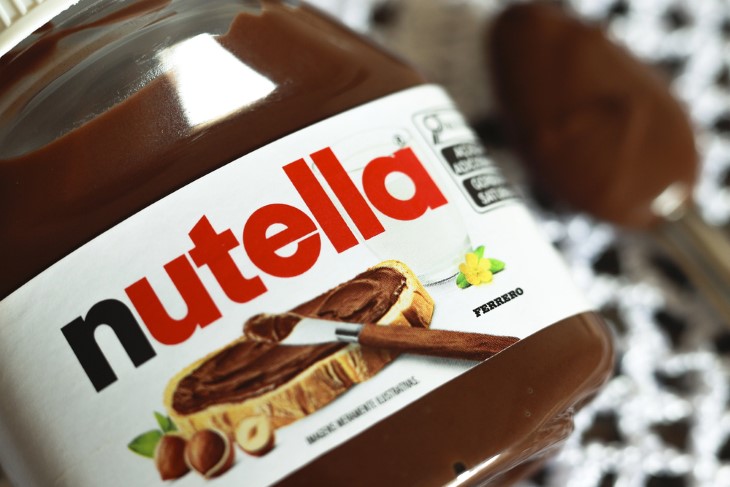
Health Benefits: Nutella is more of a treat
than a health food. It does not offer significant health benefits
beyond a small amount of calcium and iron, and the pleasure of its
taste. Hazelnuts and cocoa themselves are nutritious—hazelnuts contain
vitamin E and healthy fats, and cocoa has antioxidants—but in Nutella,
their positive impact is largely offset by the overwhelming sugar and
fat. There is a minor benefit that Nutella has zero trans fat (it uses
palm oil instead of partially hydrogenated oil) and contains no
cholesterol (being plant-based apart from milk). However, these factors
don’t make it “healthy,” just slightly less harmful than if it contained
trans fats. In some countries, Nutella is fortified with a bit of
vitamins or marketed focusing on its hazelnuts and milk, but
nutritionally, those contributions are negligible in context.
Health Deficits & Risks: The high sugar
content is the biggest health deficit. With 21 grams of sugar per
serving, Nutella can cause blood sugar spikes and contributes to
excessive added sugar intake if eaten regularly. Diets high in added
sugars are linked to weight gain, tooth decay, and an increased risk of
type 2 diabetes and heart disease. Nutella is also high in saturated fat
from palm oil (about 3.5–4 g saturated per serving). Consuming a lot of
saturated fat can raise LDL (bad) cholesterol levels, potentially
increasing heart disease risk over time. Nutella’s overall nutritional
profile is poor—it is high in calories, sugar, and fat and offers little
protein or fiber to mitigate these. Regularly using Nutella in place of
more nutrient-dense spreads (like nut butters) could lead to
nutritional deficiencies (missing out on protein, fiber, healthy fats)
and excessive calorie intake. There are also no significant
micronutrients (the small calcium/iron content doesn’t justify the sugar
load). Health experts often warn that Nutella should not be considered a
healthy ingredient for breakfast or daily consumption. Another concern
is that Nutella’s delicious taste makes it easy to overeat, especially
for children, which can crowd out healthier foods in the diet.
Daily Use and Long-Term: Regular daily use of Nutella is not recommended
from a health perspective. Spreading 2 tablespoons on toast daily adds a
large amount of sugar and calories to one’s diet without providing
satiety (very little protein or fiber). Over time, this habit could
contribute to weight gain, poorer blood sugar control, and an increased
risk of metabolic syndrome. In children, a Nutella-laden breakfast can
lead to an energy spike followed by a crash, and if it becomes a habit,
it may instill preferences for very sweet foods. Long-term, diets high
in sugary, processed foods like Nutella may elevate risks of type 2
diabetes, heart disease, and fatty liver disease. If you enjoy Nutella,
it’s best seen as an occasional dessert spread rather than a daily
breakfast staple. Using a thin layer or pairing it with healthier foods
(like fruit) might mitigate some downsides, but moderation is key. For a
chocolate-nut spread with better nutrition, one could opt for versions
with less sugar and more nuts (some brands or homemade recipes use more
hazelnut and maybe no palm oil). Ultimately, Nutella’s place in a
healthy diet is limited—delicious, yes, but best enjoyed sparingly.

No comments:
Post a Comment