Showing posts with label crackers. Show all posts

Monday, August 4, 2025

Seed Crackers

Chia & Flax Seed Crackers from foolproofliving.com  

Ingredients

½ cup chia seeds (80g)

½ cup flax seeds (80g)

1 cup water (240ml)

1 tsp garlic powder

1 tsp onion powder

½ tsp sea salt

½ tsp dried thyme 


Preparations

 Preheat your oven to 300°F (150°C). This relatively low temperature allows the crackers to dry out and become crisp without burning the delicate seeds.

Line a baking sheet with parchment paper. This prevents sticking and makes cleanup easier. Make sure the parchment extends slightly beyond the edges of the baking sheet.

In a medium bowl, combine the chia seeds and flax seeds. Mix them thoroughly to ensure even distribution throughout the crackers.

Add water to the seed mixture, stirring well to combine. The mixture will initially appear watery, but don’t worry – the magic is about to happen. Let it sit for 10-15 minutes, stirring occasionally. During this time, the chia seeds will absorb the water and develop a gel-like consistency that will bind the crackers together.

After the resting period, the mixture should have thickened considerably. Now add the garlic powder, onion powder, sea salt, and dried thyme. If using any optional add-ins like sesame, pumpkin, or sunflower seeds, incorporate them now. Stir until all ingredients are evenly distributed.

Transfer the mixture onto the prepared baking sheet. Using a spatula or the back of a spoon, spread the mixture evenly to about 1/8-inch (3mm) thickness. For perfectly even crackers, place another sheet of parchment paper on top and use a rolling pin to flatten the mixture.

Remove the top parchment (if used). For easier breaking after baking, score the mixture into cracker-sized pieces using a knife or pizza cutter.

Bake in the preheated oven for 35-40 minutes, or until the edges begin to brown and the center feels firm to the touch. For extra crispness, you can flip the entire cracker sheet halfway through baking.

Once baked, remove from the oven and let cool completely on the baking sheet. The crackers will continue to crisp up as they cool.

When fully cooled, break the crackers along the scored lines. If you didn’t score before baking, simply break into desired sizes.

Notes

The thickness of your crackers directly affects their crispness. For crunchier crackers, aim for a thinner spread. If they’re too thick, they may remain slightly chewy in the center.

Ovens vary, so keep an eye on your crackers, especially toward the end of baking. The seeds contain oils that can burn quickly if left too long.

To maintain crispness, store your crackers in an airtight container. If they soften over time, you can refresh them with a few minutes in a 250°F (120°C) oven.

For a different texture, try grinding half of the flax seeds before mixing. This releases more of their nutritional benefits while maintaining some texture from the whole seeds.


https://gscrochetdesigns.blogspot.com. one can see my crochet creations  

https://kneereplacement-stickclub.blogspot.com. for info on knee replacement

https://cancersupportindia.blogspot.com  for info on cancer and health related topics

https://GSiyers home remedies.blogspot.com   is the latest addition to my blogs


Sunday, August 3, 2025

Gluten-Free Snack Options for Kids' Parties

Having gluten-free snacks makes sure all guests can enjoy the party food. There are many tasty gluten-free options that kids love. These snacks show care for everyone’s health needs.

Offer fruit and veggie platters.

Roasted nuts or seeds

Gluten free crackers

Air-popped corn

Fresh or dried fruit

Homemade trail mix

Gluten free pretzels or chips

Hummus and veggies

Portable yogurt

Gluten free cookies

Gluten free granola bars

Pudding cups or applesauce

Cheese sticks or slices

Fruit snacks or fruit leather


https://gscrochetdesigns.blogspot.com. one can see my crochet creations  

https://kneereplacement-stickclub.blogspot.com. for info on knee replacement

https://cancersupportindia.blogspot.com  for info on cancer and health related topics

https://GSiyers home remedies.blogspot.com   is the latest addition to my blogs


Thursday, March 7, 2024

Savoury Cheesecake Bites

Ingredients

For the Crust:

For the Filling:

For Garnish:


Cooking Steps

For the Crust:

Preheat your oven to 350°F (175°C). In a bowl, mix the crushed crackers or pretzels with melted butter. Press this mixture into the base of mini muffin tins to create the crust.

For the Filling:

In a separate bowl, beat together the cream cheese and Greek yogurt until smooth.

Add shredded cheddar cheese, chopped green onions, sun-dried tomatoes, garlic powder, salt, and pepper to the cream cheese mixture. Mix until well combined.

Spoon the cheese mixture onto the prepared crust in the mini muffin tins.

Bake in the preheated oven for about 15-20 minutes or until the edges are golden and the filling is set.

Allow the savory cheesecake bites to cool in the muffin tins for a few minutes before transferring them to a serving platter.

For Garnish:

Garnish each bite with additional chopped green onions and sun-dried tomatoes.


https://gscrochetdesigns.blogspot.com. one can see my crochet creations  

https://cancersupportindia.blogspot.com. feel free to view for easy, simple and health tips  

https://kneereplacement-stickclub.blogspot.com. for info on knee replacement

https://GSiyers home remedies.blogspot.com     is the latest addition to my blogs
.

Wednesday, June 9, 2021

14 Foods That Are Safe to Eat Past Their Expiration Date

The expiration date label is there for a reason, but that reason might not always be what you think. While some expiration dates are printed for the consumer to know when a certain food should be disposed of, in other cases, the ‘sell by’ label on a product is a marker of freshness and not its actual expiry. After all, we often purchase foods with the intention of using them up over a course of weeks, or sometimes months, and food producers and sellers incorporate these dates to make sure your food gets to you as fresh as possible.

This article explains what you need to know about expiration dates and how, with certain foods, you can extend their shelf life significantly and save a good amount of money. All 14 of these foods shouldn’t be tossed when they reach their expiration date, and you’re about to find out why. 
 
1. Meat and Fish 
The "sell by" date that typically appears on fresh fish and meat you buy in-store is printed on each package for retailers or sellers to know when they should start pulling the product from the shelves, but when it comes to the consumer, you don't have to get rid of the expensive meat or fish once it reaches the date if you make sure to freeze or refrigerate it. 
 
Raw fish, chicken, and meat will last for only 1-2 days after you purchased it if you keep it in the refrigerator. But if you put it in the freezer, the shelf life can be extended for months according to FoodSafety.gov, namely: 
 
Poultry can be kept in the freezer up to 9 months if it's cut up into pieces, and up to 12 months if whole. 
 
Fish can be frozen for 6-9 months if bought fresh, but it can be kept frozen up to 12 months if you purchased it frozen, sealed and it didn't thaw while being transported. 
 
Red meat can be stored upwards to 12 months in steaks, chops, and roasts, and up to 4 months if it's ground up. ​
 
Similarly to raw meat and fish, the shelf life of smoked, cured, and cooked products can be extended by 1-2 months if you freeze them, all because freezing significantly slows down the process of oxidation and the multiplication of harmful bacteria in foods.
 
2. Eggs
foods safe to eat past expiration date carton of eggs
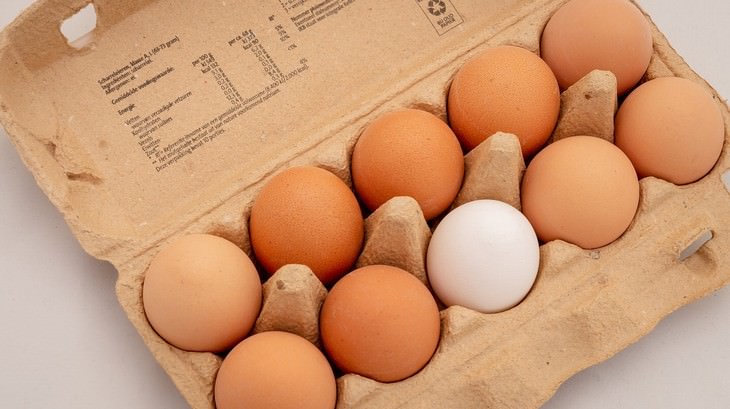
Eggs are another one of those foods that are fine to eat after they have passed the expiration date printed on the carton or egg. Irrespective of this date, you are usually fine to use raw eggs for 3-5 weeks after you've purchased them. If you're doubting the freshness of an egg, simply crack it into a separate bowl before cooking or using in a recipe - an egg that has gone off will have a strong sulfur smell that's difficult to mistake for anything else. 
 
Be mindful of the way you store eggs. If you bought eggs un-refrigerated, storing them in the fridge is optional, but refrigerated eggs should always be stored in the fridge.
 
3. Hard Cheeses
foods safe to eat past expiration date woman smelling cheese
Unlike soft cheeses, such as cottage cheese, soft mozzarella or ricotta, which should be tossed in accordance with the expiration label, most hard cheeses are safe to eat for weeks past their expiration date. The harder the cheese, the more fermented and the more resistant to bacteria it is, which is exactly why aged cheeses, such as parmesan, can remain unspoiled for months. 
 
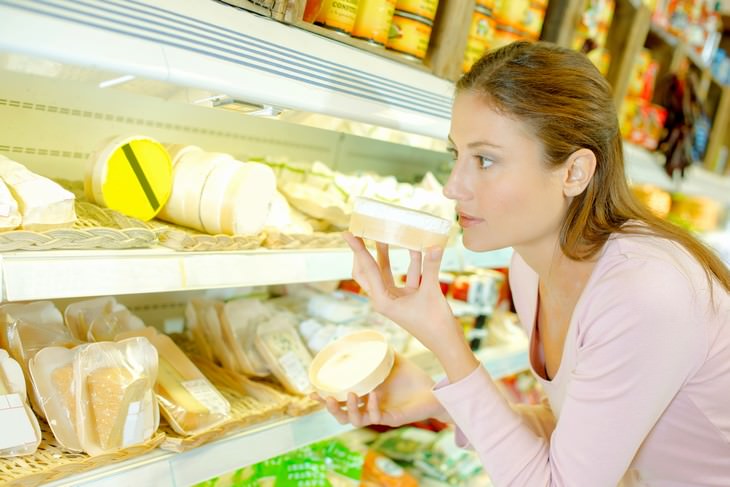
When it comes to determining whether or not a chunk of cheese is still edible, your nose and eyes are your best tools. If the cheese smells different than it used to, or if it starts growing mold from the middle, it's best to part with it, but if it smells fine, and there is a little mold growing on the side, simply cutting the faulty part off will still leave you with perfectly fine cheese, since mold is naturally involved in the production of hard cheeses anyway.  
 
4. Cereal
foods safe to eat past expiration date cereal in a bowl
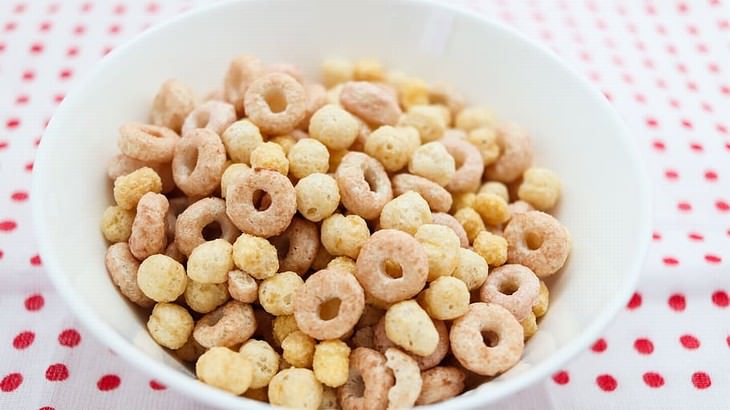
If there is one food that doesn't really have an expiry date, it's dry breakfast cereals. The only catch is to keep the box sealed and unopened, and you will be able to store a bag of cereal in the pantry for 6-8 months. After that, the cereal can taste a bit off and become stale, but even then, you won't get sick if you eat it. 
 
This is because cereals are dry and processed foods, which makes them among the easiest to store at room temperature. Needless to say, adding milk or cooking it, e.g. preparing oatmeal, will require you to eat it immediately, although oatmeal specifically can be stored for a few days in the fridge. 
 
5. Yogurt 
Don't throw away an unopened jar or plastic container of yogurt just because it reached its expiry date, these will still remain just as tasty and healthy as they used to be for another 2-3 weeks. If you'd like to extend its shelf life even further, you can also freeze it, which will give you up to 2 months to use it up. 
 
Once thawed, though, you'll have to use it up immediately. Needless to say, any odd smell or presence of mold is a sign that you should part with the yogurt, after all. 
 
6. Nut Butters  foods safe to eat past expiration date family breakfast woman spreading peanut butter onto bread

 Nut butters are another one of those foods that can be kept for months even after you've opened them, irrespective of the expiration date. Surely, it's best to purchase the freshest option in the store, as, with time, the taste of nut butter will start to decline, but even these are still safe to eat. 
 
Both preservative-free nut butters and those that contain preservatives have a long shelf life, but understandably, those that contain preservatives will stay fresh for longer. It's best to store nut butters in the fridge: natural nut butters can be stored up to 6 months past the expiration date printed on the jar as long as they're unopened, whereas an unopened jar of nut butter that contains preservatives will be good for up to 12 months past the date. 
 
Spreads that contain other ingredients, such as Nutella, for example, have a shorter shelf life -these will last 1-2 months past the date on the label. 
 
7. Frozen Fruit and Vegetables
foods safe to eat past expiration date a bowl of frozen raspberries
As mentioned previously, freezing prevents foods from spoiling, and this is also true when it comes to frozen fruit and vegetables, which remain safe to eat up to 10 months after the expiration date if the package hasn't been opened. If you have opened the bag, however, try to use it up as soon as you can, as the freezing can render parts of the fruit and vegetables dry and hard, a phenomenon known as "freezer burn". 
 
It has to be noted that foods affected by freezer burn are still safe to eat, they're just not too tasty. 
 
8. Chocolate 
foods safe to eat past expiration date different kinds of chocolate stacked
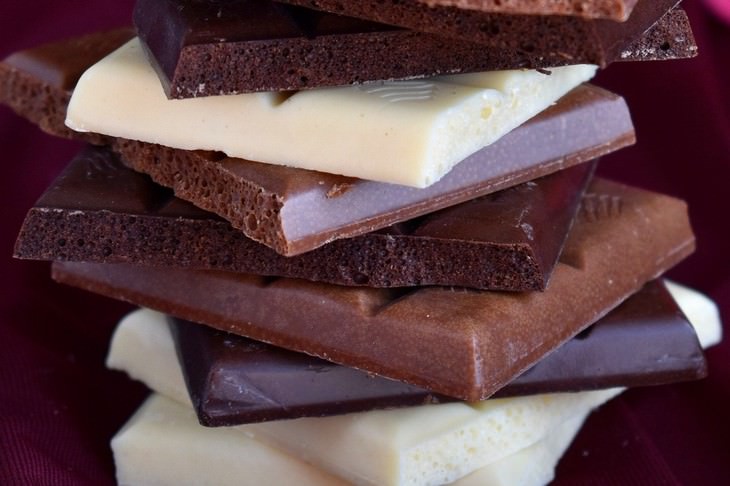
Chocolate is likewise very resilient, staying in tip-top shape for months past it's printed expiration date. You should ideally keep the chocolate at steady room temperature, though, as sudden changes in temperature may cause some of the cocoa butter to liquefy and come to the surface of the chocolate - a phenomenon known as "blooming" among chocolate experts, which shouldn't be confused for mold. This type of chocolate covered in a white film is still safe for you to eat, but the bloom might sadly render the texture of the treat a bit less pleasurable. 
 
9. Some Condiments

foods safe to eat past expiration date boy waiting for his dad to make him a hot dog
You'd be absolutely in the right if you're keeping that bottle of ketchup or mustard until you finish it or it starts smelling funny, as these two, as well as relish and certain salad dressings, can remain fresh and tasty for up to 6 months past their expiration date as long as you keep them refrigerated. 
 
The most resilient of the bunch is yellow mustard, which can remain unspoiled for up to 2 years past its expiration label in the pantry if left unopened, or up to a year in the fridge after opening.  
 
10. Pasta foods safe to eat past expiration date pasta
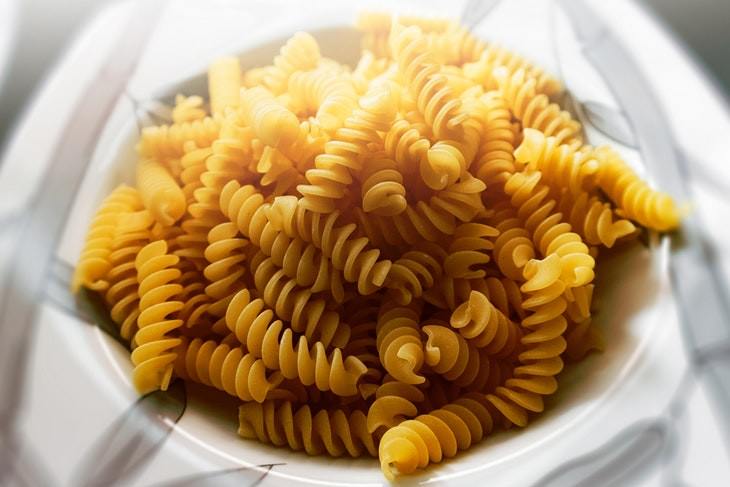
Let's be clear, we're not talking about cooked pasta, or the fresh pasta, ravioli or gnocchi that are sold in the refrigerated section of the supermarket, as all of those are intended for immediate use and wouldn't last for 5 days past their expiration date. But when it comes to dry pastas, their longevity is quite impressive, as these can be used up even if their expiration date was a year or two ago as long as the packaging seal hasn't been broken.  
 
11. Chips and Crackers
Like pasta, unopened bags of crackers, dry biscuits, even packaged cookies, and potato chips will last for months past their expiration date, so don't be afraid to munch on a long-forgotten bag of chips you suddenly discover in the depths of your pantry. 
 
Keep in mind that these will likely have a stale taste, which is fine as long as you can tolerate the taste and they don't smell off. If we're talking about an opened bag of treats, however, try to eat them within a few weeks, as dry foods will pull humidity from the air and lose their crunch quite fast.  
 
12. Bread
Despite the popular misconception, eating bread that's past its sell-by date is absolutely fine as long as it doesn't grow any mold. This is because the date seen on the packaging relates to room-temperature storage, and it is possible to significantly extend the shelf life or bread by simply putting it into the fridge. After all, the best french toast is made precisely from second or third-day bread...
 
 13. Canned Foods
There is a reason why all those post-apocalyptic movies feature underground shelters with tons of canned foods, and that reason is that canning foods is among the best way of preserving it, be it soup, vegetables, fruit, fish or meat. Most canned fruit and vegetables, with the exception of highly acidic tomatoes and pineapples, will stay tasty for up to a year past their expiration date. 
 
But canned fish and meat are the true champions, as foods like spam and canned tuna can be kept for an impressive 2-5 years past the date printed on the can.  
 
14. Milk
Like many other items on this list, milk comes in many varieties, and the level of pasteurization and fat content both determine the shelf life of the product. Skim milk will typically last for a week or so past its expiration date, but whole milk and half and half will spoil more quickly, in about five days past the printed date. Ultra-pasteurized milk will remain drinkable for twice as long as pasteurized milk. 
 
Checking whether the milk has turned is quite easy - it will bunch up in small white curds and start smelling sour, so simply pour the milk into an empty glass and check if you're afraid it might have gone off. Also, make sure to keep milk refrigerated at all times, even go as far as to move it to the back of the refrigerator instead of the fridge door if you want to extend its shelf life.


https://gscrochetdesigns.blogspot.com. one can see my crochet creations  

https://cancersupportindia.blogspot.com. feel free to view for easy, simple and health tips  
https://kneereplacement-stickclub.blogspot.com. for info on knee replacement


Thursday, December 19, 2019

15 Food Facts

Food is a universal topic of conversation, no matter the place or occasion. Clearly, this is because we all need to sustain our energy with food, and the majority of people prefer to enjoy what they’re eating as well. That being said, enjoyment is not the only reason why we eat. Health is an important aspect of nutrition as well, and it seems that staying healthy is becoming increasingly more challenging with all the misleading marketing tactics used in the food industry. We were very surprised to find out about these 15 facts, for example, all of which prove that what we think we eat may, in fact, not be quite what we really end up consuming.

1. Coffee Creamer
Believe it or not, many white-colored foods, such as coffee creamer, powdered sugar, candy, chewing gum, and ranch dressing often contain titanium dioxide to make their color even whiter and more opaque. The same chemical is often used in the production of paint, paper, plastic, toothpaste, and sunscreen.
On food packaging, titanium dioxide is often labeled as E171.
While generally considered safe in cosmetics and around the home, there is some evidence suggesting that it may be a carcinogen when inhaled. There is little information about the safety of titanium dioxide in foods, with some research suggesting that it may be absorbed into the bloodstream, which is why France declared that it will ban titanium dioxide in foods in 2020.


2. Skittles
Another common food dye is carmine (or carminic acid). It is a red dye, so you'll be able to find it in a variety of red or pink-colored foods and cosmetics, such as fruit drinks, ice cream, yogurt, Skittles, pink or red candy, eyeshadow, and lipstick. What most people aren't aware of is that this dye is produced from crushed up carcasses of the Dactylopius coccus beetle.

The dye is safe to eat for most people, apart from those who are allergic to carmine, but it's certainly reasonable to question whether one needs crushed up beetles in food, especially since the only contribution of carmine in foods is the color.


3. Fruit
Did you know that your food is covered by the same wax they used to polish cars? It's true, carnauba wax, also known as palm wax or Brazil wax, is derived from the Copernicia prunifera palm. Sweets, such as gummy bears, pills and vitamins, as well as fruits are commonly coated with this wax to make them appear glossier and shinier. The same wax is used as shoe polish, car polish and even in flooring and furniture waxes.
Though considered safe for human consumption, as it doesn't get digested and simply passes through the human digestive system, palm wax does seem to have a poor environmental impact. Also, the necessity of the wax, at least in some foods, such as fruit, is questionable.


4. Soda
Most of us are aware that soda drinks aren't the healthiest, to say the least. Soda has a number of harmful effects on the human body, but it's certainly eye-opening to find out that only 1 can of soda contains more added sugar than the whole recommended daily intake of sugar. There are 39 grams of sugar in 1 can of soda, which is 9 grams more than the 25-gram daily sugar intake recommendation.


5. Almond Extract
Almond extract is rarely made of real almonds. Instead, the slightly bitter and nutty taste is derived from stone fruits, such as apricot or cherry pits. The compound called benzaldehyde, more commonly known as bitter almond oil, is what's providing the almond flavor, and it typically comes from apricots, plums, peaches, and cherries.


6. White Chocolate
White chocolate shouldn't actually be called chocolate either, as it doesn't contain cocoa powder at all, the key ingredient in all chocolates. The only common ingredient in dark and white chocolate is cocoa butter, which gives chocolate its creaminess. White chocolate also contains vanilla, dairy products, and sugar.


7. Bananas
The Cavendish variety of the banana fruit, which is the only kind most people know and recognize as 'the banana' has to be cloned by farmers all over the world, as the fruit is practically devoid of seeds - the only other way for the plant to reproduce.
If you're wondering whether the complete lack of genetic diversity could make the plant more susceptible to disease and extinction, that's a real possibility, as we've discussed in greater detail in a previous article titled Will Bananas Go Extinct Soon (Again)? 


8. Burger Patties
Hamburgers are made of ground beef, and the origins of this very beef are not only difficult to pinpoint, but they're also much 'wider' than you'd expect. According to a Washington Post article, one burger patty, or one portion of store-bought ground meat can be part of hundreds of animals. This isn't dangerous per se, but this does make it very difficult to regulate and recall meat in an economic fashion when a threat has been detected.


9. Crackers
It turns out that it's crackers, and not sweets, that are the worst for your teeth, so add snacking on goldfish on the list of tooth-damaging habits. This is because crackers and biscuits get dissolved in your mouth and turn into a sticky paste that gets between your teeth, becoming the perfect breeding ground for bacteria and the cause for gum infections and cavities. That's why it's best to least rinse your mouth after eating a biscuit, or ideally - brush your teeth.

10. Ketchup
Nowadays, we know that ketchup isn't the healthiest of condiments, as it is loaded with added sugar and tons of preservatives, but back in the 1800s, when ketchup was fresh and new, so to speak, people believed that it has medicinal properties and can cure diarrhea and indigestion. Luckily, we're wiser now and know that ketchup should only be an occasional treat.


11. Wasabi
Wasabi is related to horseradish and mustard, and it has a similar taste to horseradish - a resemblance that's often abused, as it turns out. In fact, over 90% of the wasabi you can find in Europe or the US is just dyed horseradish and not the Japanese stuff. Real wasabi is grown in quite limited quantities and is very expensive, which is why most restaurants resort to the cheaper equivalent.


12. Brown Sugar
If you're in the habit of shopping for the more expensive brown sugar (like I once was), don't submit to the deception. The truth is that brown sugar is just white sugar with the addition of molasses, which was filtered out during the refining process. The only difference between the two is the taste and the texture, but in terms of its health effects, they're equal.


13. Salmon
Let's discuss salmon and why salmon flesh is the color that it is. In the wild, salmon feed primarily on krill and shrimp, which have that pinky color thanks to a compound called astaxanthin. As a result, the flesh of wild salmon becomes infused with this pink, as well as numerous vitamins that come with it.
Interestingly, salmon are not the only species that owe their salmon pink color to shrimp and krill. Flamingoes, too, can thank their diet rich in shrimp for their bright color. But let's get back to salmon, namely farmed salmon. They have a different diet than their wild counterparts, which is why farmers feed the fish carotenoid dyes to tint their flesh a familiar pink hue.


14. Grated Cheese
If you ever read the ingredient list of grated cheese or some cereals, you may have encountered an ingredient called cellulose. In cheese, it's used to prevent clumping, whereas in cereals it's just a bulking agent advertised as 'fiber'. What cellulose really is is sawdust, and manufacturers have been using it since the 1970s to cut production costs.
Needless to say, sawdust is absolutely unnecessary in food of any sort and it can be replaced by more nutritious ingredients. Unlike flour or wheat, cellulose has no health benefits whatsoever, hence the misleading advertising regarding fiber.


15. Fresh Oysters
Have you ever tried fresh oysters? If so, then chances are, you were munching on a live animal, as it turns out that raw oysters have to be served alive or nearly so to be safe to eat. Most oysters are stored in very specific conditions, and they can survive without water upwards of 2 weeks. During this time, they can be served to customers, but once they die, they are no longer safe to eat. 


links for my other 3 blogs-

https://gscrochetdesigns.blogspot.com. one can see my crochet creations  
https://cancersupportindia.blogspot.com. feel free to view for easy, simple and health tips  
https://kneereplacement-stickclub.blogspot.com. for info on knee replacement

Friday, January 22, 2016

From Dry Munchies to Crunchy Munchies

Snacks such as potato chips or crackers are expensive and can take a big bite out of your budget over time, and so it can be quite annoying when a big bag of chips or crackers goes stale after only a few days. However, instead of throwing them away, put them in the microwave for 10 seconds. They will make a short trip back in time to a higher level of crunchiness!
 
Another option is to preheat an oven or toaster-oven to 200 degrees C, put the crackers or chips on baking paper (one layer) and heat for 1-2 minutes. 
 
Carefully take them out of the oven when they begin to get golden, and the crunchiness shall return. 
 
Please note: The freshness cannot be returned to crackers or chips that have begun to smell bed, are moldy or hardly have any taste. 


those interested in cancer and health related topics are free to see my blog-
http://cancersupportindia.blogspot.com/
 for crochet designs, my blog, those who like a particular design are free to mail me

http://My Crochet  Creations.blogspot.com

For info. about knee replacement, be free to view my blog-

http://knee replacement-stickclub.blogspot.com

Thursday, September 18, 2014

12 Ways to Save Your Extra Food

Food is one of the easiest expenses to forget all about, especially because we waste so much of it. On the other hand, it's hard to buy the exact right amount you need, so who can blame us? But there are ways to waste less on food and reuse it instead of just throwing it away. 

1. Reusing Green onions
Ways to Save Your Extra Food

It may sound strange but this is true. Green onions can grow back when you save their white roots. How? Just cut off the green leave and put the white ends in a cup of water. Put the cup on a sunny window seal. The onions will start growing almost immediately, and you will be able to harvest the green leaves almost indefinitely. 

From time to time empty the water, rinse the roots and return them to a cup of fresh water.


2. Reusing Ground Coffee 
Ways to Save Your Extra Food

Ground, used or dried coffee can be used to solve a lot of situations, so before you throw it to the floor, you can:

- Use it as an ant repellant by spreading it a little where ant groups can be found.

- For skin peeling, you can massage coffee grains on your face and rinse.

- To fertilize plants, you can spread ground coffee on acidic earth

- To neutralize bad odors from the freezer, put a bowl of ground coffee (you can add a few drops of vanilla extract).

- To remove scents of foods from your hands, we recommend rubbing them together with ground coffee and then washing.

- To get fleas away from your dog, wash him, then rub ground coffee on his fur, and then wash him again. 

3. Peels vs. Insects 
Ways to Save Your Extra Food

While the citrus fruit gives the body essential vitamins, its peel is also quite useful. It helps keep away flying insects and ants, as well as neutralize bad moldy smells. Use a scraped peel to rub on surfaces that attract a lot of flying insects or ants.

Another option is to the peels in a blender, add a glass of water and grind until getting a smooth mixture. Then, pour the liquid on ant hills or on the entrance to the house. To get rid of moldy smells, put an orange peel in a cloth bag and hang it in old closets. You can also throw a citrus fruit peel in the trash compactor to get rid of bad odors. 

4. Ripe Banana to Bake 
Ways to Save Your Extra Food
Banana which are too ripe may not be good for eating, but they can become delicious banana bread. So instead of throwing them away, make a terrific and delicious dessert.

You will need:
2 cups of flour / 1 spoon of drinking soda / 1/4 spoon of salt/ 1/2 a glass of softened butter / 3/4 a cup of brown sugar / 2 scrambled eggs and 2 cups of squished ripe bananas.

Instructions:
Pre-heat the oven to 175 C and oil an English cake baking mold. In a big bowl, mix: Flour, drinking soda and salt. In a different bowl you mix: Cream, butter and brown sugar. Add the eggs and the squished bananas to the wet ingredients bowl and mix well. Add the banana mix to the wet ingredient bowl and mix well.

Add the banana mix to the flour mix and stir well until getting a uniform mix. Spill it to a mold and put in the pre-heated oven for 60 minutes. Let the banana bread cool for 10 minutes, and then serve. 

5. From Dry Munchies to Crunchy Munchies 
Ways to Save Your Extra Food
Snacks such as potato chips or crackers are expensive and can take a big bite out of your budget over time, and so it can be quite annoying when a big bag of chips or crackers gets too dry after only a few days. However, instead of throwing them away, put them in the microwave for 10 seconds. They will make a short trip back in time to a higher level of crunchiness

Another option is to preheat an oven or toaster-oven to 200 degrees C, put the crackers or chips on baking paper (one layer) and heat for 1-2 minutes. 

Carefully, take them out of the oven when they begin to get golden, and the crunchiness shall return. 

Please note: The freshness cannot be returned to crackers or chips who have begun to give a bad odor, are moldy or hardly have any taste. 


6. Crumbs Will Do! 
Ways to Save Your Extra Food
A moment before you throw away bags of pretzels, croutons, cereal, crackers or other snacks that have crumbs - collect the crumbs in one big plastic bag and crush the crumbs with a rolling pin. Then you can use them to dress up other courses or freeze them in big chunks and then cook slightly for resurrected snacking. 

7. From Old Bread to Croutons 
Ways to Save Your Extra Food

Don't throw away old bread! You can dice it, fry it with butter and make delicious croutons for your salad or soup. HOW?

Dice the dry bread. If it is a bit too dry, put it on a baking pan and warm it for about 10 minutes until the surface becomes very dry. Put a pan on a medium to high fire and melt a little butter. Put the bread dices in the pan and mix until all the sides begin to turn brown. When the bread has been toasted, remove from the fire. If you do not plan on using the croutons right away, let them cool and only then put them in storage. 

8. Dry Rice for Drying 
Ways to Save Your Extra Food


If you have encountered an old bag of rice and you're worried it's no longer good enough to eat, don't throw it away. Instead, next time something gets wet (like your phone, for instance) put the rice in a bowl and the wet object on the rice. The rice will drain the liquids from the object. So if it is your cell phone, for example, wait 24 hours and then turn it back on.
 

9. Defunking that dish sponge
Ways to Save Your Extra Food

If you need to clean and you are out of good sponges, just put that old funky one in the microwave for 2 minutes. It will look much cleaner after 99% of its germs have been killed, and will be almost good as new. 

CAREFUL! Do NOT put any sponges that have any metal fibers in them, as no metal can be put inside a microwave!

10. Getting More from Your Lemon
Ways to Save Your Extra Food
If you need to add just a few drops of lemon to a recipe, don't cut it in half. Instead, prick it with a tooth pick and gently squeeze out the amount you need. Cover the hole with a little tape or paper and put the lemon back in the fridge to be used again later.

11. Oiled Eggs for Extra Freshness
Ways to Save Your Extra Food
To prolong the life of fresh eggs, dip a paper towel in plant oil and gently rub the egg shells before putting them in the fridge for storage. The oil will keep those eggs fresh for another 3-4 weeks.

12. Too Many Potatoes? Not a Bad Thing!
Ways to Save Your Extra Food

You peeled too many potatoes or sweet potatoes? Don't throw out the extra ones or cook too much. Just take the uncooked ones, put them in a bowl with cold water, add a few drops of vinegar and put in the fridge. The potatoes will last like this for another 3-4 days.
 
 
those interested in cancer and health related topics are free to see my blog-

http://cancersupportindia.blogspot.com/


for crochet designs, my blog, those who like a particular design are free to mail me

http://My Crochet  Creations.blogspot.com

For info. about knee replacement, be free to view my blog-

http://knee replacement-stickclub.blogspot.com