Showing posts with label baking. Show all posts

Tuesday, February 25, 2025

The Best Plant Milks to Pair With Coffee and Foods

 Plant milks, such as almond milk, oat milk, the now-classic soy milk, and others have experienced a rapid rise in popularity worldwide. People switch to plant milk for health reasons, moral reasons and just for the heck of it, and who are we not to encourage experimentation? So, if you’re trying out plant-based milks, either as an experiment, or because you decided to give up dairy altogether, one thing you’ll notice pretty soon is that one plant-based milk cannot replace cow's milk completely. Not to say that plant milks are a one-trick pony, but different plant milk varieties do work best for different tasks, and in this article, we’d like to explain which plant milks are best cut out for which task.


What are plant milks?
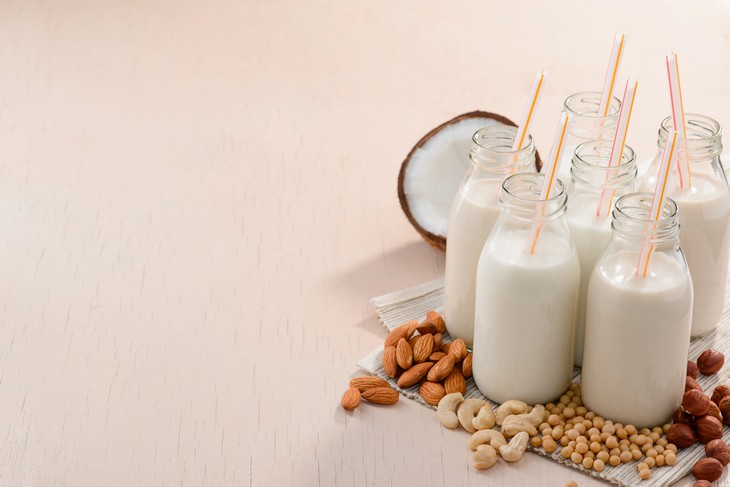
Plant Milks Suitable for Every Task different plant based milks in bottles
 Plant milks are essentially plant-based drinks and not milk per se, but they’re referred to as milk because they are marketed as alternatives to dairy. These can be made of a variety of plants:  
 
Grains (e.g. rice, oats, quinoa) 
 
Nuts (e.g. almonds, hazelnuts, coconuts, cashews, macadamia)  
 
Seeds (e.g. chia seeds, hemp seeds)  
 
Beans (e.g. soybeans, peas).  
 
Mixes of two or more kinds of milk are also popular. Different plant milks will have different nutritional content and can be sold sweetened or unsweetened, all of which will be specified on the packaging of a given product. Because of this variability in nutrients, it’s difficult to assess how healthy plant milks are overall compared to cow’s milk, but we did compare and contrast popular milk varieties in this article: Pros and Cons – Which Milk is Best for You?  
 
Also, keep in mind that not all plant milks will be suitable for everyone, and if you’re allergic to nuts or gluten, some kinds of milk will not be the best for you, so make sure you check the ingredients of each product before consuming or even purchasing it. Finally, in this article, we focused on more affordable and widely available plant milk options because they’re more accessible to consumers. 
 
The Best Plant Milks to Pair With Coffee (and Other Warm Drinks)
Replacing milk or creamer with an equally creamy and frothy plant-based alternative is one of the biggest challenges. In the end, it all boils down to your personal taste, but we do want to give you tips and options, and here are our top picks: 
 
1. Oat Milk is an excellent one to use with coffee because it has a neutral taste and can be whipped up in a nice latte or cappuccino. Also, it’s one of the most sustainable and widespread milk varieties, so it’s double, no - even a triple win. 
 
2. Coconut Milk makes some of the best dairy-free cappuccinos, as it is creamy and can be easily whipped up with no extra effort. It also obviously tastes like coconut, which can be both a good and a bad thing, as those of you who enjoy specialty coffee varieties may find coconut milk a bit overpowering, but those who love coconut will love the taste. 
 
When choosing coconut milk, it’s best to go for the bottled variety, and not the ones that come in cans, as the last one can be a bit too fatty and tends to separate when combined with steaming hot coffee.
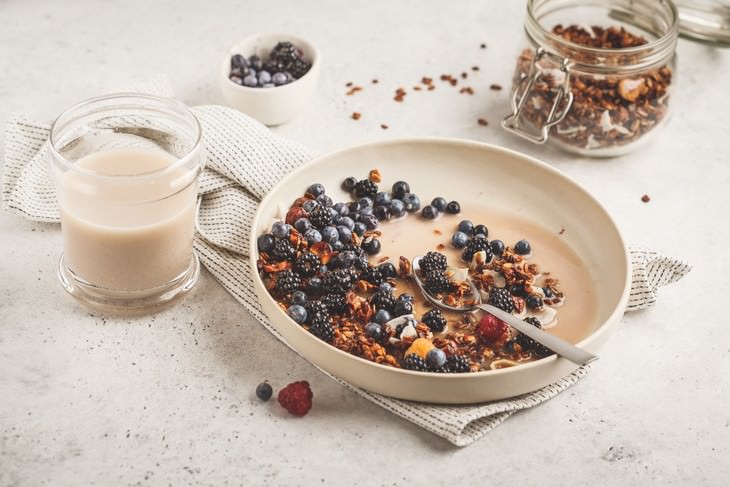
3. Soy Milk is also an excellent choice for coffee drinkers, as it has a relatively neutral taste and can be whipped up. It’s also widely available and inexpensive compared to other plant milks. Soy milk is the most nutritionally similar to all plant milks to cow’s milk and is a good source of protein. 
 
4. Almond Milk Plant Milks Suitable for Every Task
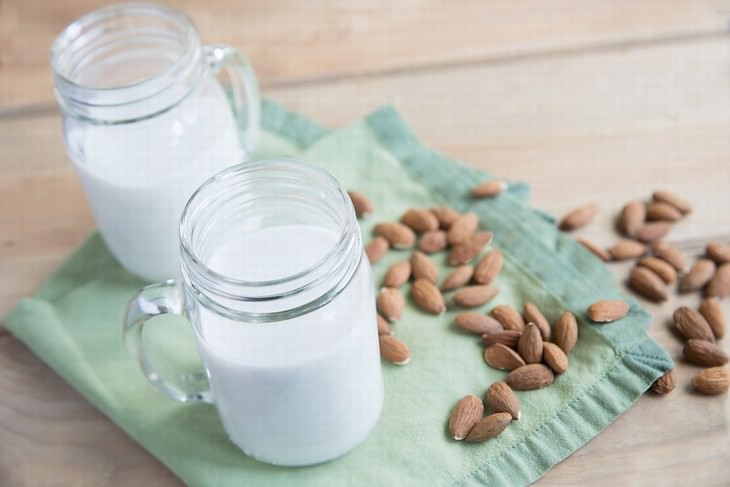
is another suggestion for coffee lovers. You won’t be able to fluff it up as you would the other plant milks listed here, but it’s benefit is that it has a neutral taste and silky texture, so it will complement many coffee varieties. 
 
Highly acidic coffee varieties can emphasize the natural bitter aftertaste of almonds, but this is easily salvageable with a dash of sweetener and it doesn’t happen with all almond milk varieties available on the market or homemade almond milk. 
 
5. Cashew Milk is our final suggestion. It's very similar to almond milk, but is a bit more full-bodied and has a less nutty taste, which makes it perfect for lattes.

Plant milk that goes with cereals and oatmeal
 Plant Milks Suitable for Every Task granola with soy milk
If you’re concerned that you won’t be able to have your usual morning cereal, granola or oatmeal when you go dairy-free, don’t be, as all three pair perfectly well with a wide range of plant-based milks. In fact, we’d venture out to say that plant milks are superior to cow’s milk, as they can add a twist to your ordinary breakfast and make it more variable and interesting. 
 
In our opinion, these are the best plant milk options to pair with cereal and oatmeal: 
 
1. Coconut Almond Milk is my personal favorite to add to granola or cereal simply because it spices up an otherwise bland breakfast without being too overpowering. It also pairs ridiculously well with fruit, especially bananas or mangoes. 
 
2. Almond Milk, (or Oat Almond Milk) is the best to prepare cereal, as it’s fatty enough to make your cereal creamy, but simple enough not to overpower the taste of oats.

3. Hazelnut Milk is an interesting one as well, as it tastes just like Nutella if combined with a bit of dark chocolate, but healthier, and who doesn’t want to have Nutella for breakfast? Hazelnut milk pairs so well with cereal, granola, and oatmeal because it imparts a nutty, simply delicious flavor to any breakfast. It’s also used in baking, but it’s a bit pricey. 
 
We wouldn't recommend milks that are too rich or too watery to pair with cereal, granola or oatmeal, so it's best to reserve rice milk, coconut milk, cashew milk and soy milk for other tasks.

The Best Plant Milks for Cooking and Baking 
The options of using plant-based milks in cooking and baking are limitless. You can add them into smoothies, soups, and curries, or use them to make the fluffiest pancakes and bake the most delicious desserts. For a few delicious examples, check out this dairy-free recipe of Healthy Carrot and Nut Muffins or this finger-lickin' good Thai Coconut Soup. 
 
When choosing plant milk for cooking or baking, look for the more inexpensive and neutral milk varieties that will be the closest to cow’s milk so that you can simply substitute it in any recipe, with the obvious example of coconut milk that’s traditionally used in many Asian recipes

Here are our plant milk recommendations: 
 
1. Soy Milk is suitable for cooking and baking because it’s so thin and similar to cow’s milk. Apart from that, it’s the only plant milk we know of that can be turned into buttermilk, just like cow’s milk, which makes it invaluable for baking. Finally, soy milk is relatively affordable, which is an important consideration, since you typically use a lot of it when baking or cooking. 
 
2. Rice Milk is thin and has a very neutral taste, which makes it a suitable option for baking and cooking as well. Another reason to choose rice milk is that it’s the least likely of all milks to cause food allergies, since both it’s nut-free and gluten-free. 
 
3. Oat Milk is affordable and has a thin consistency that’s very similar to skim milk. Compared to cow’s milk and most plant milks, it has more protein and fiber, slightly more calories and less fat. Since oat milk has a slightly sweet, yet very bland taste that’s similar to cow’s milk, it works very well for both cooking and baking. 
 
4. Hemp Milk is an interesting, yet somewhat more difficult to get and pricey choice. Still, some people swear by it in pastries and baking in general, plus it’s among the healthiest options out there, since it’s rich in essential omega-3 fatty acids that support good brain and heart health.

https://gscrochetdesigns.blogspot.com. one can see my crochet creations  

https://kneereplacement-stickclub.blogspot.com. for info on knee replacement

https://cancersupportindia.blogspot.com  for info on cancer and health related topics

https://GSiyers home remedies.blogspot.com   is the latest addition to my blogs


Wednesday, September 11, 2024

Adding vanilla essence to vegetables for a special flavor

 Flavor-enhancing tips: Vanilla pods

Vanilla is one of the most flavorful spices in the world of baking and sweets. Its unique and exotic flavor is familiar to everyone, to the point where it is almost universally used in baking. Surprisingly, recently, vanilla essence has also been used as an addition to vegetable dishes in many parts of the world. Next time you make yourself a green salad or a similar dish, try adding a few drops of pure vanilla essence. Once you taste the result, you’ll wonder why you hadn’t done it sooner.


https://gscrochetdesigns.blogspot.com. one can see my crochet creations  

 https://kneereplacement-stickclub.blogspot.com. for info on knee replacement

 https://cancersupportindia.blogspot.com  for info on cancer and health related topics

https://GSiyers home remedies.blogspot.com   is the latest addition to my blogs.

Wednesday, May 25, 2022

How To Pick The Best Apples For Baking


If you love to bake, and apples are a key ingredient,  this apple baking guide chart is going to be your new best friend. Certain varieties are better suited to different recipes and cooking techniques.

Now, you will no longer be in the dark! This handy chart shows you the best choices for your pies, sauces, desserts, ciders, and even snacking!

 apple cooking guide for baking

https://gscrochetdesigns.blogspot.com. one can see my crochet creations  

https://cancersupportindia.blogspot.com. feel free to view for easy, simple and health tips  
https://kneereplacement-stickclub.blogspot.com. for info on knee replacement


Friday, October 29, 2021

10 Popular Apple Varieties - Which Apple Meets Your Needs?

As you walk down the grocery store fruit aisle, you’ll find dozens of distinct apple varieties, but which should you choose? Not all apples are made equal. Some varieties make the best snack, whereas others will be better off in an apple pie or even cider than your lunchbox.

Apart from their uses and taste profile, apples also differ in terms of their growing seasons: some are in season in September and others are in their prime as late as December. Knowing how to distinguish between the popular apple varieties is helpful for everyone. In this article, we go through the key characteristics of 10 popular apple varieties, providing you with all the information you need to match up the perfect apple to your needs.  
 
1. Granny Smith
Popular Apple Varieties Granny Smith
The Granny Smith is an apple variety you’ll find in every grocery store in the US, as it’s been one of the top-ranking apples in terms of sales for several years. These apples have originated in Australia, and they’re a mix of domestic and wild apples. The dense and crisp texture of Granny Smith makes it the most favored apple for making pies. 
Color: Green with thick skin and a yellowish blush when ripe 
Season: September - October 
Flavor: Sweet, juicy, with tart and acidic undertones 
Used for: Pies, tarts, salads, juices, and cider.  
 
2. Fuji 
Popular Apple Varieties Fuji
Named after Mount Fuji, this Japanese apple was first developed in the 1930s, and it appeared in the US in the 1980s. Favored for their fruity flavor and versatility, Fuji apples are one of the best-selling apples in the US today.  
Color: Red with yellowish undertones 
Season: November - December 
Flavor: Mildly sweet and tart, with citrus and honey notes 
Used for: Fresh eating, baking, salads, juices, and cider.
 
3. Red Delicious
Popular Apple Varieties Red Delicious
The story of the Red Delicious is a cautionary tale. Between 1968 and 2018, the Red Delicious was the most widely-grown apple variety in the US, but the apple became a victim of its own popularity. Farmers started breeding for color and appearance instead of taste, and the once juicy and sweet Red Delicious lost its flavor and is now known mainly as the least tasty apple variety. That said, if you prefer a mild and sweet taste, the Red Delicious may be for you. 
Color: Deep red, with a thicker skin 
Season: September - October 
Flavor: Mildly sweet 
Used for: Fresh eating. 
 
4. McIntosh  Popular Apple Varieties McIntosh
The McIntosh is the national apple of Canada. Discovered at the beginning of the 19th century by one John McIntosh, this Canadian apple is extremely popular due to its versatility and a long growing season. The McIntosh is easy to peel, and it works extremely well for both snacking and cooking. 
 
Color: Vivid red with green skin 
Season: September - December 
Flavor: Exceptionally crisp and juicy, sweet and tart, with spicy notes (flavor fades when stored in the cold) 
Used for: Baking, cider, juices, and fresh eating.

5. Cortland
Popular Apple Varieties Cortland
Cortland apples are especially beloved in New York. These apples are related to the McIntosh, and they’re a common apple variety among home growers due to the tree’s resistance to many diseases. Cortland apples work especially well in salads and charcuterie boards because they don’t turn brown very fast. 
Color: Bright red with darker red streaks and a green blush 
Season: September - October 
Taste: Juicy with a sweet-sour flavor, sometimes described as wine-like 
Used for: Salads, charcuterie boards, preserves, ciders, juices, and fresh eating.
 
6. Braeburn
Popular Apple Varieties Braeburn
Due to their versatility and ease of growing, Braeburn apples are among the most-favored apples for home growers and grocers alike. These apples were invented in New Zealand by breeding Granny Smith and Lady Hamilton apple trees. Like the Granny Smith, these apples can withstand high temperatures without turning mushy, which is why they work perfectly for baking. 
 
Color: Yellow and red (or pink) with green undertones, with a yellow flesh and thin skin 
Season: September - October 
Flavor: Juicy, sweet, and tart, with notes of pear and nutmeg 
Used for: Baking, salads, and fresh eating.

7. Golden Delicious
Popular Apple Varieties Golden Delicious
The Golden Delicious isn’t closely related to the Red Delicious, but they were picked up by the same manufacturer, hence the resemblance in the name. The Golden Delicious was discovered in West Virginia in 1905, and it is now among the most popular apple varieties in the country. 
 
Color: Pale green to yellow, with white flesh 
Season: September - October 
Flavor: Balanced sweet and tart, firm and crisp texture 
Used for: Baking, sauces, juices, and fresh eating.
 
8. Pink Lady
Popular Apple Varieties Pink Lady
Pink Lady was one of the first apples to be trademarked. Developed by John Cripps, the Australian apple was created by crossing Golden Delicious with Lady Williams apples. The trademark is owned by Apple and Pear Australia Limited, and the company oversees that each apple labeled as Pink Lady has a specific appearance, sugar content, and crispness. Pink Lady apples are usually on the larger side, they are extremely versatile, slow to brown, and have an unusually long growing season too. 
 
Color: Pinkish red, with yellow background and white flesh 
Season: April - October 
Flavor: Balanced sweet-tart, with thin skin and a crisp texture 
Used for: Baking, pies, salads, charcuterie boards, and fresh eating.  
 
9. Gala 
Popular Apple Varieties Gala
In 2018, the popularity of the Red Delicious as America’s top-selling apple was surpassed by Gala. America’s favorite snacking apple, Gala apples were developed in New Zealand by breeding the Golden Delicious and Kidd's Orange Red. 
 
Color: Pink and orange stripes on a yellow background, with a thin skin 
Season: August - September 
Flavor: Sweet, citrusy, and aromatic 
Used for: Applesauce, pies, salads, and fresh eating.  
 
10. Honeycrisp
Popular Apple Varieties Honeycrisp
Let’s finish our list with an unusual apple. The Honeycrisp is an emerging star in the apple world - a superbly juicy but also crunchy apple with a balanced flavor profile. Honeycrisp apples were bred by the University of Minnesota in the 1970s, and they are the 5th most-grown apple in the country today. 
 
Color: Red with pale yellow and green undertones 
Season: September - November 
Flavor: Juicy, sweet, tart, and aromatic 
Used for: Pies, baking, and salads.

https://gscrochetdesigns.blogspot.com. one can see my crochet creations  

https://cancersupportindia.blogspot.com. feel free to view for easy, simple and health tips  
https://kneereplacement-stickclub.blogspot.com. for info on knee replacement


Friday, April 30, 2021

14 Cooking Tips and Tricks That You Need to Know!

The lock-down may be loosening up in some places around the world, but the hobbies we've picked up still remain firmly within our grip. One major quarantine activity that many people picked up during the lock-down was baking and cooking. Creating delectable delights (or attempting to) based on family recipes, professional recipes, and others that you can find on the internet has never been so popular.

As with all new skills, the initial phases often come with laughable failures, but practice makes perfect. And if you really want to take your cooking skills to the next level, you should keep these clever tips in mind. They will not only help make sure your meal comes out tasty, but they can also help reduce your clean-up time! 
 
1. A little sugar goes a long way  
Helpful cooking, baking, and kitchen tips, Spoonful of sugar
If you’re making a dish heavy in spices and tomato sauce like Chili or spaghetti, the acidity content will likely be high. Just adding a teaspoon of sugar will drastically reduce the acidity of your dish. 
 
2. Use all the broccoli
Helpful cooking, baking, and kitchen tips, Broccoli cut on table next to pan
When you’re making a dish that uses broccoli, the common method of making use of it is to cut off the stalks and leave the stem. But the stem is equally delicious and nutritious. Just cut it up into smaller pieces and toss it into the pan. 
 
3. Baking with recipes
If you’re baking, recipes are the law. Of course, you can experiment and try new things, but following the recipe can help you avoid disasters like sunken souffle and burnt bread. 
 
4. Cooking with recipes
Unlike baking, which is heavily based on a formula to ensure the consistency of your baked goods, cooking doesn’t need as much precision. You can use recipes like road maps and tweak them to your flavor preference. 
 
5. When the blade falls
Any chef will tell you, a knife that’s falling is a knife without a handle. If the knife slips out of your hand, you and everyone in the vicinity should take a step back away from the drop zone and let it fall before you pick it up. You’re much more likely to cut yourself trying to catch it mid-air. 
 
6. Try scissors instead!
Helpful cooking, baking, and kitchen tips, Scissors on plate next to heart
Any fan of street food has probably seen chefs cutting meat with scissors. This actually makes the cuts cleaner, leaves less of a mess, and it’s quick! Many types of meat, vegetables, and dough can be cut with scissors, and it’s also an easy way to cut the crust off a slice of pizza. 
 
7. Electric or gas stove?
It's not so much a question of which is better, it’s about keeping in mind the temperatures. Most electric stoves run hotter than gas stoves, so a high setting in an electric stove will burn your dish while the same setting on a gas stove will sear your dish quite nicely.

8. Salting is an art
Depending on what you’re making, the time at which you add salt can drastically change the flavor of your dish. Check existing recipes just to learn whether the dish requires salt to be added early or later into the process of making your dish. Also, avoid adding salt to the pan directly from the container or a spoon. Let it go from your hand to the pan in small measured amounts. 
 
9. No salt? No problem!
Helpful cooking, baking, and kitchen tips, Soy sauce being poured onto a spoon
In case you run out of salt on one frightful and unexpected occasion, don’t panic. Fish sauce or soy sauce can both work well to add saltiness to your dish and also give it an umami flavor. Since the flavor is concentrated in both sauces, a small amount is enough which will also reduce the sodium content of your dish. 
 
10. Scraping with knives
After chopping vegetables, the easiest way to gets every bit of your chopped veggies from the chopping board into your pot is by scraping them into the pot using the back of your knife. Never use the sharp end of the blade as it will make the blade dull.

11. Frying with olive oil
Helpful cooking, baking, and kitchen tips, Olive oil being poured into a cup
It’s not advisable to fry items with olive oil, though it can handle relatively high temperatures. Extra Virgin Olive Oil has a very low smoke point so it cannot be used for frying or heated too much. Too much heat will cause Extra Virgin Olive Oil to break down. 
 
12. Pasta perfection
Helpful cooking, baking, and kitchen tips, Spaghetti noodles being put into boiling water
Making pasta is relatively simple. You boil the pasta, strain it, and add it to a delicious homemade sauce. The next time you’re making pasta, add a little bit of the pasta water used for boiling the pasta to the sauce before mixing it. This will ensure that, when you mix it, the sauce sticks to the pasta better and enhances the flavor. 
 
13. Heat the pan
Whatever you're planning to cook on the stove, from pancakes to chili, here’s one rule you should always remember: never put any ingredients in a cold pan. Put the pan on the stove to heat while you prep the ingredients. Always start cooking your dish on a hot pan.

14. Keep your towel close
A towel is your best friend in the kitchen, for quickly drying wet utensils or cleaning surfaces when needed. To make sure you can keep your hand towel handy, simply slip it through a belt or tuck it either between your belt and pants or into the inner lining of your pants. This will ensure it’s close to you in case of any spill or emergency.


https://gscrochetdesigns.blogspot.com. one can see my crochet creations  

https://cancersupportindia.blogspot.com. feel free to view for easy, simple and health tips  
https://kneereplacement-stickclub.blogspot.com. for info on knee replacement