Showing posts with label canola. Show all posts

Friday, September 11, 2020

9 of the Healthiest Cooking Oils Available

With so many cooking oils available on supermarket shelves, it can be tricky to make sense of the latest health headlines about dietary fat. In fact, many consumers are confused about which types of dietary fat experts encourage or discourage in order to promote heart health. However, the overall message seems to be to encourage healthy fats (monounsaturated and polyunsaturated) in the diet by replacing animal fats with vegetables fats. These fats are good for the heart as they decrease the levels of LDL (bad) cholesterol and fats in the blood, both of which are risk factors for heart disease.

To help you select some of the healthiest oils while still pleasing your taste buds, here is a rundown of 9 cooking oils:
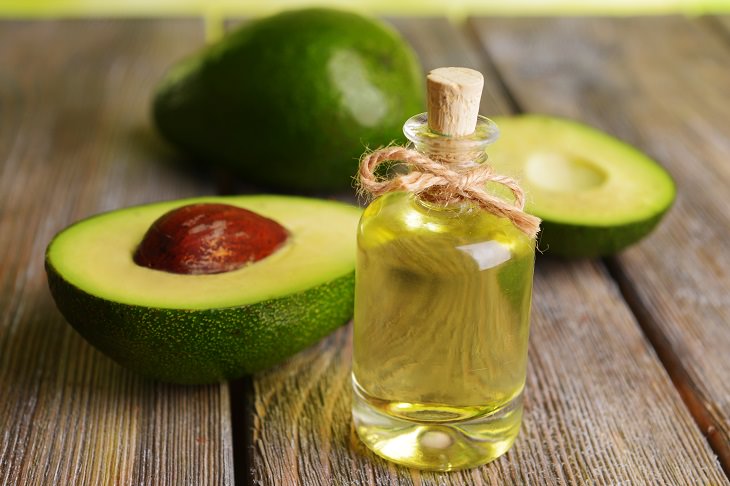
1. Avocado Oil 

This is rich in monounsaturated fat (70%), and it has one of the highest levels of monounsaturated fat among cooking oils, second only to olive oil. Like olive oil, avocado oil is low in polyunsaturated fats (10%). When compared with other vegetable oils, avocado oil has a higher saturated fat content (20%), but this is a lot less than the percentage of saturated fats in lard, butter, or tropical oils such as palm or coconut oil.

Avocado oil is a fine oil to use, although it tends to more expensive and harder to find. It has a mild flavor that's similar to avocado, and it can withstand high cooking temperatures, making it suitable for grilling, sautéing, roasting, or in a salad dressing.

2. Canola Oil

This oil has a relatively high monounsaturated fat content (62%). However, despite this, canola oil still contains a considerable amount of polyunsaturated fat (32%). Furthermore, canola oil has the lowest level of saturated fat among other cooking oils. It’s also one of the few oils that contain a good plant-based source of omega-3 fats. A study carried out in 2013 found that when people use canola oil to replace saturated fat in their diets, it helped them to reduce their cholesterol levels and LDL cholesterol levels, which reduces a person’s risk of a heart attack.

Canola oil is a versatile and practical cooking oil that’s not very expensive and can be used in a wide variety of ways, from baking and grilling to stir-frying and making salad dressings.  

3. Grapeseed Oil

This versatile cooking oil is extracted from grape seeds left over from wine-making. It’s considered to be a good all-purpose oil that can be used for sautéing and roasting, or in salad dressings. Grapeseed oil has a high percentage of polyunsaturated fat (71%), with a similar fatty acid profile to soybean oil.

According to a 2016 review of studies published in the Journal of Nutrition and Metabolic Insights, little is known about the effects of grapeseed oil on human health.
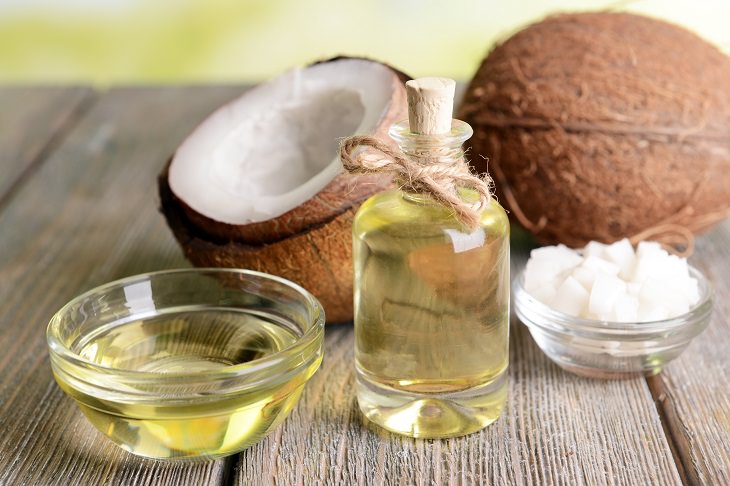
4. Coconut Oil 

Made from the fruit of the coconut, this oil has been promoted as a better alternative to butter. Consumers seem to have bought into the hype that it’s among the healthier options when it comes to oils, and vegans, who eat no animal fat, may use it as a butter substitute (it’s a white solid at room temperature). However, coconut oil is high in saturated fat, so it’s recommended that it’s used sparingly. A study conducted in 2016 found that people who consumed coconut oil had higher LDL cholesterol levels than those who consumed unsaturated fats. Therefore, coconut oil might not be as healthy as everyone says it is.

5. Extra-Virgin Olive Oil and Pure Olive Oil

Due to its prominent role in the Mediterranean diet, olive oil is a very popular cooking oil. Extra-virgin oil is made from the first pressing of the olives. This results in an oil that has more flavor and a fruity aroma, and is less processed, meaning it’s considered to be “unrefined.” It’s also usually more expensive than other types of olive oil and contains the most antioxidants.

Olive oils have the highest percentage of monounsaturated fats among cooking oils. They're rich in antioxidants called polyphenols, beneficial plant compounds that improve heart health.

When it comes to cooking at high temperatures there are better choices, as extra-virgin olive oil cannot withstand very high heat before it starts to burn and smoke. Refined, or pure, olive oil may be more suited for high-temperature cooking.

Since extra-virgin olive oil offers more flavor than other types of olive oil, it’s a good option for sautéing vegetables, and preparing salad dressings and marinades.

6. Peanut Oil

Among cooking oils, peanut oil has the highest monounsaturated fat content (49%). It also has a relatively high percentage of polyunsaturated fat (33%). It’s percentage of saturated fat is higher than that of other vegetable oils, but not to the point that it has an effect on heart health.

A flavorful oil with a pale color and nutty aroma, peanut oil can withstand high temperatures, and is a good choice for cooking Asian-inspired meals and stir-fries.
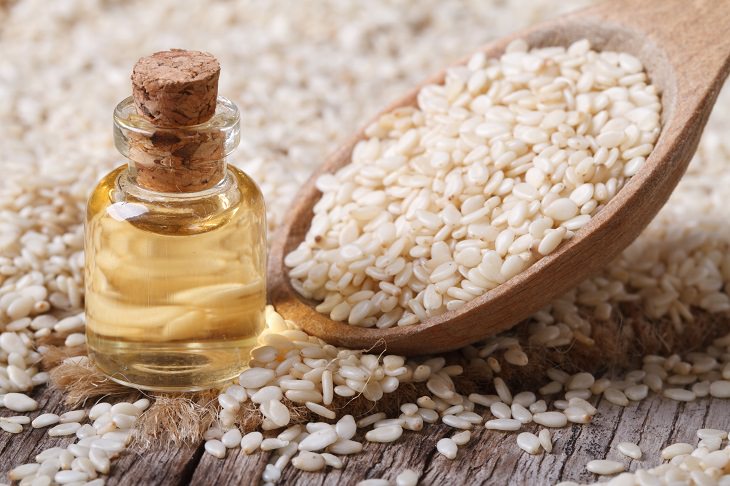
7. Sesame Oil

Often used in Asian and Middle Eastern cooking, sesame oil is a good mixture of polyunsaturated fat (46%) and monounsaturated fat (40%). This oil is not often used as a cooking fat and is used more for its intense flavoring.

Sesame oil lends a nutty flavor to any dish, especially toasted sesame oil, which is darker and has a bolder flavor.

8. Sunflower Oil

Light in color and neutral in flavor, sunflower oil has one of the highest concentrations of polyunsaturated fat (69%) among cooking oils. It has some monounsaturated fat (20%) and is low in saturated fat (11%), making it an overall heart-healthy option.

Four studies have compared the heart-health effects of a diet rich in conventional sunflower oil, a polyunsaturated fat, with a diet rich in canola oil, which has more monounsaturated fat. The research concluded that sunflower oil and canola oil had similar effects: both reduced the levels of cholesterol and LDL cholesterol in the participants’ blood.

This oil is a good all-purpose oil because it can withstand high cooking temperatures.

9. Vegetable Oil

This oil is primarily a polyunsaturated oil (61%). As a bonus, it contains some omega-3 fats, which are heart-healthy fats often found in salmon and sardines, but are less common in plant-based sources of food.

Vegetable oil that is made from soybeans is a neutral-tasting oil that does not have much of a flavor. Nevertheless, it can be used for sautéing, frying, and making salad dressings.


https://gscrochetdesigns.blogspot.com. one can see my crochet creations  

https://cancersupportindia.blogspot.com. feel free to view for easy, simple and health tips  
https://kneereplacement-stickclub.blogspot.com. for info on knee replacement


Saturday, April 6, 2019

The Fruit Codes Visible on Fruit Are Very Important!

If you're a good observer, you may have realized that the fruit you buy has numbers labeled on it. These numbers are called PLU codes, and they hold a great deal of information about how a fruit was produced, such as whether it is organic, conventionally grown, or genetically modified, along with other important information that should be of interest to the buyer. Let us help you demystify these codes, so you can rightfully become more knowledgeable about the products you are buying.
First of all, what are PLU codes?
PLU stands for "Price Lookup", and it refers to the code that you find on the little stickers affixed to fruits and veggies available at grocery stores and supermarkets. Each code is intended to deliver information to the cashiers to know what price they should charge the buyers. Apples, for instance, come in many varieties, and thanks to their PLU codes, the cashier is able to tell one from the other. Besides the cashier, you (the buyer) also have the right to know what these codes reveal.

The meaning of PLU codes
PLU codes normally consist of four or five digits, and depending on the digits they begin with, they can reveal different information about the way the fruit was grown. Here's what it means in the following cases:

•    A five-digit code beginning with a "9": This signifies that the product is organic - meaning that the farmers who grew it used natural farming techniques such as crop rotation, green manure, compost, and biological pest control. You are likely to find this kind of produce being sold in organic sections at supermarkets or at chain health-food stores. For example, in the U.S., 94033 is used for small organic lemons and 94053 for large organic ones.
•    A four-digit code beginning with a "3" or a "4": This indicates that the produce is probably conventionally grown, meaning that its growth involved the use of fertilizers and pesticides that help the farmers attain a higher fruit yield, out of season growth, more longevity, more resistance and more mass. There are numerous variations of this kind of code. For example, in the U.S., 4033 is used for small lemons and 4053 for large ones.
•    A five-digit code that starts with an "8": This means that the product is a GMO (Genetically-Modified Organism) - but unfortunately, you won't see this very often, if at all. 

Why are PLU Codes not always reliable?
Firstly, it's important to know that PLU codes are not mandatory, so it's not always possible for us to tell how certain produce is grown. Secondly, companies sometimes mislabel the produce to hide actual facts, in turn misleading us completely. Of course, they do this for the benefit of their sales - especially since most Americans say that they would avoid GMOs if they were labeled, which leaves no concrete reason for companies to do so.
 

Genetically modified fruits and vegetables are undeniably frowned upon, and although 60-70 percent of food contains ingredients of this type, we are not informed well enough about their presence, as well as the long-term effects they have on our health. And what's worse is that there seems to be little to no regulation enforcement in regards to the correct labeling of such products.
How can I avoid GMOs?

Although there is no direct research showing health hazards by GMOs. Companies may hide the fact that their products have been genetically modified. But on the other hand, others may boast that theirs aren't. Knowing about these companies is a great option to certify that the products you buy are GMO-free.
And if you're still doubtful about that, then you should know about the most reliable ways to tell this:

•    The "USDA CERTIFIED ORGANIC" label: This label is certified by the USDA (The United States Department of Agriculture), a department that conducts professional research on food, agriculture and nutrition. Finding this label means that the use of GMOs were completely prohibited in the production of the produce, and that it is organic. The USDA calls for tangible proof from each company before the labeling is officially given. This doesn't only apply to fruits and vegetables, but any products that may include traces of GMOs.
•    "NON-GMO" labels: This label is certified by the Non-GMO Project, a non-profit organization that offers verification and labeling for non-GMO foods and products in North America. Their mission involves working hand-in-hand with food manufacturers, distributors, growers and seed suppliers to be able to identify whether they make use of GMOs or not. They also help create awareness of GMOs and their impact on our health and food systems.

Other ways to avoid buying GMO foods:
•    Avoid buying products such as corn, soy and canola that are not specifically labeled as non-GMO.
•    Get informed about common aliases for products, for example maize or hominy for corn.
•    Buy ingredients, instead of food with ingredients.
•    Cook food from scratch.
•    Opt for shopping at local farmers' markets over grocery shopping.
•    Buy and preserve food that is in season.  It's more likely to be genetically-modified if it's bought out of season.


those interested in cancer & health related topics are free to see my blog-
http://cancersupportindia.blogspot.com/

for crochet designs, my blog, those who like a particular design are free to mail me
http://gscrochet designs.blogspot.com

For info. about knee replacement, be free to view my blog-
http://knee replacement-stick club.blogspot.com