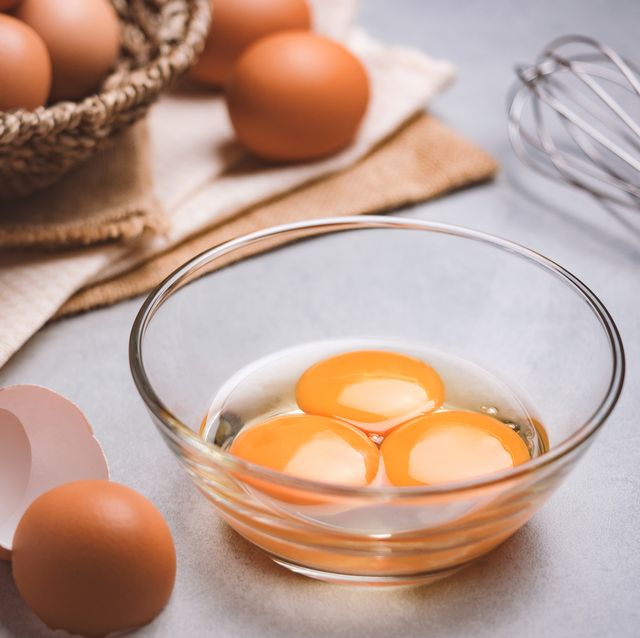
Eggs
are a staple for cooking and baking. But if you’re scrambling for a
replacement, your kitchen is full of dupes, from ground flaxseed to
canned pumpkin. Many offer health benefits that make them comparable or
even superior to actual eggs.
Depending
on what you’re making, eggs can contribute structure, moisture, flavor,
and color, or act as a binding agent (holding ingredients together) or
leavening agent (helping baked goods rise and become light and airy). So
when you’re considering egg substitutes, it’s important to think
through what purpose any replacement will serve in your recipe: “Do you
need it as a binder, or as more of a fluffy agent? Is it in a baked
dish?” asks Rebecca Russell, a functional medicine registered dietitian
in Denver. Seeds tend to be great binders, for example—they’re perfect
in meatballs and burgers—while applesauce and silken tofu are just right
for baking.
Ground flaxseed
Meet
“flegg,” also known as ground flaxseed that’s gelatinous enough to sub
for eggs in baked goods. To make it, mix 1 tablespoon of flaxseeds with 3
tablespoons of warm water, and let the concoction sit for about 5
minutes until it thickens. It works as a one-to-one substitute for eggs,
Russell says. While you can technically use whole flaxseeds, grinding
them up makes them easier to digest and improves their texture, she
adds.
Expect
a mild, nutty flavor with lots of health benefits. “Flaxseeds are a
great source of soluble fiber, which is important for gut health, blood
sugar balance, and even weight loss,” Russell says. She likes using
flegg in pancakes, banana bread, and other breakfast pastries. Because
it’s a great binding agent, it also works well in dense dishes like
meatloaf. Unlike many of her clients, “I can tolerate eggs just fine,”
she says. “But I often still use flegg for the added benefit of the
fiber.”
Chia seeds
When
you combine 1 tablespoon of chia seeds and 3 tablespoons of water, you
get a “chia egg,” which replaces one traditional egg in all kinds of
recipes. The mixture, which is thick and more gelatinous than flegg, has
a neutral taste but can be texturally grainy. Russell recommends using
it as a binding agent in poppy seed muffins, or baked goods that have
walnuts or pumpkin seeds, all of which can help conceal its texture.
Chia egg also works well in veggie burgers.
Russell
often recommends it to her clients because it’s a great source of fiber
and omega-3 fatty acids. “Chia seeds are great for brain health, heart
health, and inflammation,” she says.
Applesauce
A
quarter cup of applesauce is an easy swap for one egg in recipes that
require moisture. It works especially well in structured baked goods
like muffins, breads, brownies, and cakes, says Kaytee Hadley, a
registered dietitian nutritionist in Richmond, Va. (You wouldn’t want to
use it in a fluffy meringue.) Because applesauce is naturally sweet,
consider slightly tweaking your recipe. “You’re going to be getting a
decent amount of sweetness, so you might want to cut back on whatever
added sugar you’re using,” she suggests. “It’s a nice natural
alternative—plus, you’re getting the fiber that’s in there, which is
great for heart health and gut health.”
“Bean water”
The
liquid that comes in a can of chickpeas is often discarded—but can
actually be repurposed as an excellent egg replacement. Officially, it’s
called aquafaba, but Russell thinks of it as “bean water.” When it’s
whipped, it takes on a light, fluffy texture similar to egg whites, she
says, and works well in recipes that call for aeration, such as
chocolate mousse, meringues, and homemade mayonnaise. Simply substitute 3
tablespoons per egg. “It’s virtually tasteless,” Russell says, which
means it works well in both sweet and savory dishes.
Next
time you use a can of chickpeas, pour the aquafaba into an ice cube
tray or small container and freeze it for up to four months; that way,
you’ll have some on hand when you need it. You can either thaw it in the
fridge the night before, or microwave it for a minute or two.
Silken tofu
Silken
tofu—unlike its firm cousin—has a creamy, yogurt-like consistency that
makes it ideal for baking as well as dishes such as quiche and
frittatas. A quarter cup replaces one egg, and Russell recommends
blending it first to make sure it’s as smooth as possible. She often
encourages clients with dairy intolerance to experiment with silken
tofu, since it’s so versatile. “It can soak up any sauces, seasonings,
herbs, or whatever you put on it, because it has a super mild flavor,”
she says. Plus, it packs a nutritional punch: Tofu is a complete
protein, which means it provides all nine essential amino acids, and
it’s rich in nutrients like calcium, iron, and magnesium.
Greek yogurt
What
can’t you do with Greek yogurt? Add “egg replacement” to its long list
of uses: a quarter cup is a convenient substitute for one egg. It adds
moisture, creaminess, and a slight tang to baked goods, keeping them
soft and tender, says Russell, who also uses it in pancakes. The only
caveat, she adds, is that not everyone is wild about its taste. “You can
try it out, and if you don’t like it, maybe go to something like a
flaxseed or chia seed egg,” she says.
Pumpkin puree
If
you’re the type who longs for pumpkin spice lattes year-round, you
might enjoy this swap, which calls for replacing one egg with a quarter
cup of pumpkin puree. “You get a little bit of pumpkin color, and a
little bit of that flavor,” says Maggie Michalczyk, a registered
dietitian nutritionist in Chicago. Pumpkin puree
works particularly well in baked goods like breads, muffins, and
cookies, she says. In addition to its pleasing taste, she gives it bonus
points for adding vitamins A, C, and E to your recipe, as well as
potassium and fiber.
Vegan egg replacements
You can now find commercial egg alternatives at almost any grocery store. JUST Egg,
for example, makes plant-based substitutes that are similar to
traditional eggs in taste, texture, and function but made from
ingredients like mung bean protein and canola oil. Hadley, who is not
affiliated with the company, eats its products every morning. “You can
scramble it, or you can bake it into a nice egg dish,” she says. “The
texture is shockingly similar, and it’s super convenient and mess-free.”
Since it tastes somewhat mild, she recommends adding black salt to
ratchet up its egg-like flavor. (The condiment’s sulfur content gives it
an authentic eggy taste.)
Hadley also enjoys Crackd,
a plant-based product made out of pea protein, which doesn’t have any
saturated fat or cholesterol. “You can cook it in a skillet or
microwave, and use it in baking as an egg replacement,” she says.
https://gscrochetdesigns.blogspot.com. one can see my crochet creations
https://kneereplacement-stickclub.blogspot.com. for info on knee replacement
https://cancersupportindia.blogspot.com for info on cancer and health related topics
https://GSiyers home remedies.blogspot.com is the latest addition to my blogs