Showing posts with label pesto sauce. Show all posts

Wednesday, March 6, 2024

13 Ways To Upgrade The Flavor Of Store-Bought Pizza Sauce

Pizza is loved by many for its delicious flavor, versatility, and ease. After all, in its simplest form, all that's required is dough, cheese, and sauce. But when a recipe is simple, it's harder to mask imperfections — and problems with taste and texture can be especially tricky to anticipate when buying store-bought pizza sauce. You don't quite know what you're working with until you pop open a can or jar at home.

Fortunately, there are several ways to upgrade store-bought pizza sauce. Many methods require just pantry staples, like garlic powder and olive oil. Others are classic tips for making your own pizza sauce, like using fresh herbs, rich ingredients like Parmesan, and even red wine. These recommendations suit all levels of cooking skills and allow for plenty of experimentation. Have fun, taste test along the way, and remember that, when it comes to pizza, it's hard to go wrong.


1. Mix in Parmesan cheese for a greater depth of flavor
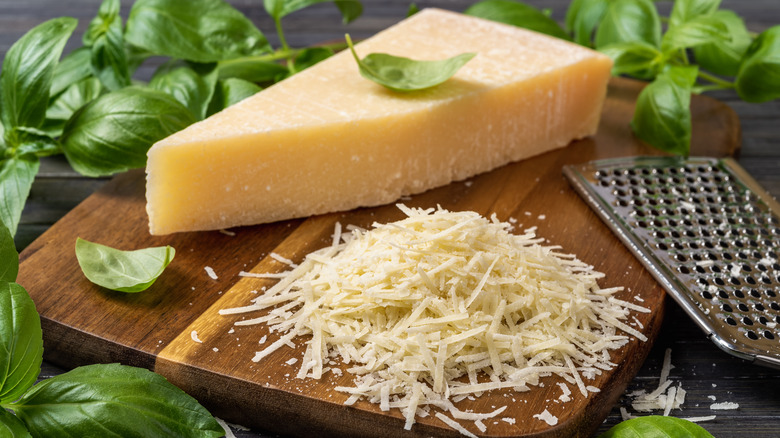
Parmesan cheese and basil
Parmesan cheese is the ingredient that will change your pizza sauce forever. This savory, umami-rich addition will complement tomatoes' sweetness and acidity, creating a balanced and delicious depth of flavor. Additionally, Parmesan will form a thicker consistency and help ensure a crisp, chewy crust — rather than a soggy one that can result from a runny store-bought pizza sauce.

You can play with texture when incorporating Parmesan by folding in grated or shredded cheese, or using a blender to create a smooth, silky sauce. You can also experiment with flavor by exposing the sauce to heat. Most store-bought pizza sauce options are made with uncooked ingredients, resulting in a brighter, fresher taste. But some argue that simmering pizza sauce on the stovetop allows its flavors to meld and develop.

If you prefer the latter, consider the ingredient Giada De Laurentiis adds to store-bought sauce: a Parmesan rind. Not only does this cut down on food waste, but the rind boosts flavor in the same way that grated Parmesan would. Simply drop one into your sauce and let it stew away to your preference. However, remember that most often, your sauce will be heated again in the oven, and overcooking can lead to a bitter taste. Simmer with caution or consider making a Detroit-style pie, which involves pouring the sauce on after the crust and toppings have par-baked, limiting its cook time in the oven.


2. Stir in melted butter to balance acidity
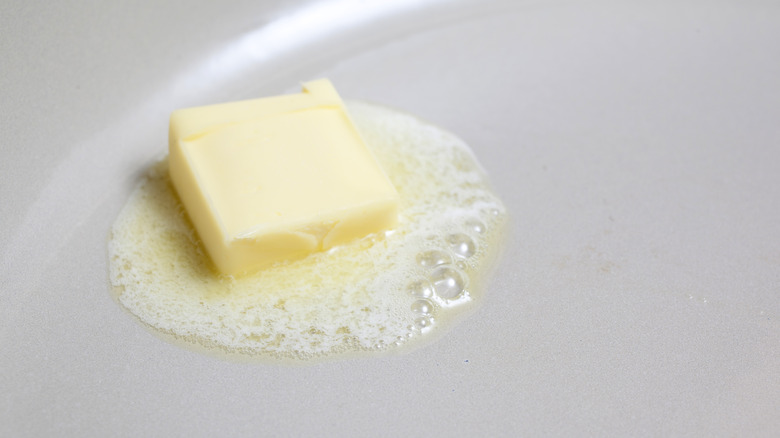
Melting pat of butter

Butter is the rich addition that will take your pizza sauce to the next level. A pat or two will balance any sour notes in your store-bought sauce and further enhance its flavor with a subtle sweetness. However, the addition doesn't have to be understated. Rather than a standard stick of butter, consider using savory, seasoned varieties like garlic butter and herbaceous blends.

There are many ways to add flavor to butter at home, and most recipes whip together in just minutes with the help of a stand or hand mixer. But like store-bought pizza sauce, there are plenty of ready-made compound butters available at grocery stores that will save you a few dishes and a bit of time. Regardless of what flavor you choose, butter will add a velvety, creamy texture to your sauce.

To use this ingredient, melt your preferred amount of butter in the microwave. Pour the melted butter and sauce into a bowl and stir until they're combined. Alternatively, you can add your store-bought sauce and a small amount of butter to a saucepan, then heat the mixture on the stovetop until it's emulsified. But again, if you choose to heat your pizza sauce, do so mindfully so that it doesn't overcook in the oven.


3. Add garlic powder for a smooth and well-seasoned sauce
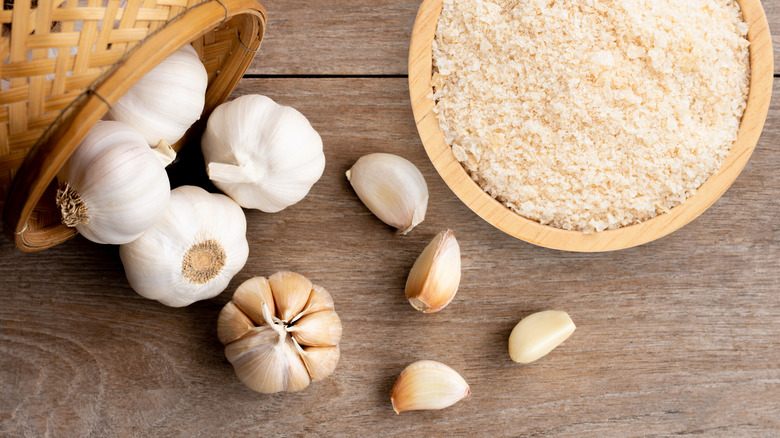
 Garlic cloves and powder

Many homemade pizza sauces, like this extra-flavorful pizza sauce recipe, call for fresh garlic. Of course, you could go that route when upgrading a store-bought sauce, too. But to avoid a pungent sharpness, you'll want to mince and cook your garlic cloves, then incorporate your pizza sauce. Most home chefs are unlikely to be daunted by this process, but these steps can be easily skipped without sacrificing flavor.

The addition of garlic powder will take your pizza sauce up a notch, and few hacks are as effortless. Simply sprinkle the seasoning into your store-bought sauce, starting with a ½ teaspoon. If needed, add more to suit your taste, but remember that you don't want your sauce to be too overpowering — it should complement, not outshine, your pizza toppings.

Unlike the fresh ingredient, garlic powder ensures a smooth, easy-to-spread consistency, as well as a consistent flavor. It's not only a convenient solution but an affordable staple that you're likely to use in a wide variety of recipes. Chances are you already have it readily available in your pantry.


4. Pour in red wine for a more robust taste

Person uncorking wine bottle

Seriously upgrade store-bought pizza sauce with a boozy ingredient: red wine. This addition will create a rich aroma and deeper, more complex flavor, especially when it's exposed to heat. Either reduce the wine in a saucepan over the stovetop, then stir the concentrated liquid into your store-bought sauce; or simply warm the two together on the stove simultaneously. Regardless of which method you choose, start with about a ¼ cup of wine per jar of store-bought pizza sauce, which is usually around 14 ounces.

Keep in mind that the sauce will pick up the nuanced flavors of the wine you choose, so cooking with a wine that you enjoy drinking is a good rule of thumb. Though, you may want to especially consider using pinot noir, zinfandel, or cabernet sauvignon varieties. They're some of the best red wines for cooking and beautifully complement tomato-based sauces. Chianti is another ideal pick, especially for those who aren't accustomed to cooking with wine. It's a forgiving varietal — even if you accidentally pour in a bit too much, your sauce won't turn bitter. Rather, Chianti will add a subtle fruity flavor and earthy quality.

This tip includes an added bonus: You'll already have a bottle open and ready for when your pizza comes out of the oven. Many would agree that there are few better pairings than a glass of vino and Italian flavors.


5. Blend in Calabrian chile peppers for a spicy kick
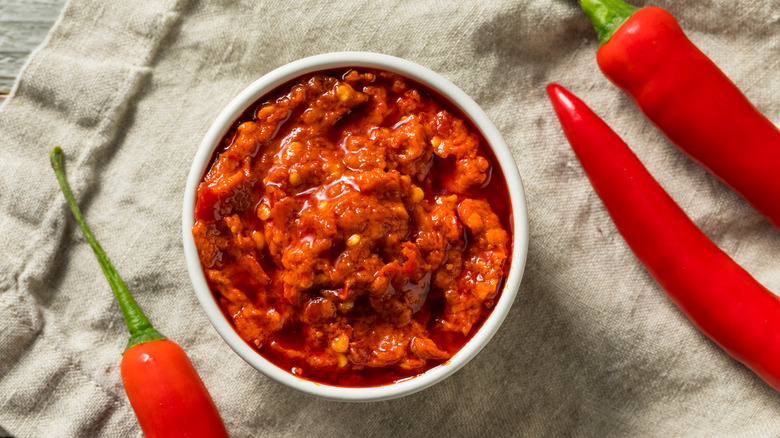
Calabrian chile paste

Give your pizza sauce a spicy kick with Calabrian chiles. These vibrant peppers pack on heat, as well as a fruity, smoky flavor that complements a number of pizza toppings, like roasted red peppers, mushrooms, and salty meats.

You can use raw Calabrian chiles in your pizza sauce by dicing them finely, before sauteing them in a pan with a touch of heated oil. Once the peppers are softened, add them to the sauce. You can leave the texture as-is or use an immersion blender for a smooth consistency. More than likely, one pepper will suffice if using a standard-sized jar of pizza sauce. But the quantity of Calabrian chiles needed depends on your preference. Note that Calabrian chiles' spice level is between a jalapeƱo and a cayenne pepper, and most of their capsaicin is in their seeds — which can be removed if using fresh produce.

However, for greater convenience, you might prefer Calabrian chile paste or oil-based jars containing the chopped pepper. Both are available at grocery stores, and the latter comes especially recommended by restaurateur and chef Bobby Flay. He uses Mutti sauce and jazzes it up with jarred Calabrian chile peppers, red pepper flakes, fresh herbs, and aged parmesan.


6. Whisk in tomato paste for a thicker texture
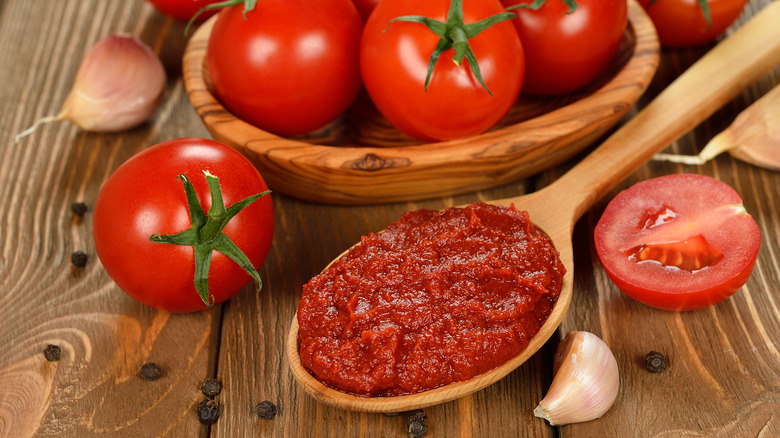
Tomatoes and tomato paste

When shopping for store-bought pizza sauce, it may be tempting to think that options made with fresh tomatoes are more premium than tomato paste-based sauces. But Tasting Table's ranking of grocery store pizza sauce brands debunked this belief. Muir Glen organic pizza sauce placed second among the competitors despite its use of water and tomato paste, and it scored particularly well in the areas of flavor and consistency.

Tomato paste is not an inferior ingredient — in fact, it can be a useful tool in upgrading the taste and texture of store-bought pizza sauce. The addition will increase your sauce's hearty tomato flavor and thickness, making it easy to spread on what will be a properly crisp crust. For the best result, use a quality product and consider browning your tomato paste before incorporating it into your sauce. To do so, simply heat a small amount of oil in a pan, then add your tomato paste and cook until caramelized, which is evident in its bright red color darkening. Of course, this extra step isn't necessary, but you may find that it creates a more robust flavor.


7. Sprinkle in nutritional yeast for a protein-packed sauce
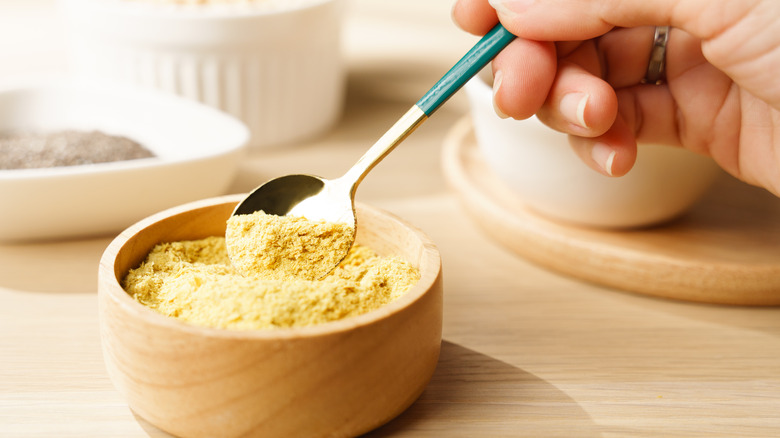
Spoon in nutritional yeast
Nutritional yeast is the key ingredient for a more flavorful pizza sauce — and a healthier one, too. Also known as nooch, 2 tablespoons of nutritional yeast — which is about how much you'll want to add to a jar of store-bought pizza sauce — will feature an impressive 8 grams of protein. That quantity also contains roughly 20% of your daily dose of fiber, plus around three times your recommended daily amount of vitamin B12.

Along with a nutritional boost, this ingredient will add an umami-rich, cheesy flavor (similar to the way parmesan would) to your pizza sauce. However, nutritional yeast accommodates those who are lactose intolerant, along with folks who follow a plant-based diet. In fact, including a sprinkle of nooch is one of the top tips for making a flavorful vegan pizza. Though, any type of pie can benefit from this savory, nutrient-dense addition.

Simply stir the flaky, yellow-hued ingredient into your store-bought pizza sauce and spread the mixture over your crust. The papery flakes will dissolve and not change the sauce's texture. Visibly, you may not even notice a difference, but its enhanced flavor will be deliciously evident.


8. Toss in aromatics like chopped onion and fresh herbs
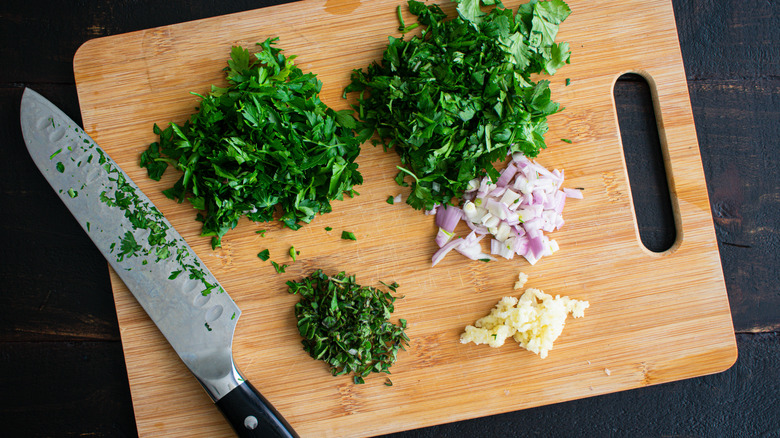
Aromatics on cutting board

Some store-bought pizza sauces are well-seasoned right out of the can or jar. However, others are lacking, even when it comes to common additions like garlic, onion, and oregano. But either way, a few fresh ingredients can reinvigorate the flavor of ready-made pizza sauce — and while peeling, dicing, and sauteing may be more laborious than other suggestions on this list, it's easier than making sauce from scratch. Yet the result may fool even the most discerning palette into believing it's completely homemade.

To start, look at the ingredients listed on your store-bought sauce. If some aromatics are already included, you might want to use a lighter hand. Still, don't be shy about adding a few tablespoons of caramelized onions or a dash of onion powder for greater ease. Fresh or dried herbs can make a big difference in flavor, too. Toss in a few basil leaves or a sprig of oregano, rosemary, or thyme. Alternatively, you can simply shake Italian seasoning into your sauce for a combination of all four herbs. Keep in mind that dried spices can be easily stirred in, whereas sauteed ingredients should be blended into the sauce for a smooth consistency.

Depending on your pizza toppings, you could get a little more creative with your aromatic additions. For example, this Italian sausage and sweet potato pizza recipe could incorporate several unique ingredients into its sauce, like spicy peppers, fresh sage, or extra fennel.


9. Stir in olives and capers for a puttanesca-inspired sauce
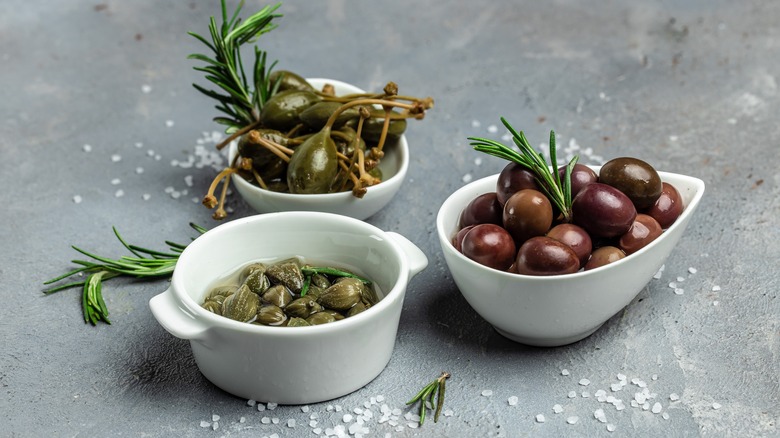
Bowls of olives and capers
There's a big difference between pizza and pasta sauce. Namely, store-bought pizza sauce is often uncooked, whereas pasta sauce is typically exposed to heat prior to canning. Additionally, pizza sauce is often thicker, allowing it to be more easily spread and to prevent a soggy crust. Still, this doesn't mean you can't take cues from classic pasta recipes when looking to elevate your store-bought pizza sauce.

To easily make a flavorful puttanesca-inspired sauce, mix in capers and olives. Experiment with various types of the latter, such as rich Kalamata olives or buttery Castelvetranos, remembering to remove any pits. Finely chop the ingredients and leave the texture as-is, or use an immersion blender to create a smooth, briny sauce that will complement a number of pizza toppings. Think salty anchovies, peppery arugula, seared strips of chicken, or sun-dried tomatoes. Other classic Mediterranean ingredients like eggplant and artichokes would be tasty additions, too.


10. Incorporate mushrooms for a boost of umami richness
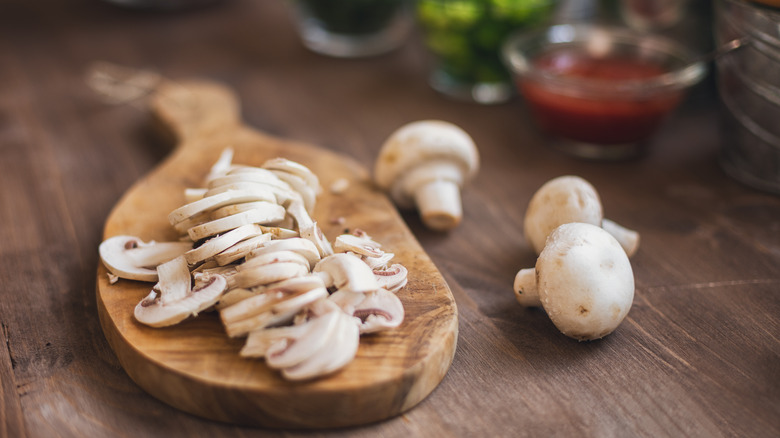
Sliced and whole mushrooms
Mushrooms are one of the best umami boosters for store-bought tomato sauce. For the greatest ease and to avoid cooking your sauce, opt for dried mushrooms. This pantry staple may be more costly than fresh mushrooms, but it's long-lasting and practically effortless to prepare. Simply rehydrate them in warm water for about 30 minutes, then rinse your dried mushrooms to remove any grit. Next, blend them into your pizza sauce until the mixture is smooth, and be amazed by the robust result.

You can also chop fresh mushrooms and saute them in a lightly oiled pan until they're caramelized and reduced in size by about half. You'll know they're done once most of their moisture has evaporated. Once thoroughly cooked, you can mix the mushrooms into your sauce, leaving a bit of texture, or blend them to create an even consistency.

Nearly any type of edible mushroom will work for this tip, but we recommend especially seeking out umami-rich types like porcini, shiitake, and portobello, as well as maitake and morel mushrooms. You'll want to consider your pizza toppings, too. For example, this roast mushroom pizza recipe calls for oyster mushrooms — another variety that can amplify the flavor of your store-bought pizza sauce.


11. Marry pesto with your sauce for added brightness
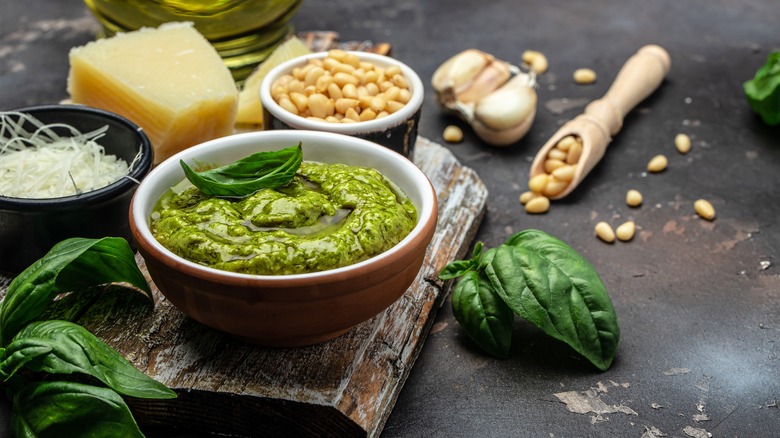
Pesto and pesto ingredients

Pesto is one of the most delicious alternatives for classic pizza sauce, but why not use both? After all, the key components found in classic pesto — basil, garlic, lemon, pine nuts, and parmesan — complement the flavor of tomato-based pizza sauce beautifully. You can easily blitz these ingredients together with olive oil in a food processor, creating a traditional homemade spread. But from-scratch recipes also allow you to play with flavors. Maybe you'd add fresh cilantro, a few tangy capers, or a pinch of chili flakes. Homemade pestos also give you the option to cut costs with the use of spinach instead of basil, or sunflower seeds instead of pine nuts.

Still, you could also buy ready-made pesto to save yourself some time and effort. Grocery stores have plenty of options on both shelves and in the refrigerated section. Some store-bought pestos are even plant-based or nut-free, offering convenience to those with dietary restrictions.

To try this idea, simply fold your pizza sauce and pesto into one flavorful mixture before spooning it onto your crust. Alternatively, you can layer on your pizza sauce, and then drizzle on your preferred amount of pesto for greater variation in flavor. The latter approach is more common; for example, see this cheesy eggplant parmesan pizza recipe. But ultimately, it comes down to personal preference, as either method will similarly upgrade your store-bought sauce.


12. Add balsamic vinegar to balance sweetness
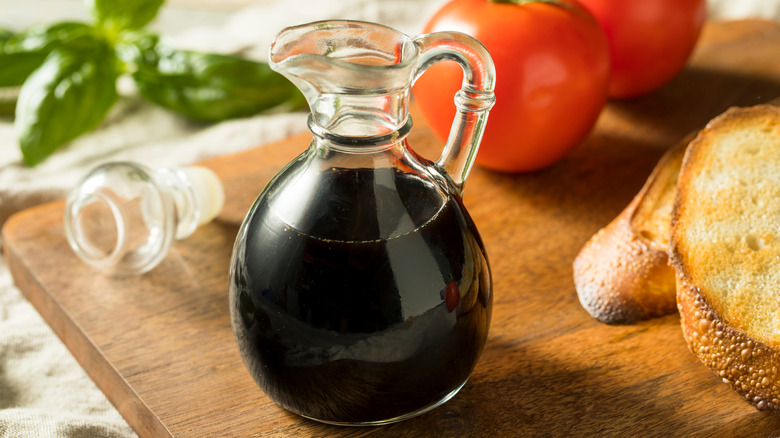
Balsamic vinegar in bottle
There's a secret ingredient that makes pizza sauce restaurant-worthy, and it's likely already in your pantry: balsamic vinegar. Both it and tomatoes are deliciously acidic, but a quality balsamic vinegar will also add depth, complexity, and even a touch of smokiness. It also can fix an overly sweet tomato sauce, a characteristic you'll find in certain store-bought pizza sauce brands.

Though, it's important to remember that balsamic vinegar is quite pungent. Start by adding just a teaspoon to a jar of store-bought pizza sauce, then give it a taste and carefully stir in more, if necessary. You want the balsamic vinegar to act as a complement, not overpower the sauce. When done properly, the flavorful result will go with just about any pizza topping. But if you do accidentally pour in a touch too much, you can counter any sour notes with a pinch of sugar — the scale goes both ways!


13. Infuse a good glug of olive oil for a greater flavor
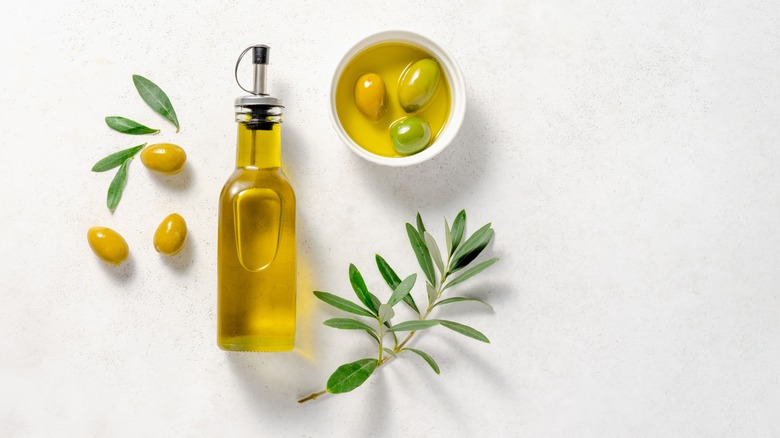
 Bottle of olive oil

Last but certainly not least, there's olive oil. This versatile ingredient is a must-have for any home cook, and it's also a staple during pizza night. Brush your pan with olive oil so that your pie doesn't stick, use it to baste your dough to add more flavor to your pizza crust, and yes, combine it with your store-bought sauce. Start with a thin stream, pouring in 2 or 3 teaspoons of oil, and then stir until it's emulsified.

This dairy-free addition acts similarly to butter, as it will make your pizza sauce glossy and richer in flavor. Standard olive oil will taste more subtle and adapt well to various toppings. But you can also test out flavored oils, whether store-bought or infused using your kitchen scraps. You read that right — cheese rinds and aromatics like garlic, peppers, and herbs can be added to olive oil, and as you've learned, all of those ingredients pair perfectly with store-bought pizza sauce.


https://gscrochetdesigns.blogspot.com. one can see my crochet creations  

https://cancersupportindia.blogspot.com. feel free to view for easy, simple and health tips  

https://kneereplacement-stickclub.blogspot.com. for info on knee replacement

https://GSiyers home remedies.blogspot.com     is the latest addition to my blogs
.

Thursday, September 28, 2023

Spinach ravioli casserole

This herby pesto, luscious Alfredo, gooey cheese and ravioli recipe. It's a simple weeknight dinner recipe your family will love, yet an elegant (and innovative) enough dish to serve on special occasions.

Prep time: 45 minutes; serves 6 to 8 people 
 
 Ingredients 
 
25 oz. frozen ravioli (cheese or meat-stuffed) 
 
8 oz. fresh baby spinach, chopped 1 (16 oz.) can artichoke hearts, drained and diced 
 
2 cups Alfredo cream sauce 
 
1 1/2 cups Italian cheese blend, shredded, divided 
 
1/3 cup low-sodium chicken/ veg broth 
 
 1/4 cup pesto sauce  
 
 
Directions 
 
1. Preheat the oven to 375°F. Meanwhile, in a medium bowl, combine the spinach and the artichokes with the pesto sauce until they are thoroughly coated. 
 
 2. In a separate bowl, combine the Alfredo sauce and the chicken/ vegetarian broth.
 
3. Lightly butter a 9x13-inch baking dish then spread a third of the Alfredo sauce mixture along the bottom of the dish and top with 1/2 of the spinach mixture. 
 
4. Layer half of the ravioli evenly over the spinach and top with another layer of the Alfredo sauce and the spinach sauce. 
 
5. Top with what's left of the ravioli and cover with the remaining Alfredo sauce and Italian cheese. 
 
6. Cover the dish with foil and bake in the oven for 15 minutes. Then uncover and bake for a further 15 to 20 minutes, until the cheese has melted and is bubbly. 
 
7. Remove from the oven and serve hot.

Alfredo sauce is a rich and creamy white sauce made with garlic, butter, heavy cream, and parmesan. This savory cheesy sauce infuses garlic into the butter and can be used with all kinds of pasta or even on top of vegetables.


https://gscrochetdesigns.blogspot.com. one can see my crochet creations  

https://cancersupportindia.blogspot.com. feel free to view for easy, simple and health tips  

https://kneereplacement-stickclub.blogspot.com. for info on knee replacement

https://GSiyers home remedies.blogspot.com     is the latest addition to my blogs.
 

Monday, September 27, 2021

Avocado Grilled Cheese Sandwich

avocado-recipes

Ingredients (makes 1 sandwich) 
 
2 slices bread 
 
2-3 tbsp. herb pesto (recipe below) 
 
 2 slices mozzarella 
 
Handful fresh baby spinach 
 
¼ avocado, sliced 
 
2 tbsp. goat cheese, crumbled 
 
Olive oil (and butter if desired) 
 
For the pesto:  
1 clove garlic 
 
1 anchovy filet (in oil) 
 
½ small shallot, chopped (about 1 tablespoon) 
 
1 tsp. lemon juice 
 
Handful chopped fresh parsley 
 
Handful chopped kale 
 
2-3 tbsp. chopped fresh tarragon 
 
1 tbsp. chopped chives 
 
¼ cup olive oil 
 
Salt and pepper to taste 
 
Directions:  
 
To prepare the pesto:  
1. Pulse the garlic, anchovy, and shallot in a food processor until finely chopped. Add the lemon juice, parsley, kale, tarragon, and chives into the food processor and continue pulsing. 
2. Drizzle olive oil onto the kale and herbs until all ingredients take on the consistency of pesto. Season to taste. 
 
To prepare the sandwich: 
1. Spread about 1 tbsp. of herb pesto onto each slice of bread. On one slice of bread, add one slice of cheese, sliced avocado, crumbled goat's cheese, spinach, and yet another slice of cheese. Top with the second slice of bread. Gently press together. 
 
2. Heat 1 tbsp. of olive oil in a frying pan over medium-low heat and fry until the bread is golden brown. Press on the sandwich lightly then flip and cook until golden brown.

ps- this is not my recipe, saw it, since I had posted about health benefits of avocado in my cancersupport blog, thought of posting the recipes too as I felt it to be simple and healthy too.

https://gscrochetdesigns.blogspot.com. one can see my crochet creations  

https://cancersupportindia.blogspot.com. feel free to view for easy, simple and health tips  
https://kneereplacement-stickclub.blogspot.com. for info on knee replacement

Tuesday, June 8, 2021

Why You Should Start Saving Pasta Water

What if we told you that you have been flushing something many chefs call ‘liquid gold’ down the drain all these years? As you can already tell from the title, we’re talking about pasta cooking water, that cloudy starchy liquid so many of us simply drain away when our pasta is ready. Little did we all know that pasta water is actually the secret ingredient of many chefs and something you can use around the house as well! Here are 5 excellent uses of pasta water that will make you want to save it up every time you cook pasta! 
 
1. Enhance the taste of sauces and stews 
Pasta Water cooking spaghetti
Done cooking the pasta? Instead of draining the water completely, leave a cup or so of the water and add it into your pasta sauce, stirring and incorporating until the sauce becomes thick and rich. The starch content of the cooking water will upgrade your pasta sauce to fine restaurant level, adding that richness and silkiness characteristic of chef-made sauces. 
 
The slight saltiness of the water, in turn, will add extra flavor to the sauce, and the starches will help make the sauce thicker. But don’t stop at just adding the pasta water to pasta sauces like Alfredo or Bolognese, store a cup of pasta water in the fridge and use the same trick to give stews and slow-cooked one-pot meals that extra flavor and richness, too. 
 
2. Soak legumes in pasta water
Pasta Water soaked beans
Pre-soaking dried legumes like beans, peas, lentils, and chickpeas is a must - this allows them to absorb moisture and plump up before cooking, so it is guaranteed to shorten the cooking time of all legumes. While most people cover the legumes with room-temperature water, using cool pasta water instead is a real game-changer. 
 
When soaked overnight in pasta water, the legume will not only soften but will also absorb some of the savory salty flavors as well. Keep in mind, though, that you will likely need less salt to cook legumes pre-soaked in the pasta water.
 
3. Use pasta water to make bread or pizza dough
Pasta Water dough
The basic ingredients of any dough are simple - water, salt, and flour. But if you replace the water with pasta water, chances are you won’t need to add any salt at all, so you’re essentially eliminating one of the steps in the recipe and saving time. 
 
Since pasta water also contains some starches, it will render your dough more stretchy, elastic - and hence more delicious too - which is extremely useful when making sourdough for things like pizza crust and bread.

4. Improve homemade pesto pasta
Pasta Water pesto
What’s the trick to making pesto pasta silky and smooth rather than clumpy and dry? You guessed it, add a splash of warm pasta water, and you’re golden. Do keep in mind that the process of adding in the pasta water is slightly different from other sauces. 
 
Rather than adding the pasta water directly into the sauce and combining until smooth, combine the pasta and the pesto in a bowl first, and then add in about ¼ cup of pasta water bit by bit, simultaneously stirring the pasta. By adding in the warm pasta water and not cooking the pesto, you’ll help the pesto stick to the pasta better while preserving the natural taste of fresh herbs.

5. Use pasta water for watering flowers
This last tip is kind of unconventional, we understand, but we say try it and tell us what you think! It involves letting the pasta water cool down completely and then using it to water your indoor or outdoor plants. The starches and slight saltiness of the water mean that it contains vitamins and minerals beneficial for plants, so you can use it to water flowers and other plants from time to time. 
 
Best of all, it will help you repurpose the same water, which means that you’ll end up saving water in the long run!  
 
Tips for Collecting and Storing Pasta Water
Pasta Water draining pasta
As you already know now, pasta water has quite a few handy uses in and outside of the kitchen. So, by now you must be wondering - what is the best way to save and store pasta water? And most importantly, is all pasta water good to mix into other foods and water your plants? 
 
Let’s begin by answering this last question. The best kind of pasta water to use in both cooking and gardening isn’t too salty and cloudy. This is why we recommend against using pasta water in which you’ve cooked pasta twice, as it will be quite cloudy, which means it’s too high in starches and may be too sticky. 
 
Likewise, pasta water that’s saltier than the soup or sauce you usually make is better discarded, as by using it you’re running the risk of adding too much salt to dishes or hurting your plants. Now, how do you separate pasta from pasta water without flushing the pasta water down the drain? This one’s pretty simple, all you have to do is use tongs or a pasta fork to retrieve the pasta, and you’ll be left with plenty of pasta water at the bottom of the pan. 
 
Now it’s up to you how much of the pasta water you’ll want to use, but make sure to allow it to cool off before pouring it in a jar or bottle to save in the fridge for later. The pasta water will stay good for 2-3 days if stored in the fridge.


https://gscrochetdesigns.blogspot.com. one can see my crochet creations  

https://cancersupportindia.blogspot.com. feel free to view for easy, simple and health tips  
https://kneereplacement-stickclub.blogspot.com. for info on knee replacement


Sunday, March 17, 2019

Some Simple Kitchen Hacks

Some of these hacks you may be aware of, then there are many more useful ones for you all here. Hope this helps to keep your foods safe without getting spoiled and wasting your money.

Don't keep onions and potatoes together
Ever wondered why your potatoes aren't lasting very long? Start by storing them in separate place to your onions. Both potatoes and onions release moisture and gases that will cause the other to spoil faster, so make sure you keep them apart.


Garlic should never be kept in the fridge
The worst way to store garlic is in a sealed container in the fridge, which can cause the bulb to sprout and develop mold. Instead, place your garlic somewhere dry and dark, and keep the bulb together for as long as possible. Once, you've separated the cloves, they won't last longer than a week.


Wrap the crown of a bunch of bananas
Much like avocados, bananas don't have too long a shelf life. To keep them looking fresh, wrap the crown of each bunch with clingfilm. This will slow down the ripening process and they'll last 3-5 days longer.


Don't wash fresh produce before putting it in the fridge
Washing fruit and vegetables before you refrigerate them will produce excess moisture, causing them to spoil faster. If you need to give you food a rinse, make sure you do it just before cooking .


Don't put bread in the fridge
You might think popping your bread in the fridge will help prevent it from drying out, but it'll actually go stale quicker than at room temperature. Cold temperatures cause the starch in bread to recrystallize more quickly than it would in a warmer environment( leading to staleness)- so dust off that bread bin and keep your loaf out of the cold.


Rinse berries in vinegar solution
Berries are delicious fresh, but they don't last for long. To help preserve them, wash them in a mixture that is one part vinegar and 10 parts water, then drain, rinse and pop them in the fridge. Don't worry, the solution will be diluted enough that you won't taste any of the vinegar. The berries should last one to 2 weeks without going moldy!


Preserve cheese
You can also use vinegar to help rescue cheese. All you need to do is dampen a paper towel with the same mixture, wrap it around the cheese and store it in a plastic bag. Again, the solution will be diluted enough that the taste won't be impaired.


Store fresh mozzarella in water
Balls of fresh mozzarella can quickly become dry or turn sour once sliced. Extend their life in the fridge by storing them in water. If you ensure all the cheese is covered, it should last for around 3 days.


Freeze your fruits
If you've got fresh fruit you're not going to eat, bag up small portions and freeze it instead. You can use frozen fruit straight away in smoothies or cook it in crumble, pies and jams. This method will work with everything from bananas and apples to blackcurrant and mangoes. Frozen fruits can be used to make kulfi too !


Store asparagus like a bunch of flowers
After a while, asparagus can start to look a little limp. To keep it fresher for longer, cut the stems off your asparagus, place them in water ( not too much), and then put a plastic bag on top before refrigerating. This will keep them crisper for longer.


The same goes for herbs
Just like asparagus, fresh herbs such as basil and parsley fare best when treated like a bunch of flowers. Cut back the stems, and place them in a jar of fresh water. Ensure they get enough light and are kept away from extremes of temperature.


Don't let rotten apple sit with the rest
We've all heard the phrase " one bad apple spoils the barrel" and it's true. As they ripen, apples, much like fruits, produce ethylene, a ripening agent. When you store fruits together,  the ethylene from each fruit causes the others to ripen faster too. So, if you see an apple looking a little worse , remove it straight away.


Buy an ethylene gas absorber
Add it to your mote, if your fridge is constantly full of fresh fruit and veges, buy yourself an ethylene gas absorber. Costing around 5$ (4 pounds), the absorber sits in the fridge and helps to soak up all of that troublesome ethylene, extending the life of your fruit and veges.


Freeze pesto as ice cubes
Pesto is a great addition to pasta, but can start to spoil very quickly. To keep it fresh, pour the remaining pesto into an ice-cube tray and freeze it, so you've always got some on hand when you need it. Once frozen, you can put in a zip-lock bag in the freezer.


Freeze veges to make smoothie packs
It's not just frozen fruit that works well in a smoothie. Leafy veges such as kale and spinach freeze just fine and can easily be blitzed up to make a juice. If you're a fan of smoothies, this hack might just transform your mornings.


Put a paper towel on top of your salad
Lettuce is great on the 1st day, but after you've opened a bag of salad, you'll see a quick decline. Placing a paper towel on top of the leaves will soak up all the excess and prevent them from wilting as quickly.


Invest in a salad spinner
Alternatively, invest in a salad spinner and spin your leaves to remove all the  moisture before storing. This will help them to last longer without turning into one soggy mess.


Dry your herbs in the microwave
If you're struggling to keep your herbs alive, try popping them in the microwave to dry them out. Place them in between 2 paper towels and zap them for 1 minute, followed by a few 20 second bursts until they're completely dry.


Cut the tops off your carrots
Carrots might look pretty with their green stems, but those leafy tops are actually stealing nutrients from the rest of the carrot. Chop them off to keep your carrots for longer.


Freeze fresh herbs or chili on oil
Another handy hack for preserving fresh herbs and chili is to chop them up and pop them into ice cube trays with olive oil or melted butter. Harder herbs( rosemary, thyme etc) can also withstand being plucked from the stem and kept in jars in the freezer.


Freeze fresh pasta for quick meals
Cooked pasta can turn to mush (unless it's frozen after being cooked al dente). But tightly wrapped fresh pasta freezes well for up to 2 months, so it's certainly worth keeping some for nights when you've a little less time.


Wrap veges in aluminum foil
Wrapping veges like cucumber, lettuce and celery in aluminum foil helps to allow the ethylene gas to escape, while still holding enough moisture for the food to stay fresh. Storing them this way should keep them fresh for at least a week longer.


Freeze your milk
Freezing fresh milk is a great hack if you're going away. Skimmed or semi-skimmed milk can last for up to a month in the freezer. However, fat requires an extremely low temperature to freeze ( lower than the average freezer) so this won't work as well with whole milk.


Pop some marshmallows in your brown sugar
If kept for a while, brown sugar can become dry, clumpy and hard- but there are a couple of quick fixes.Firstly, you'ld transfer the sugar from its bag to an airtight container ( this will keep it from losing too much moisture). Next pop a couple of marshmallows into it. It may seem strange, but the moisture from the marshmallows will help keep your sugar soft. Bread has a similar effect but can go moldy.


Make your yogurts into lollies
Yogurts have a short shelf life, but they'll last monger of they're frozen into delicious lollies. Simply take yogurt pot, stir the contents ( mixing in some fresh berries if you fancy), pop in a lolly stick or kulfi mould and freeze upright.


Store your peanut jar upside down
The oils in natural peanut butter separate with time. To help keep your spread to the right consistency for longer, store it upside down. This helps the oils distribute evenly, so you'll not have to re-mix it every time you fancy peanut butter on toast.


Transfer flour to an airtight container
Leave your flour in the bag it came in and you're shortening its lifespan considerably. You're best off moving it to an airtight glass or plastic container, where it will will retain its natural moisture. Most people don't think of putting flour in the freezer either, but it actually freezes perfectly well. If you're not a regular baker, keep it here until you're ready to use it ( just make sure you bring it back up to room temperature before you do).


Fashion an onion holder out of tights
A great way to store onions for a long period of time is in a clean pair of tights,as they let the correct amount of air and moisture in. Place an onion in the foot of the tights, then tie a knot immediately after it- repeat this until the tights are full. You can then hang your makeshift onion holder in the kitchen in a cool, dry place. Stored in this way, onions can last up to 6 months.


Transfer your coffee to an opaque container
Whether your coffee is whole or ground, light is its ultimate enemy. It can impair the color and taste, and cause it to spoil faster. So, while it might be tempting to store your coffee in a jar that it comes in, or any clean jar, coffee is best kept in an opaque container.


Use leftover orange juice for marinades
If you're left with some orange juice at the end of the carton, it has no need to go waste. While orange juice doesn't last long opened, it can be used as a base for homemade marinades. We recommend adding some soy sauce, honey and seasoning to the orange juice, and then marinating your favourite dish in it.


Cook your meals in bigger batches
If there's no way you'll make it through all the fresh produce in your fridge, batch cooking could be the way to go. Just double ( or triple) the amounts in your recipe and dole out the extra helpings into an airtight container. Choose dishes that freeze well ( think chili, lasagna or curries) and look forward to feeling suitably smug when dinner time rolls around.


Spray leftover guacamole with vegetable oil
There's nothing better than guacamole with your tortilla chips, but there's little chance of it lasting the evening. According to experts, the trick is to spray leftover guacamole with a little non-stick oil. This creates an oxygen barrier around the mashed avocado and stops oxidation from occurring ( which makes it turn brown). So get spraying, then wrap it in some clingfilm and store it in the fridge.

Here, in one of my earlier posts, I've also mentioned how to keep your left over avocado without spoiling or turning brown by putting lime juice all over the cut edge !

those interested in cancer & health related topics are free to see my blog-
http://cancersupportindia.blogspot.com/

for crochet designs, my blog, those who like a particular design are free to mail me
http://gscrochet designs.blogspot.com

For info. about knee replacement, be free to view my blog-
http://knee replacement-stick club.blogspot.com