Showing posts with label adulterated. Show all posts

Tuesday, March 3, 2026

Is Your Jaggery Pure? FSSAI Shares A Simple Home Test To Detect Adulteration

 Is Your Jaggery Pure? FSSAI Shares A Simple Home Test To Detect Adulteration 


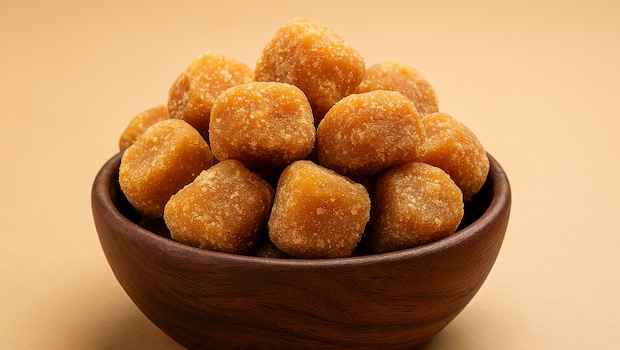
Jaggery remains a widely used ingredient in Indian households throughout the year. From sweetening traditional desserts to enriching ayurvedic drinks, this natural sweetener is valued for its earthy flavour and health benefits. However, its popularity has also led to growing concerns about adulteration. Reports suggest that jaggery is often mixed with substances like sugar, chalk powder or even baking soda, reducing its purity and compromising its quality. To help consumers stay vigilant, the Food Safety and Standards Authority of India (FSSAI) has shared a simple home test to detect adulteration.

Why Jaggery Gets Adulterated

Jaggery is commonly adulterated because of its high market value and seasonal demand. Unscrupulous manufacturers may mix cheaper substances to improve texture, colour or weight. One such adulterant is baking soda (sodium bicarbonate), which enhances the appearance of jaggery blocks and makes them look smoother and more appealing. While the addition may not always be obvious, it affects the authenticity and natural goodness of the product.

The Simple FSSAI Test To Detect Baking Soda In Jaggery

In a video posted on X (formerly Twitter), FSSAI demonstrated an easy test that anyone can perform at home to detect adulteration.

Here's how to do it

  1. Take 1/4 teaspoon of crushed jaggery in a test tube or small glass.
  2. Add 3 ml of hydrochloric acid (HCL) to the sample.
  3. Observe the reaction.

What the results mean

No bubbles formed -> The jaggery is pure.
Bubble formation observed -> The jaggery is adulterated.

Why do bubbles form?

When jaggery contains sodium bicarbonate, it reacts with hydrochloric acid to release carbon dioxide gas, creating bubbles. This fizzing is a clear indicator that the jaggery has been tampered with. FSSAI also shared a reminder along with the video: "Festivities call for a little extra care. If you're using jaggery this season, watch this video to learn a simple test to find out whether it is adulterated or not. Stay aware & stay informed. #NoToAdulteration".

Adulteration And Your Safety

While baking soda may not seem dangerous in small amounts, it alters the natural composition of jaggery and can affect digestion and nutrient absorption. Consuming adulterated jaggery over time can also negate the health benefits that pure, traditionally made jaggery provides, such as aiding digestion, boosting immunity and improving energy levels.

What Does FSSAI Recommend?

FSSAI advises that while home tests can help identify basic forms of adulteration, they are not a substitute for laboratory testing. Only certified labs can conclusively determine the purity of jaggery and detect multiple adulterants at once. Nevertheless, simple checks like this one can serve as a useful first step for consumers to stay vigilant and make better purchasing choices.

How To Avoid Buying Adulterated Jaggery

Here are some quick tips to keep in mind:

  • Check the FSSAI licence number before buying packaged jaggery.
  • Avoid overly bright or shiny jaggery blocks, as these may indicate the use of artificial colorants or additives.
  • Choose trusted brands or reliable vendors known for quality.
  • Opt for darker jaggery which is often less processed.
  • Avoid unusually cheap jaggery, as low prices can signal adulteration.

What To Do If You Suspect Adulteration

If you come across suspicious jaggery, you can report it directly to:

  • FSSAI's online complaint portal
  • FSSAI mobile app
  • Local food safety department

Reporting such cases helps authorities take strict action and maintain food safety standards for all consumers.

With simple checks and mindful choices, you can make sure your jaggery is as authentic as it should be.

 

https://gscrochetdesigns.blogspot.com. one can see my crochet creations  

https://kneereplacement-stickclub.blogspot.com. for info on knee replacement

https://cancersupportindia.blogspot.com  for info on cancer and health related topics

https://GSiyers home remedies.blogspot.com   is the latest addition to my blogs

Sunday, August 29, 2021

Jaggery/Gur: How to Check Its Purity and Quality?Jaggery/Gur: How to Check Its Purity and Quality?

Jaggery/Gur: How to Check Its Purity and Quality?

Jaggery Benefits: These days, finding the right and authentic product has become very difficult. It takes a village to make sure that the product is pure and good. And so is finding the right and good quality jaggery or gur. Jaggery is a traditionally unrefined form of sugar and is well known for its health benefits: helps excellent digestion, is a rich source of iron and Vitamin C, helps in the circulation of blood and a lot more. Jaggery also helps in keeping our bodies warm during extremely chill days. But how do we know that what gur we are consuming is authentic or is not mixed?

Adulteration has become a child’s play. It is now easy to cheat and fool consumers by selling a lower quality product at a sky-rocketing price. Not only this, but adulteration has also led to many health issues and unhygienic conditions. But we have got you covered! 

Here’s an easy way to identify authentic jaggery and ways to check the purity:

  • What Exactly is Jaggery or Gur?

Jaggery is made out of sugarcane by boiling raw and concentrated sugarcane juice. It is used as a sweetener. Sugarcane juice is boiled for a few hours, water is added to the moulds, and then, gives time to cool down and harden. This is also a healthy alternative to white sugar as gur has a superior nutritional profile. What not to forget is, the calories content of both gur and white sugar is the same. Jaggery is made through the boiling of sugarcane whereas white sugar goes through several processes and one of them is crystallisation before it is packed for consumption

  • What is the best season to consume Jaggery?

Jaggery produces a lot of heat, hence health experts have advised and recommended consuming jaggery only during winter. During heated seasons, problems of stomach problems can arise. Hence, it is better to have minimal consumption of jaggery during warm seasons.

  • How to check the purity of jaggery?

“Generally a good quality jaggery should have the right colour, good flavour and hardness,” says Chef Reetu Uday Kugaji, the Culinary Expert and Food Blogger. It is very important to check for purity whenever you go out to buy jaggery.

  • A few of Chef Reetu’s suggestions are here:
  1.  Taste a piece of jaggery. If it tastes slightly salty, then it indicates that a high concentration of mineral salts is involved. The easy way out is, the older the jaggery gets, the saltier it becomes.
  2. If you taste any sort of bitterness, it means that jaggery has gone through the caramelisation during the boiling process.
  3. If you find crystals, it means that jaggery has gone through other processes of sweetness too. Look out!
  4. The Colour of the jaggery is dark brown. The colour also plays a role in determining purity. If the gur appears in yellowish, it may have undergone chemical treatment.
  5. It is always recommended to buy hard jaggery, it means that there are no additives added during the process of boiling the sugarcane juice.

Make sure to keep these points in mind before you go out for jaggery shopping!

https://gscrochetdesigns.blogspot.com. one can see my crochet creations  

https://cancersupportindia.blogspot.com. feel free to view for easy, simple and health tips  
https://kneereplacement-stickclub.blogspot.com. for info on knee replacement


How to Differentiate Iodised Salt With Adulterated Common Salt?

It is easier to pass off adulterated food items these days. Salt is one of the most important kitchen ingredients. It is needed in every food prepared for getting the taste and flavour. Experts are recommending iodised salt as it helps in curing and fighting iodine deficiency disorder (IDD). The presence of iodine ensures growth of the body, maintaining body temperature and the development of the brain.

The Government of India has created a program to control iodine deficiency under National Iodine Deficiency Disorders. This is an attempt to iodise all edible salts in the country. According to Food Adulteration Act, iodised salt should not be less than 30 ppm and the consumer level should be above 15ppm. Even though these parameters are set, not many brands follow them. 

Adulterated food item consumption is injurious to health. They can lead to chronic health diseases too. However, you can detect if your iodised salt is adulterated or not with a simple test.

Recently, the Food Safety and Standards Authority of India (FSSAI) shared a video on Twitter, carrying out a simple test to identify between an iodised and adulterated salt.

Cut a potato into two pieces.
• Apply salt on both the cut surfaces and wait for a minute.
• Add a drop of lemon to both samples.
• It will be a double fortified salt if the potato does not change its colour.
• If the colour changes to blue, the iodised salt is adulterated.

https://gscrochetdesigns.blogspot.com. one can see my crochet creations  

https://cancersupportindia.blogspot.com. feel free to view for easy, simple and health tips  
https://kneereplacement-stickclub.blogspot.com. for info on knee replacement


Monday, October 9, 2017

HOW TO TEST THE PURITY OF TURMERIC

Turmeric is such a common and powerful ingredient with so many medicinal properties, that we use it blindly thinking that all that is sold with good brand names should be pure, wish it was so ! Very often scrupulous traders, adulterate most of the products to earn that extra money at the cost of our health. So, for at least now, to test the purity of turmeric, few simple tests will tell you and it can be done by you in your own kitchen !

Turmeric often tends to have unwanted additives such as chalk powder or starch or sawdust and sometimes, it is made to look appealing with the help of synthetic colors. Adulteration in spices is a common situation in many countries and therefore, it pays to ensure that the turmeric you buy and eat is free from Metanil yellow or lead chromate which are some of the toxic chemicals.
Simple tricks that can help you check- 

Chalk powder: You can take a pinch of turmeric powder in a glass flask and add a few drops of water to it. Now add a few drops of hydrochloric acid, and if you see it to give off bubbles, it is indicative of the presence of yellow soap powder or chalk powder or both.   

Metanil yellow: A few drops of hydrochloric acid in a pinch of turmeric will also help you understand whether it has Metanil yellow. Add some water and shake the mixture as vigorously as you can. If you see the mixture to turn pink, then rest assured that it contains this unwanted additive. 

Adulterated turmeric root: Sometimes, we need turmeric root instead of the powder, and you will be surprised to know that it may also be coated with some unwanted substance. To test for it, you will have to place turmeric root on a piece of paper and pour some water on it. If you see it leaving color, it can be impure and polished to give the desired look. 

Simple water test: This is one of the easiest ways to find out if there is any adulteration. You will have to take some warm water in a glass and pour in little quantity of turmeric on the surface. Do not stir or mix it and leave it for around 20 to 30 minutes. If all the turmeric powder settles at the bottom of the glass and the water is crystal clear, then the turmeric is pure. If you find the water to turn cloudy, then change to another brand with the hope that it is pure, again test it !

those interested in cancer and health related topics are free to see my blog-

http://cancersupportindia.blogspot.com/

 for crochet designs, my blog, those who like a particular design are free to mail me
http://gscrochet  Creations.blogspot.com
For info. about knee replacement, be free to view my blog-
http://knee replacement-stickclub.blogspot.com