Showing posts with label gluten free. Show all posts

Monday, February 9, 2026

Cauliflower Crusted Pizza


Cauliflower is an excellent alternative to many unhealthy carbs. You can prepare your delicious pizza base easily using cauliflower. This is a low-carb and low-calorie option that can also be suited to the pizza cravings of vegans. 

Serves: 4-6 servings

Ingredients: 

1 small cauliflower head

1 egg

1 cup mozzarella cheese

Salt and pepper to taste

½ cup pizza seasoning 

½ cup toppings of choice

½ tsp olive oil

½ tsp mixed herbs

3-4 fresh basil leaves


Preparations

Preheat the oven to 300’C. Grate the cauliflower to get a fine powdery texture. Flash-boil the cauliflower in salted boiling water for not more than 1 minute. Strain the cauliflower and drain out all extra water. 

Transfer the cauliflower to a mixing bowl, and add an egg and half the quantity of mozzarella cheese to it. Season it with salt and pepper. Take a baking dish and line it with butter paper, brush the paper with some olive oil.

Now using a spatula or your fingers, flatten some of the cauliflower mixture on the paper. Shape it like a pizza. Add the baking tray to the oven and bake the cauliflower crust for 15 minutes or until it forms a crust-like texture. 

Remove from the oven and add the pizza sauce, toppings of choice and the remaining mozzarella cheese. Put the tray into the oven again and bake for another 8-10 minutes or until the cheese melts. 

Remove from the oven and tear some fresh basil leaves on it and sprinkle some mixed herbs. Cut into 4-6 pieces and enjoy hot. 


https://gscrochetdesigns.blogspot.com. one can see my crochet creations  

https://kneereplacement-stickclub.blogspot.com. for info on knee replacement

https://cancersupportindia.blogspot.com  for info on cancer and health related topics

https://GSiyers home remedies.blogspot.com   is the latest addition to my blogs


Thursday, October 23, 2025

Rajgira Thalipeeth


Ingredients

Boil potatoes, peel, mash and keep them aside.

In bowl, add singhare ka atta, rajgire ka atta, rock salt, black pepper powder, red chili powder, finely chopped green chilies, and add mashed boiled potatoes.
Mix all the ingredients well and then knead a soft dough.
Heat a tawa and add a little oil/ghee and take a small ball from the kneaded dough.
Spread the ball in hands to make a small roti.
With hands just spread evenly and make a roti and place it on the tawa.
Shallow fry it with ghee.
Serve with boiled fried potatoes and curd, pickle / tomato chutney.
 
TIP- you can spread them on a greased banana leaf / plastic sheet, then carefully place on the hot tawa to cook. 
 

https://gscrochetdesigns.blogspot.com. one can see my crochet creations  

https://kneereplacement-stickclub.blogspot.com. for info on knee replacement

https://cancersupportindia.blogspot.com  for info on cancer and health related topics

https://GSiyers home remedies.blogspot.com   is the latest addition to my blogs


Monday, October 13, 2025

Oats gluten free chila

 INGREDIENTS

oats 1 cup
besan 1/2 cup
water  1/2 cup
onion chopped 1 big
green chilies chopped to taste
turmeric pdr 1/4 tsp
red chili pdr to taste
hing little
jeera pdr 1/2 tsp
salt to taste
oil for cooking
carrot grated 2 tbsp
coriander leaves 2 tbsp
 
Preparations 

grind oats with water, add besan and other ingredients, adjust the consistency for chila,
heat a tawa, grease with oil, make thin chilas, cook well on both sides, serve hot with chutney and pickle of your choice.

Tip- You may add some chopped spinach, grated carrots, grated cabbage, or any vegetable of your choice.


https://gscrochetdesigns.blogspot.com. one can see my crochet creations  

https://kneereplacement-stickclub.blogspot.com. for info on knee replacement

https://cancersupportindia.blogspot.com  for info on cancer and health related topics

https://GSiyers home remedies.blogspot.com   is the latest addition to my blogs


Sunday, October 5, 2025

Carrot Pancakes Served With Salted Yogurt


This is a great gluten-free dish to try if you’re looking for something different to make in the kitchen. 
 
We start by mixing four thoroughly beaten eggs with 1 pound of peeled and grated carrots, a quarter cup of chickpea flour and a third of a cup of chopped cilantro, in a big bowl. Add a pinch of kosher salt and some pepper to season your rough mixture. 
 
Take a large cast-iron skillet (preferably, if you have one) and add 2 tablespoons of olive oil and heat the skillet over medium flame. 
 
Put two well-sized scoops of your carrot mixture individually on the skillet and flatten them to about half the existing thickness, or whatever thickness is your preference. From that point on the process is the same as making a normal pancake. 
 
Keep rotating the skillet to ensure all sides of your pancakes are heated evenly until they are a nice golden brown. Then you can remove your pancakes from the skillet and drain them of any excess oil using paper towels. 
 
While your pancakes are browning up, you can prepare the yogurt. Just add a cup of chopped spicy greens like watercress, one tablespoon of fresh lemon juice and a little bit of salt and pepper to one cup of plain whole yogurt, and stir.


https://gscrochetdesigns.blogspot.com. one can see my crochet creations  

https://kneereplacement-stickclub.blogspot.com. for info on knee replacement

https://cancersupportindia.blogspot.com  for info on cancer and health related topics

https://GSiyers home remedies.blogspot.com   is the latest addition to my blogs


Sunday, September 21, 2025

Margarines based spread- health benefits, deficits, allergen and risks

Nutritional Profile: Margarine and vegetable oil spreads were created as alternatives to butter. They are made from plant oils and water, usually with emulsifiers and sometimes fortified vitamins. A classic soft margarine spread like I Can’t Believe It’s Not Butter! (Original) contains about 60 calories per 1 Tbsp (14 g), with 6 g of total fat and about 2 g saturated fat. This is roughly half the saturated fat of an equivalent amount of butter (butter has ~7 g sat fat per Tbsp). Per 2 Tbsp serving, a margarine spread would have ~120 calories, ~12 g fat, ~4 g saturated. Importantly, margarine spreads have 0 g trans fat in modern formulations (older margarines contained trans fats, but these have been eliminated in most countries). The fats in margarine are primarily unsaturated (polyunsaturated and monounsaturated), coming from oils like soybean, canola, or sunflower. For example, a tablespoon of a soy-oil-based spread might contain ~3 g polyunsaturated and ~1.5 g monounsaturated fats. 
 
Many margarines are fortified with vitamins A and D to levels comparable to butter (since butter naturally contains those from dairy). Some special margarine spreads also contain added Omega-3 fatty acids (ALA)—for instance, a serving of I Can’t Believe It’s Not Butter contains about 375 mg of Omega-3 ALA. Margarine typically has a bit of sodium (if salted) but less than salted butter; e.g., ~90 mg sodium per Tbsp. Overall, nutritionally, margarine is lower in calories and saturated fat than butter and free of cholesterol, but it is still a concentrated source of fats. 
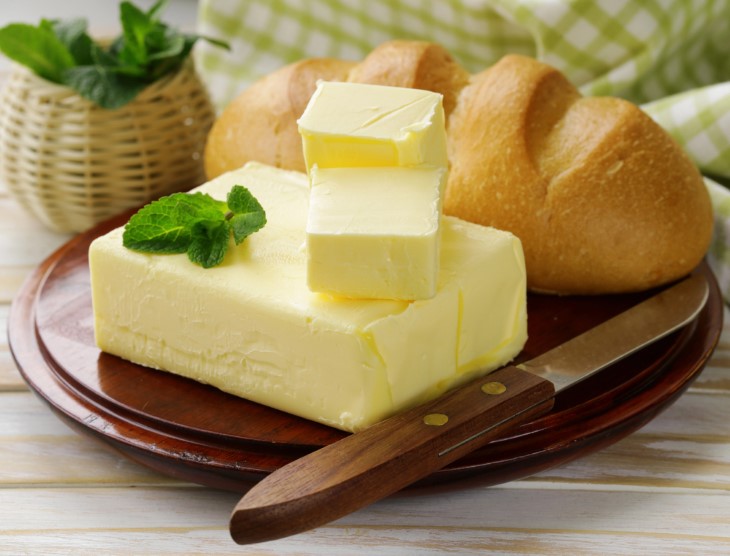
 
Margarine-Based Spread  
Ingredients and Allergens: The primary ingredients of a margarine spread are usually vegetable oils (e.g., soybean, canola, palm, or palm kernel for solidity), water, and often soy lecithin or other emulsifiers, plus salt and natural or artificial flavors. I Can’t Believe It’s Not Butter! Original, for example, contains soybean oil, palm kernel and palm oil, water, salt, soy lecithin, and flavorings. Potential allergens include soy (from soybean oil and lecithin). Highly refined soybean oil is often not considered a major allergen (the protein is removed), but people with severe soy allergies might still exercise caution or choose soy-free spreads. Some margarine brands also include a small amount of dairy (like a touch of buttermilk or whey for flavor)—in our example brand, the original spread is actually dairy-free, but it’s always good to check labels. There are dedicated vegan margarines (in fact, many soft spreads are inherently vegan since they’re made from plant oils and contain no milk). If the product is labeled “vegan spread,” it contains no dairy. 
 
Margarine is naturally gluten-free (no wheat/barley/rye in oils), so it suits a gluten-free diet. It is obviously appropriate for those who cannot have dairy (lactose intolerant or allergic), as long as no milk derivatives are added—and many brands explicitly state “0% dairy” or have a vegan certification for clarity. For diets: margarine is ideal for vegan and vegetarian diets that want a butter-like experience. It is also keto-friendly, as it contains essentially no carbs (pure fat and water). In fact, margarine or coconut oil is often used by people on ketogenic diets as a spread to add fats. One caveat: some keto/paleo enthusiasts prefer butter or ghee over margarine because they favor whole foods and because some margarine uses soybean oil, which is high in Omega-6; but strictly speaking, margarine’s macros fit keto perfectly. 
 
Health Benefits: The primary health advantage of margarine spreads over something like butter or cream-based spreads is the fat profile. Because margarine is made from plant oils, it is much higher in unsaturated fats and much lower in saturated fat. Replacing saturated fats with unsaturated fats in the diet is known to help lower LDL (“bad”) cholesterol levels. Most standard margarines have at least 50% less saturated fat than butter, and swapping butter for a polyunsaturated-rich spread can reduce heart risk factors. Soft margarines also contain no dietary cholesterol since they’re plant-based (whereas butter and cream cheese do contain cholesterol). Many margarines contain Omega-6 polyunsaturates (like linoleic acid), which can improve cholesterol when consumed in moderation instead of saturates. Some are enriched with Omega-3 (ALA), which is beneficial for heart health and inflammation (though ALA from plants is not as potent as fish Omega-3s, it’s still positive). Certain margarine products are fortified with plant sterols/stanols, which actively help reduce cholesterol absorption—these are specialty “heart-health” spreads. Margarine spreads also typically have fewer calories per serving than butter because they often include water and air (especially the whipped or light versions). For example, 1 Tbsp of regular butter equals 100 kcal, while 1 Tbsp of a light margarine might be 50–60 kcal. For someone watching weight, this reduction can help if they use spreads regularly. 
 
Additionally, margarine is free of lactose and dairy proteins, so it’s a benefit for lactose-intolerant or dairy-allergic individuals who need a safe alternative to butter. From a culinary perspective, soft tub margarines are easily spreadable right from the fridge, which can help encourage using a thin, controlled amount (butter is hard, and people might put a larger chunk when softened—an arguable advantage). Some newer margarine blends include healthy oils like olive oil or avocado oil, adding minor benefits of those oils (antioxidants, etc.). In summary, the big health benefit is that using margarine in place of butter can lower saturated fat intake, which can help improve cholesterol levels and reduce heart disease risk—a key reason margarine became popular in heart-health recommendations. 
 
 
Health Deficits & Risks: Historically, the biggest health issue with margarine was trans fats. Older formulations (stick margarines and some tubs pre-2000s) used partially hydrogenated oils, which introduced trans fatty acids that are very harmful (raising LDL, lowering HDL, increasing cardiovascular risk more than saturated fat). However, today’s margarines are largely trans-fat-free. Assuming we are dealing with modern trans-free margarine, the remaining concerns are processed ingredients: margarine is a processed food with emulsifiers, preservatives, and artificial flavor in some cases. Some people prefer more “natural” options; while these additives are generally recognized as safe, very purist eaters might avoid margarine for being highly processed. Saturated fat content is another issue—although much lower than butter, margarine isn’t entirely free of saturated fat. Many contain palm or palm kernel oil to stay solid at room temperature. Our example spread has 2 g sat fat per Tbsp; if someone uses a lot thinking it’s completely healthy, they could still rack up saturates (e.g., 3 Tbsp would be ~6 g sat fat, similar to butter). So moderation is still needed; it’s not a license to eat unlimited amounts. Omega-6/inflammation balance is a concern—many margarine spreads are high in Omega-6 polyunsaturated fats (like from soybean or sunflower oil). If the diet is already very rich in Omega-6 and poor in Omega-3, some worry this could promote inflammation. 
 
However, this is a more nuanced point—the average person should focus on reducing saturates and trans fats and getting some Omega-3s rather than demonizing Omega-6. But it is true that a diet extremely heavy in Omega-6 (and low in Omega-3) might have pro-inflammatory effects. Using a variety of fats (and including Omega-3 sources) can mitigate this. Added salt is another factor—some margarine spreads contain added salt for flavor and are usually moderately salty. If someone slathers margarine on everything, the sodium could add up and impact blood pressure in sensitive individuals. Butter itself also has salt unless you choose unsalted, so this isn’t unique to margarine—but it’s something to note for overall intake. Flavoring and stability agents are used—margarine achieves a butter-like flavor through additives, which may include diacetyl or similar compounds. 
 
In large industrial exposure, diacetyl was linked to lung issues for factory workers (as in microwave popcorn factories), but at the consumer level, the risk is negligible. Nonetheless, some prefer to avoid such artificial flavor chemicals. Nutrient density is limited—aside from fortified vitamins (A and D) and essential fatty acids, margarine doesn’t offer protein, fiber, or significant micronutrients. It’s basically a source of fat and calories, so over-reliance on it could displace more nutrient-dense foods. But this is true for any isolated fat source (butter, oils, etc.). 
 
Daily Use and Long-Term: Using a margarine-based spread daily in place of butter is generally considered a heart-healthier choice in the long run. Long-term studies and dietary guidelines support the idea that swapping butter for a vegetable oil spread can help reduce the risk of cardiovascular disease, as it lowers intake of saturated fat and eliminates trans fat. If one consumes moderate amounts daily (say a few teaspoons on whole-grain toast or for cooking), the long-term effect could be slightly improved cholesterol profiles and possibly a lower incidence of heart attacks. That said, not all margarines are equal—it’s important to choose soft, tub margarines with no trans fats (most brands now fit this criterion). Avoid old-style stick margarines that might still have hydrogenated oils. 
 
The American Heart Association suggests soft margarines as a better choice than butter for those watching heart health. Over decades, if someone uses a heavy hand with any fat (margarine or not), they could gain weight; so portion control matters for long-term weight management. But because margarine is often lighter per volume and spreadable, people may naturally use a bit less than they would of hard butter. Another long-term consideration is sustainability and additives—some individuals worry about palm oil in margarine (environmental impact, saturated fat content) and opt for palm-free spreads. There are palm-free margarines available that use fully hydrogenated oils or other structuring fats without trans fat. From a dietary inclusion perspective, margarine fits well into vegan diets consistently, which is a long-term benefit for those populations (a source of vitamins A & D if fortified, where they might otherwise miss D from dairy). 
 
Summing up, long-term health tends to favor margarine over butter for cardiovascular outcomes, as long as one chooses modern formulations. It’s wise to check the nutrition label: pick a spread that is lowest in saturated fat and with no hydrogenated oils. Also, consider one with added Omega-3 or phytosterols for an extra health boost. If you use margarine daily, ensure your overall diet includes sources of Omega-3 (flaxseed, walnuts, fish, or supplements) to balance the high Omega-6 intake. In conclusion, a margarine-based spread can be a suitable daily choice for those needing a butter substitute—it’s vegan, can be part of a heart-healthy diet, and is friendly for keto and gluten-free needs—but choose a high-quality product and use moderate amounts, as it is still a calorie-dense fat source. For heart health, remember that neither butter nor margarine should be eaten in excess; but swapping butter for a soft margarine can help lower “bad” cholesterol and reduce heart disease risk.


https://gscrochetdesigns.blogspot.com. one can see my crochet creations  

https://kneereplacement-stickclub.blogspot.com. for info on knee replacement

https://cancersupportindia.blogspot.com  for info on cancer and health related topics

https://GSiyers home remedies.blogspot.com   is the latest addition to my blogs


Thursday, May 22, 2025

Cauliflower Crust Pizza- Healthy, gluten free Pizza

 Cauliflower Crust Pizza

Ingredients :
 
Grated cauliflower - 2 1/2 cups (about 1/2 large head) 
Egg - 1 (lightly beaten) 
Mozzarella - 1 cup (shredded) 
Salt and Pepper - to taste 
Cooking spray - as needed 
Parmesan cheese - 2 tbsp. (grated)


Preparations
Preheat oven to 430°F/220°C and line a rimmed baking sheet with parchment paper. 
 
Using a box grater, grate the cauliflower until you have 2 cups of cauliflower crumbles. 
 
Put them in a large bowl and microwave for 7-8 minutes, until soft. Allow to cool. 
Mix the rest of the crust ingredients in the bowl. 
 
Spread the mixture - roughly in a 10-inch circle - on the pizza pan, spray with non-stick spray and bake for 10-15 minutes, until golden. 
 
Top with your favorite ingredients, including tomato sauce, mozzarella, and basil, and bake for another 10 minutes before serving. 
 
Tip: Top this pizza with any pizza toppings of your choice. 


https://gscrochetdesigns.blogspot.com. one can see my crochet creations  

https://kneereplacement-stickclub.blogspot.com. for info on knee replacement

https://cancersupportindia.blogspot.com  for info on cancer and health related topics

https://GSiyers home remedies.blogspot.com   is the latest addition to my blogs


Saturday, May 3, 2025

High protein healthy Pizza- No oven, Tawa Pizza

 Ingredients

Moong Dal - 1 1/2 Cup

Water as required

Salt to taste

Eno Fruit Salt  1 Tsp

Olive Oil

Pizza Sauce

Cheese

Topping of Choice- sweet corn, capsicum, olives, onion, mushroom

 Moong Dal Pizza

Preparations

Wash and soak moong dal in enough water for 3-4 hrs.

Drain and rinse under running water. Keep aside in a strainer.

Grind soaked moong dal into a fine paste. Add water if required. The consistency should be thick yet flowing.

Let it ferment overnight if you have time in hand.

Else add Eno fruit salt just before preparing to make it instantly.

Making Pizza –

In a heavy bottom pan or skillet heat olive oil.

Pour moong dal batter as per desired thickness. Spread evenly.

Cover and cook till done from one side and then turn over.

Spread pizza sauce on cooked side. Add vegetables of choice and grated cheese.

Pour oil from the sides to cook pizza from another side.

Cover and cook on a low flame till cheese is melted and base is crisp.

Sprinkle chili flakes and mixed herbs.

Serve hot, cutting into wedges.


https://gscrochetdesigns.blogspot.com. one can see my crochet creations  

https://kneereplacement-stickclub.blogspot.com. for info on knee replacement

https://cancersupportindia.blogspot.com  for info on cancer and health related topics

https://GSiyers home remedies.blogspot.com   is the latest addition to my blogs


Friday, May 2, 2025

Sorghum Halwa- Gluten-free, millet pudding

 Ingredients

1 Cup Jowar flour

3/4 Cup Jaggery powder

2 Cups Water

3 Tbsp Ghee

3 Tbsp Cashews

3 Tbsp Raisins

1/2 tsp Cardamom powder


Preparations

Heat 1 Tbsp Ghee in a heavy bottomed pan and fry cashews and raisins till cashews turn golden brown.

Remove the cashews and raisins in a plate. In the same pan add 2 Tbsp more Ghee and add jowar flour. Start roasting it on a medium flame.  

Roast stirring continually till the colour changes to a darker shade and an aroma starts to come. Usually takes about 8 to 10 mins. 

Now boil 2 cups water with 3/4 Cup jaggery powder in it. When the water boils, Jaggery will melt. Strain the jaggery to remove impurities.

Add this hot jaggery water to this roasted jowar flour, little by little, mixing well with spatula.

Keep mixing well with spatula, removing lumps if any by pressing it using the spatula. It will take another 8 to 10 mins of mixing well using the spatula till the jowar flour absorbs all the water and the mixture starts leaving the sides of the pan.

In this stage, add the roasted cashews and raisins, (reserving a few for garnishing) and cardamom powder. 

Mix well.  Serve it warm by sprinkling the remaining nuts and raisins on top.

Enjoy the gluten free, healthy dessert. Jaggery has iron, millets are rich vitamins and minerals like B vitamins, magnesium, potassium, phosphorus, iron, and zinc. It's also an excellent source of fiber, antioxidants.


https://gscrochetdesigns.blogspot.com. one can see my crochet creations  

https://kneereplacement-stickclub.blogspot.com. for info on knee replacement

https://cancersupportindia.blogspot.com  for info on cancer and health related topics

https://GSiyers home remedies.blogspot.com   is the latest addition to my blogs


Sorghum chocolate cake- Gluten free, Egg-less, healthy cake

 Ingredients

1 Cup Jowar flour (Sorghum flour) {106 grams}

2 Tbsp unsweetened Cocoa powder {10 grams}

1/2 tsp Baking powder

1/4 tsp Salt

1/4 Cup thick Curd or Yogurt {60 ml}

1/4 tsp Baking soda

1/2 Cup Jaggery powder {66 grams}

1/2 Cup Milk {100 ml}

1/4 Cup Ghee {54 ml}


Preparations

Take yogurt and baking soda in a bowl. Mix well. Keep aside.  

Also preheat the oven in the center rack at 180 C for 10 minutes. 

Sieve together all the dry ingredients – Jowar flour, cocoa powder, baking powder and salt and keep it aside.  

Now to the yogurt- baking soda mix, add jaggery powder, milk and ghee. Mix well. 

Now add the dry ingredient mix to the wet ingredients and mix using spatula. Don’t over mix and just fold until you can’t see any dry flour specks. 

Now spread the batter evenly in your greased baking pan.

Now keep the pan to bake @ 180 deg. C for 15 minutes, keep an eye, as the time can vary a lot depending on the size of your oven, outside temperature, voltage etc.

Check by inserting a toothpick in the center, if it comes out clean, remove from the oven, completely, invert it on a plate, cut and enjoy the gluten free healthy chocolate cake. 

https://gscrochetdesigns.blogspot.com. one can see my crochet creations  

https://kneereplacement-stickclub.blogspot.com. for info on knee replacement

https://cancersupportindia.blogspot.com  for info on cancer and health related topics

https://GSiyers home remedies.blogspot.com   is the latest addition to my blogs


Wednesday, March 5, 2025

Pearl Millet ( Bajra) pancakes - Gluten free

 Bajra is gluten free, a very healthy millet, good for diabetics. Soaking a tbsp of bajra overnight and drinking that water on empty stomach, takes care of your kidneys. Bajra can be used like quinoa. For this recipe, we'll use bajra flour with vegetables to make it a complete meal.

Ingredients

bajra flour 1 cup

methi/ fenugreek leaves  OR spinach leaves chopped 1/2 cup

carrot grated  1/2 cup

green chilies finely chopped to taste

salt to taste

ginger finely chopped 1 tsp

coriander leaves finely chopped 2 tbsp

baking pdr  1 tsp

buttermilk as needed to make batter, which should be like for uttapam

oil for cooking 


Directions

in a big bowl, add the 1st 7 ingredients, mix well, add buttermilk, whisking well to avoid lumps, add baking pdr, whisk well, adding coriander leaves.

Cover and rest the batter for 15 minutes, whisk well, before making pancakes

Heat a tawa/ flat pan, grease with little oil, pour a small ladle of batter, making small pancakes.

Spread some oil on top and cook on medium flame, flipping once the bottom is  light brown. cook adding more oil if needed till the other side is also well cooked.

Serve hot with coconut/ mint/ coriander / tomato chutney.

NOTE- you can make with whatever vegetable the family likes, adding potato, then grate it after washing it well, cabbage, spinach, corn, green peas. 


https://gscrochetdesigns.blogspot.com. one can see my crochet creations  

https://kneereplacement-stickclub.blogspot.com. for info on knee replacement

https://cancersupportindia.blogspot.com  for info on cancer and health related topics

https://GSiyers home remedies.blogspot.com   is the latest addition to my blogs


Monday, March 3, 2025

Apple halwa- gluten free, vegan halwa

 This is a very healthy dessert, as it has jaggery instead of white sugar, which is healthy/

INGREDIENTS

apple 1 peeled and grated

coconut oil 1 tsp

gur/ jaggery 2 tbsp

walnuts/ any nuts chopped 2 tbsp

almonds 10 blanched, peeled, ground to a fine paste with little water

cashew paste 2 tbsp

nuts chopped 2 tbsp

cardamom pdr 1/2 tsp or you can add cinnamon powder too


Method

add oil in a pan/ kadai, once hot, add the grated apples, you may add cinnamon pdr if using now, stir well, add gur, mix well, keep on low flame

as it is cooking, grind the almonds, add the almond paste, mix well

once it is slightly thick, add cashew paste, the pastes gives the same richness as khoya/ mawa,  as this is vegan halwa.

as it is getting thick, add half the amount of chopped nuts mix well

once it leaves the sides of the pan and comes together, remove after adding cardamom pdr and mixing well

garnish with remaining chopped nuts, serve hot/ cold. 


https://gscrochetdesigns.blogspot.com. one can see my crochet creations  

https://kneereplacement-stickclub.blogspot.com. for info on knee replacement

https://cancersupportindia.blogspot.com  for info on cancer and health related topics

https://GSiyers home remedies.blogspot.com   is the latest addition to my blogs