Showing posts with label dry. Show all posts

Tuesday, January 19, 2021

Sprouted Potatoes - Can They Be Safely Used in Cooking?

We’ve all been there: you’re cooking dinner one evening, and when you reach for the potatoes, you discover that they’ve started to sprout. Perhaps you’ve bought a bit too many on your last trip to the supermarket, or the weather warmed up and they started sprouting a bit faster than they should. The important question is ‘What should you do with the sprouted potatoes?’ Should you throw them away or use them to make dinner, after all? If you decide to do the latter, you should be aware that it isn’t without its dangers.

How Eating Sprouted Potatoes Can Be Dangerous
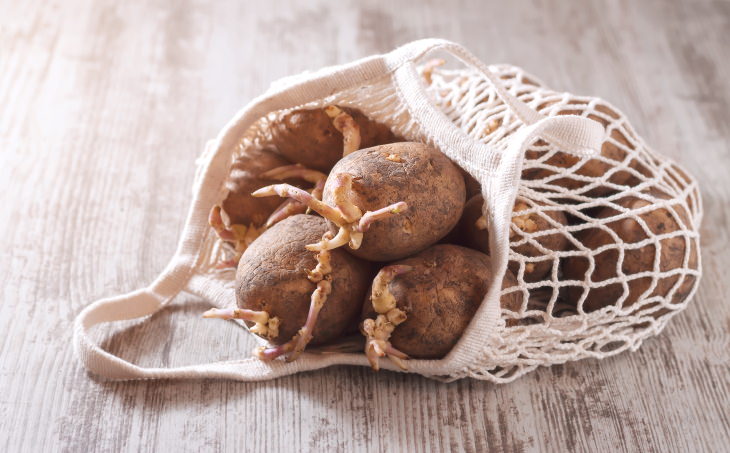
Sprouted Potatoes in a bagAll potatoes contain two natural glycoalkaloid compounds - solanine and chaconine - that are unfortunately toxic to humans when consumed in excess. Other vegetables, particularly eggplants and tomatoes, also have these chemicals albeit in lower concentrations.

Interestingly, scientific research shows that solanine and chaconine are beneficial for the human body in small quantities due to their antimicrobial activity as well as their ability to lower blood sugar and cholesterol, so eating fresh vegetables that contain these compounds in moderation is still a good idea. 
 
The concentration of glycoalkaloid compounds is the lowest in freshly-harvested potatoes, but over time, more and more solanine and chaconine build up in the vegetable, particularly in the skin and any green parts and sprouts. This is why we have all been told to stay away from green potatoes.

What happens if you consume too many glycoalkaloids? 
 
A few hours or even a day after consuming a tainted vegetable, people start experiencing symptoms of gastrointestinal distress, such as vomiting, diarrhea, and abdominal pain. In those rare cases when large quantities of solanine and chaconine are consumed, patients start exhibiting symptoms of shock, namely a rapid pulse, confusion, fever, headaches, and low blood pressure. 
 
Sometimes, this can result in death. So yes, eating green potatoes or potato sprouts isn’t just risky, it can be life-threatening. This is exactly why the National Capital Poison Center advises consumers to throw away potatoes that have already sprouted.

Is It Possible to Reduce the Number of Toxic Compounds in Sprouted Potatoes?
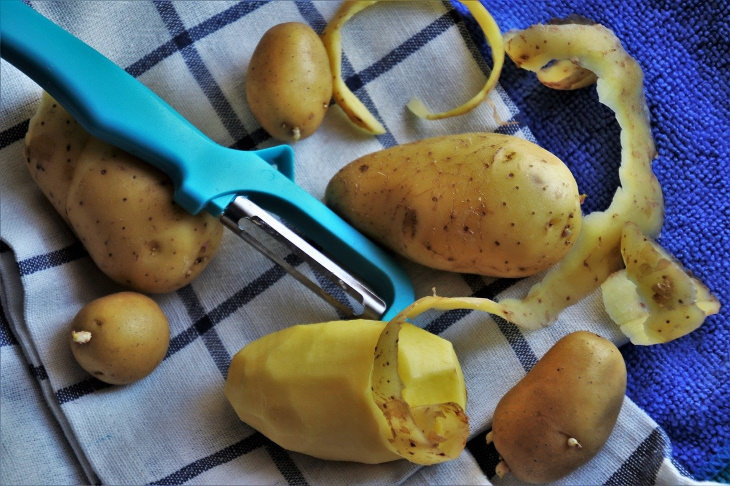
Sprouted Potatoes peeling
First and foremost, it’s necessary to point out that any potatoes that exhibit any sign of going bad should be discarded immediately, this includes potatoes with brown soft spots, signs of mold or any other growth around the sprouts, black dots on the skin, or inside the vegetable, and shriveling. Likewise, a potato with extremely prominent sprouts probably already contains a significant amount of toxic compounds and should also be thrown away. 
 
If the sprouting has barely started and the potato looks fresh and healthy, chances are they can still be salvaged. To reduce the number of toxic compounds in the vegetable, it’s necessary to peel, break off the sprouts, dig out any signs of the sprouts with a small knife and discard all of these parts, since it is believed that the majority of the glycoalkaloid compounds are stored in the skin and the sprouts of the vegetable.

When it comes to the best way to prepare salvaged potatoes, research shows that the only method that effectively reduces the number of toxic compounds is frying, while boiling, microwaving, and baking has no effect. Still, scientists aren’t completely sure that all these practices are sufficiently effective, so use them at your own risk. 
 
Needless to say, the best way to safely enjoy your mashed or baked potato side dish is by only buying the amount you need to cook one dish and use up any leftovers before they start sprouting. It’s also important to store potatoes right in order to prevent them from sprouting in a matter of days - any dark, dry, and cool place will do. 
 
Finally, please make sure to keep sprouted and green potatoes and potato scraps away from animals, as your pets are just as susceptible to the dangers of solanine and chaconine as you are.

https://gscrochetdesigns.blogspot.com. one can see my crochet creations  

https://cancersupportindia.blogspot.com. feel free to view for easy, simple and health tips  
https://kneereplacement-stickclub.blogspot.com. for info on knee replacement


Friday, June 26, 2020

How to store fresh coriander leaves for a long time

Normally, we've the tendency to buy a big bunch of coriander leaves, especially if we get it cheap. Then storing them for long has been a problem. Now, a simple way, is, cut off the roots, then slowly discard all the bad leaves and unwanted leaves that may be there. Then wash the leaves well 3-4 times in fresh water, drain, then spread it on thick layers of cloth, in the shade, for it to dry completely. Then finely chop them. To store, fold kitchen towel  or paper napkins and put in the bottom of the container to cover it well. then put the dry leaves, cover the bottle with a plastic sheet and close the lid. The leaves will be ready to use for a long time.

https://gscrochetdesigns.blogspot.com. one can see my crochet creations  

https://cancersupportindia.blogspot.com. feel free to view for easy, simple and health tips  
https://kneereplacement-stickclub.blogspot.com. for info on knee replacement

Monday, October 29, 2018

Guide to Correcting Mistakes in Cooking and Baking

All those who cook, know that there are days or times when small mistakes do happen while cooking, if we're not in perfect mood. It can be excess salt, or more sugar, too sour and so on. With the tips below, one need not fret when such small mistakes happen, as there are means to rectify them easily !

1. The dish is too salty

Since everyone’s salt preference and needs are different, most recipes call for "salt to taste". But there are times when food is too salty even for those who like salty food, so what can be done?
  • If the food is made up of a lot of liquids like soup, we’d usually just add water, which is one way of doing it, but you can also add a few raw potatoes to the dish, and they will absorb the excess salt. Another way is to add a little lemon juice or vinegar.
  • If you made a sauce, add flour and cream if possible or soy milk.
  • Salted steak or a piece of meat with a lot of salt - soak the pieces of meat in a bowl of cold water for about two hours, and if that isn’t enough, add a little lemon juice.

2. The dish is too sweet

If your sauce or stew came out too sweet, some will tell you to add lemon juice or vinegar, which makes sense in most cases. But there are times when lemon isn’t suitable for a dish, and in such cases, you can fix the flub using high-fat foods such as olive oil or avocado oil. In any case, don’t be tempted to add salt because a high amount of salt will destroy your dish, whereas a pinch of salt may accentuate the sweetness or won’t make any difference at all.

3. The dish is too sour

If you ever wondered how you can fix sour food besides for using sugar or baking soda, know that adding a little honey or date syrup can be a great solution that will add great flavor to your sauce. For a sour stew, you can add chopped carrots instead of sugar or honey.

4. The dish is too soggy and pale

Food that is pan-fried should in most cases be brown and crispy, but sometimes the first and second pieces come out right, while the rest simply go soggy and don’t crisp up on the pan. The reason for this is the amount of food you put in the pan – overcrowding the pan lowers the temperature of the oil, therefore causing the dish to stew instead of fry. To avoid this situation, just avoid overcrowding the pan, and before adding more to the pan, give the oil about half a minute to reach the desired temperature.

5. Your fried food is very greasy

Super greasy food is often hard to stomach. The main reason for this is the oil temperature and the size of the food you are frying. To avoid excess oil, make sure that the oil temperature is between 350-380 degrees and certainly not less than 280 degrees, and also fry smaller pieces of food - this shortens the time the food spends in oil does not cause the oil's temperature to drop.

6. What do you do if the cake comes out dry?

How annoying is it when after all the time and effort put into baking a cake, it comes out of the oven super dry? But don’t worry, instead of throwing it in the trash or turning it into cake-pops, just do the following:
  • Wet the cake with hot chocolate syrup or with warmed up fruit juice, while the cake is still warm. 
  • Cover the cake with a towel or aluminum foil and allow it to sit for about 10-15 minutes outside or overnight in the refrigerator. 

7. Your hard-boiled eggs always come out rubbery 

Hard-boiled eggs are among the most eaten foods in almost every household, and they even allow us to make other dishes. However, most don’t know that these types of eggs shouldn’t be rubbery in texture. The next time you prepare hard-boiled eggs you can prevent this by letting the eggs sit in a bowl of ice water immediately after removing them from the pot. After you peel them you’ll feel the difference.

8. Your pastries and cookies don’t bake evenly

Beyond aesthetics, cookies and pastries that aren’t evenly baked indicate that part of the dish is under-cooked. In order to prevent such a situation, you need to make sure of some things:
  • Your dough should be rolled out and laid evenly on your baking pan
  • Check with a thermometer to determine if the temperature of the oven is the same as what’s shown on the oven itself. 
  • Find the hot points of your oven and make sure to place your pastries there. You can do this by placing a few slices of bread in different places on the second shelf of the oven.
  • Bake for a few minutes and do not flip the bread during the test, the slices will reveal your oven’s hot spots.

9. Your cookies spread out on the baking pan

If you’ve made cookies more than once then I’m sure you’ve experienced them spreading out all over the baking sheet at least once or twice. If you follow these tips, we're sure you’ll always have perfect cookies:
  • Remove the butter from the refrigerator about an hour before preparation and place it in a warm place until it softens slightly (room temperature) - Do not melt the butter in the microwave. 
  • Cool your dough for about 30 minutes before you plan on baking it
  • Make sure your baking soda and baking powder aren’t expired
  • Place your eggs in a warm place 10 minutes before using them or until they reach room temperature.

10. Your pastry is hard or sticky

Pastries satisfy our cravings for something crispy and delicious, but what can you do to make them not sticky or too hard?
  • First, avoid over-kneading the dough by hand or increasing the speed on your mixer so that it doesn’t come out too hard.
  • Second, mix "wet" ingredients first, then add the dried ingredients and mix all together quickly and for a short time, to prevent the gluten in the flour from forming.

11. Your chocolate becomes lumpy when you try to melt it

You wanted to make a frosting or ganache for your cake so you pull some chocolate in a bowl and in the microwave, only to be left with lumpy chocolate? All you have to do to fix the mistake is to add a little vegetable oil to the chocolate bowl, wait about half a minute so that it warms up a bit and mix well.

12. Stored cookies become moist or dry

Have the cookies you baked dried out or gone soggy? Do one or more of the following:
  • Cool cookies before putting them in your storage container.
  • Do not store soft cookies in the same box as crispy cookies.
  • Store the cookies in a sealed box only.
  • Place an apple slice in a box with soft cookies to keep the inside of the box moist.
  • Bring life back to crispy cookies by re-baking them in a preheated oven at 300 degrees for several minutes and let them cool down on a cooling rack.
  • Do not freeze cookies, unless they have cream on them or are coated with fondant.

For my other blogs, I'm giving the links below, feel free to view and comment too.
https://cancersupportindia.blogspot.com. for all cancer and health related topics
https://gseasyrecipes.blogspot.com. feel free to view for easy, simple and healthy recipes
https://kneereplacement-stickclub.blogspot.com. for info on knee replacemen


Tuesday, June 17, 2014

Dry Coriander Chutney

INGREDIENTS

coriander leaves a big bunch, cleaned, washed well,  drained and chopped
chana dal  1 cup
urad dal  1 cup
red chillies 10-15 or as per taste
salt to taste
hing 1/4 tsp
tamarind a small marble size or more depending on the taste
oil wee bit

METHOD
in a pan, add wee bit oil, chana dal, red chillies, fry till the dal is light brown, add the urad dal and fry stirring continuously till both the dal are brown and a nice aroma comes
add hing and tamarind, remove from fire
once cool, powder the dals, chillies, tamarind coarsely
add the chopped coriander leaves and salt
powder till fine or slight coarse
this goes well with bread toast, idli, dosai, can be mixed with hot rice, roti
if dry, this last for months in the fridge if handles carefully ( only if it lasts that long !)

those interested in cancer & health related topics are free to see my blog-
http://cancersupportindia.blogspot.com/
 
for crochet designs, my blog, those who like a particular design are free to mail me
http://My Crochet  Creations.blogspot.com
 
For info. about knee replacement, be free to view my blog-
http://knee replacement-stickclub.blogspot.com