There are plenty of reasons why salads should be a mainstay in your diet. They can be healthy, they're refreshing, and, plain and simple, they taste good. If you're thinking to yourself, "I don't know, I don't think salads are all that," then stick with us; there are myriad ways to upgrade your salad recipe, elevating it from mere side dish to star entrée.
Salad, in its most basic form, usually comprises some lettuce, croutons, maybe a few mix-ins, and a dressing. There's certainly nothing wrong with that, but there is a whole world of possibilities out there that will have you wondering why you didn't try these sooner. These hacks range from changing out the type of greens (or swapping them out entirely) and assembling the salad to look more presentable to making it more filling and ensuring it stays fresh longer. With the following tips, you can revolutionize your salad game — making them full of vibrant colors, contrasting textures, and diverse ingredients that are both full of flavor and heavy on health benefits. Even if you're well-versed in the salad-making arts, no doubt one of the insights below will ignite a spark, leading to your next favorite "I-can't-stop-eating-this" salad.
You've probably heard the phrase
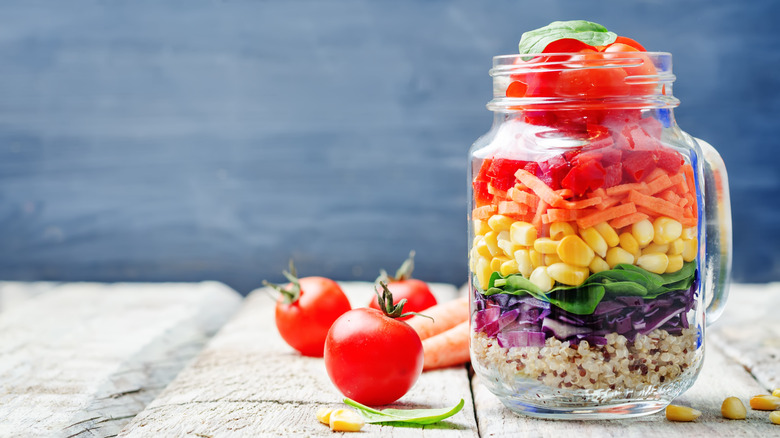
"You eat with your eyes first," meaning that if a dish looks more appetizing, you're more likely to find it so — and that claim can be backed up scientifically. Visual cues that help determine your opinion of the food you're about to eat include its color, gloss, evenness, and shape. What does that all mean? Take the time to prepare a dish that looks good, utilizing a balance of fresh and colorful ingredients that are thoughtfully prepared.
The easiest way to make your salad appear more appetizing is to introduce more color. Green lettuce, some tan croutons, and an off-white dressing? Boring. Seen it before. The addition of some sliced grape tomatoes or sliced carrots certainly brings some much-needed color into the picture but you've done that before. Pomegranate seeds, sliced apples, apricots, black lentils, pickled red onions, and various squash — among countless other ingredients — can take a dreary-looking salad and brighten it up. Which ingredient(s) you opt for might depend on your personal preferences or what other ingredients are going in the salad but be sure to include at least five colors next time and you'll need to post it on Instagram before taking that first bite.
Use a Salad Spinner
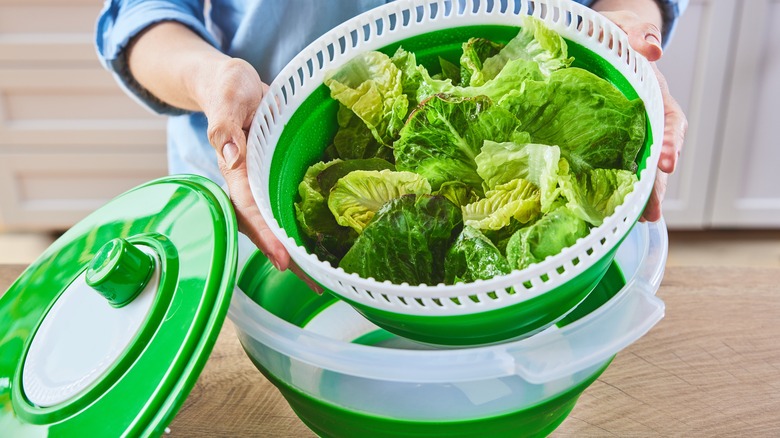
Adding a salad spinner to your kitchen pantry is a great idea for numerous reasons. On one hand, it's important to wash all produce thoroughly under running water before preparing and eating to reduce any bacteria that may be present. Eating such contaminated produce can lead to food-borne illness (i.e., food poisoning) but don't fret: Simply washing your produce under water (no soap or detergent, please!) and drying it with a clean cloth or paper towel will help mitigate any risks.
But if you've ever tried drying lettuce after washing it, you know that can be a bit of a challenge. There are plenty of crevices to get to and water can stay trapped there, even after drying with a towel — and nothing is worse than soggy lettuce because texture is also a major component of how we enjoy food. Running lettuce (or other produce) through a salad spinner after washing will help remove excess water, keeping your greens and other ingredients crisp. Drying out your lettuce will also help it remain fresh longer, as wet greens will wilt faster, even if otherwise stored properly. If you're meal-prepping, this is a crucial step to having a fresh salad each day.
Add some crunch
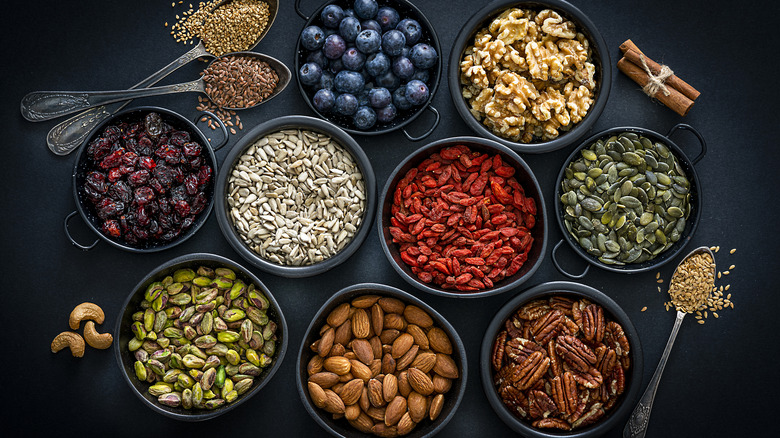
Having nice, crisp lettuce is a great base from which to build your salad but that alone isn't enough to provide the desired amount of texture in your dish. Having a variety of contrasting textures is a key to any satiating meal, just as the way it looks factors into the equation. No doubt perfectly dry lettuce is important but getting creative with your crunchy elements — utilizing such ingredients as nuts, seeds, crispy onions, or noodles — is a fun upgrade to the standard crouton.
Not only do these options provide the texture component, but they offer new flavor profiles and even added nutritional benefits — especially in the case of seeds and nuts. Some options on this front include pumpkin seeds, sesame seeds, flax seeds, chia seeds, poppy seeds, and sunflower seeds, as well as sliced almonds, cashews, walnuts, pecans, and peanuts. These ingredients in particular work well because, unlike the lettuce, they will not get soggy once the dressing is added, ensuring you have crunchy bites to the very bottom of the bowl. If you want to get something especially different, other mix-ins to add a crunch to your salad could include crispy chickpeas, bacon (make sure it's well done, of course), cereal, or even chips.
Grab a veggie peeler
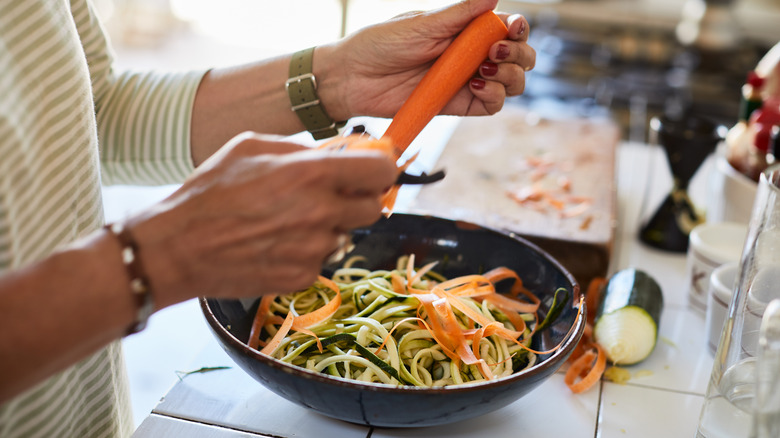
Very likely you already have a veggie peeler in your drawer, but did you know you can use it to create ribbons of veggies? Another way to bolster your kitchen skills and improve upon your salad is introducing new shapes and textures with ingredients you might have been getting a bit too used to, such as carrots or cucumber.
You can additionally take your veggie peeler to zucchini, beets, asparagus, bell peppers, and beyond. Be sure to take the time and create perfect spirals to include in your salad, almost mimicking a flower. You can also quickly sauté the vegetable ribbons in some butter and chicken broth if you want some warmer elements in your salad. Beyond making ribbons, your veggie peeler can assist in several other ways when making a salad: Using it to de-string celery, remove the stems from strawberries or even shaving cheeses are some of the best uses for your vegetable peeler.
Swap out the iceberg lettuce
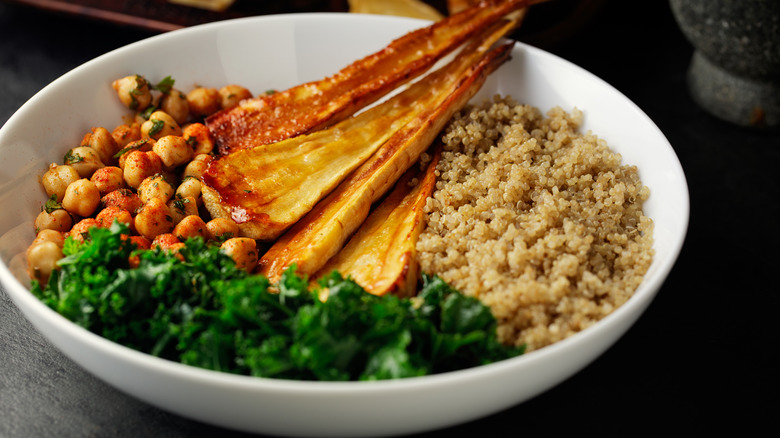
There's nothing wrong with iceberg lettuce — in fact, it's a good source of vitamin K and folate — but starting every salad with iceberg (or even romaine) can get a bit mundane. To improve the flavor and health benefits of your salad, try incorporating other leafy greens (or substituting them altogether). Kale, collard greens, chard, spinach, bok choy, and arugula as healthy alternatives to iceberg and romaine lettuce. Another option? Shaved Brussels sprouts. These alternatives are stronger in flavor and nutrition, providing a myriad of important vitamins, minerals, and amino acids.
And then there's the whole world of non-leafy green salads. Going lettuce-free gives you room for heartier ingredients. Chickpeas, broccoli, tomato, watermelon, cucumber, quinoa, farro, lentils, and asparagus, among countless other options, make for a great base to build your salad, unlocking a whole new range of textures and flavor combinations. Just like a traditional salad, these can be based on seasonal ingredients — perhaps ripe peaches, berries, avocados, and watermelon in the summer or apples, persimmons, pears, figs, and cranberries in the fall.
Make your own dressing
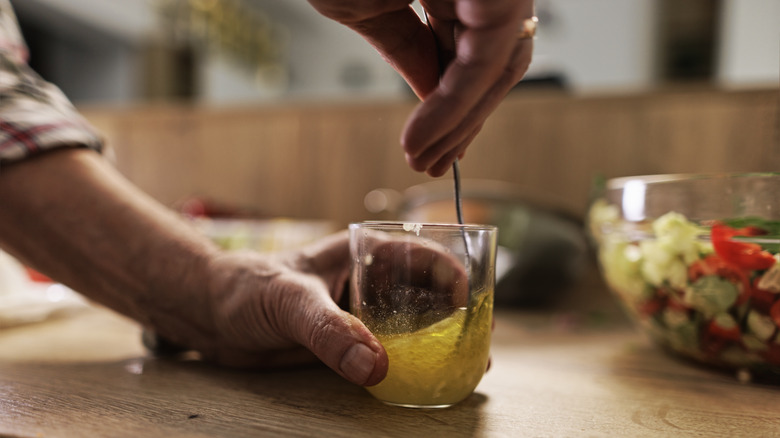
Sure, grabbing one of the many available salad dressings from the shelf at the grocery store may be easy but there are several benefits to making your own instead. The top reason is that homemade dressing can be much healthier than what you purchase at the store, and you can control what ingredients are — or aren't — included. Plus, you will expand upon your culinary capabilities in the process, mastering one more aspect of the perfect salad.
Several things go into a well-balanced salad dressing, namely: oil, an acid (like vinegar or citrus juice), and an emulsifier (typically ingredients like Dijon mustard or mayonnaise, a common base for dressings like ranch). If you have an immersion (or other) blender, you can use that, but just as simply, you can combine all the ingredients in a mason jar, close the lid tight, and give it a good shake. Homemade salad dressing recipes abound on the Internet, but if you're new to the game, you might enjoy this vinaigrette salad dressing recipe that calls for simple ingredients like olive oil, red wine vinegar, and Dijon mustard. You can also elevate the flavor of your salad dressing by prepping it in advance, allowing all the ingredients to come together. Whichever salad dressing you choose, however, be sure to only add once you're ready to eat. This is especially important if you're packing the salad for lunch at work, or if you're making a large quantity to eat throughout the week.
Consider the role of cheese
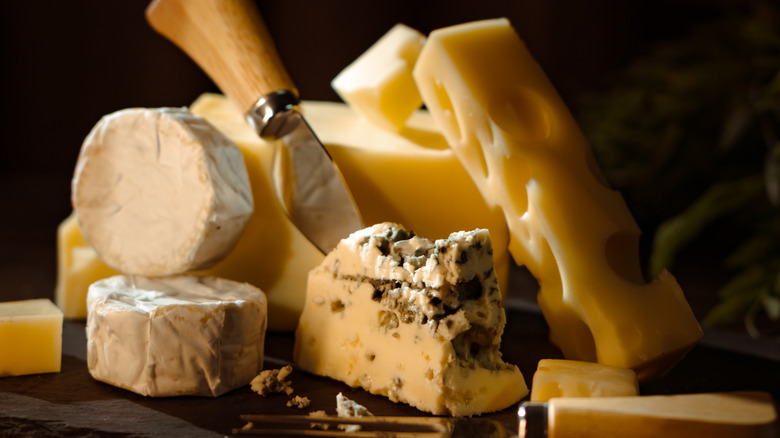
Cheese is a crucial ingredient to a great salad. Not only can it bring a variety of flavors — sharp and pungent for bleu cheeses; salty and tangy for feta; nutty and spicy for Parmesan; you get the picture – but it brings just as wide of a variety of textures. So, when considering what cheese to add to your salad, don't only consider its flavor, but consider its role in the salad. If you want a sprinkling of cheese with every bit in your Caesar salad, opt for grated Parmesan; if you particularly enjoy the bold flavor (and maybe need it to offset the fishy-umami flavor of the anchovies), use shaved Parmesan. Goat or bleu cheese bring a creamy texture to the salad, if that's the bite you're looking for.
If you can't or don't eat cheese, look to include a non-dairy substitute, perhaps made from nuts. Another option is nutritional yeast. All of the above not only contribute to the flavor and texture of your salad but, like the dressing, play an important role in binding your ingredients together, ensuring you have a cohesive dish.
Don't skip the protein
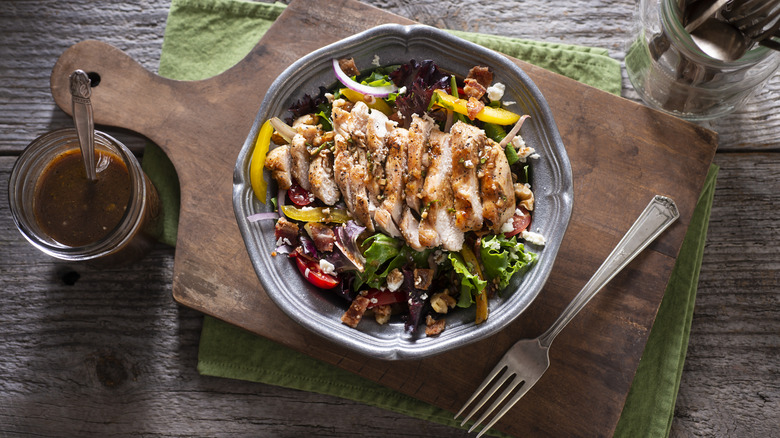
If you're planning to make this your meal, and not just a side, be sure to make it filling — and do that by adding some protein. High-protein meals are more satiating than meals that are high in carbohydrates or high in fat, meaning you will stay full for longer. The good news is you really can't go wrong regarding the type of protein you add, whether it's an animal protein like chicken, shrimp, steak, or salmon, or ingredients such as lentils, nuts, eggs, or plant-based meat substitutes. One other way to up the protein in your salad is by incorporating Greek yogurt into your homemade salad dressing.
Whether you add the protein (let's say grilled chicken for this example) hot or cold onto your salad is up to you. Having a contrast in temperatures is another great way to keep your taste buds happy. But if you need to pack it for lunch to bring into the office, it will do just as well cold.
One more tip for making a filling salad? Use a large bowl. If you make a typical garden salad (iceberg lettuce, onion, black olives, tomato, croutons, and Italian dressing), a two-cup serving is just 161 calories. Even with four ounces of chicken breast or steak, that brings it up to about 350 to 440 calories. That's certainly going to be a bit more filling, but the point is, you can load up on veggies without worrying much about the calorie count.
Work in fresh herbs
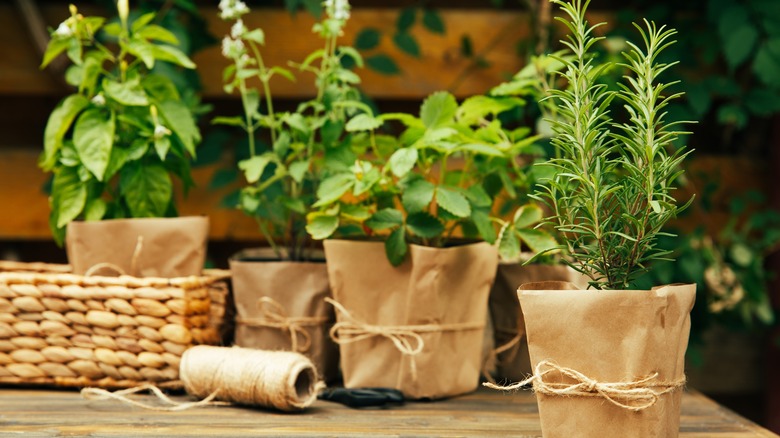
Fresh herbs are what take any dish from an "8" or a "9" to a "10," and a salad is no exception. Basil, mint, parsley, dill, of fennel are all great additions to a salad, depending on what kind you're making. They can provide a much-needed punch of flavor, as well as some added nutritional benefits. Did you know that parsley is high in antioxidants such as vitamin C, carotenoids, and several flavonoids? Oregano, alternatively, boasts many nutrients, including vitamins K and E, calcium, iron, manganese, and fiber.
Even better is that it's fairly easy to grow herbs, even if you live in an apartment, meaning you will always have some fresh options available. Anyone who has purchased some parsley or cilantro from the grocery store knows how quickly those aromatic green leaves can quickly become damp and slimy. That said, if you don't quite have a green thumb and the supermarket is your garden, be sure to store fresh herbs properly. It all depends on the herb, but parsley or cilantro can be kept in a glass or mason jar with about an inch of water; basil should be kept uncovered on the counter.
Sprinkle salt and pepper at minimum
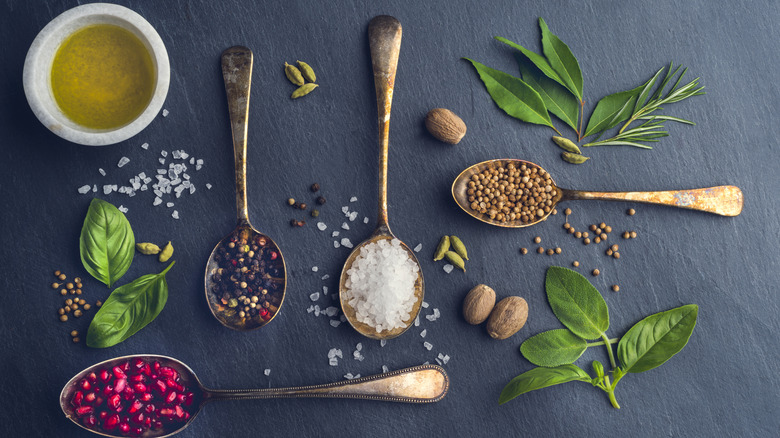
It seems like a simple hack, but salt and pepper are often left out when building a salad. Think of it this way: If you season your chicken, your roasted veggies, your pasta water — ideally, everything — then you should also be seasoning your salad. Be sure to do this to your naked vegetables after you have dried them (meaning before you add the dressing) and give everything a toss to make sure it is evenly distributed.
Of course, salt and pepper are the obvious starters but there's no need to stop there. Curry powder, crushed red pepper, cumin, and za'atar (a Middle Eastern spice blend often consisting of thyme, oregano, marjoram, sesame, sumac, cumin, and coriander) are great ways to kick your salad up a notch. There's no wrong way to go here. Perhaps consider including some of the seasonings that you added to your protein to ensure the flavors aren't clashing.
Chop it up properly
If you're the foodie that we are, perhaps your Instagram or TikTok feed is full of chopped sandwiches right now. But let's not forget that this inspiration was taken from salads. Chopping your salad once all the ingredients are mixed in — and you can do this step before or after adding the dressing — allows for perfect forkfuls that ensure you get a bit of everything in every bite. No more digging through your bowl to find a piece of lettuce, a cucumber slide, and chicken to put together that perfect bite. You mustn't over-chop, either, or else your salad may begin to resemble something unappetizing. Remember, we eat with our eyes first.
If chopping a salad just isn't for you, be sure to employ the layering method while building your salad. This will prevent heavier ingredients like your non-leafy vegetables, nuts, or cheese from sinking to the bottom of the bowl. Not only do we want to put together a salad that tastes great, but we want one that's easy and enjoyable to eat, as well.
Rely on seasonal ingredients
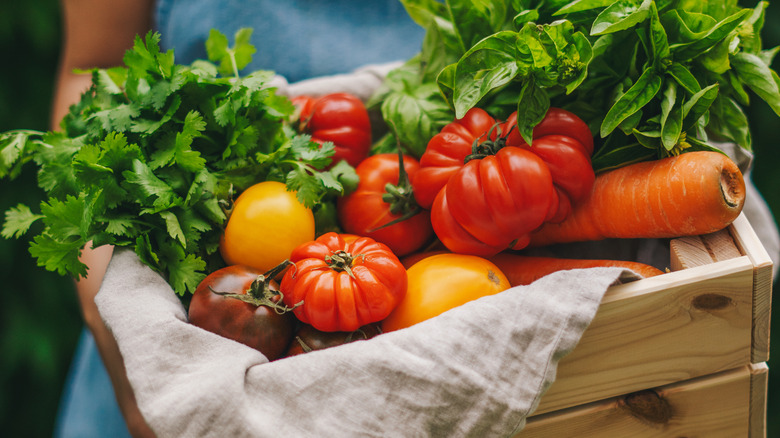
If you're unsure of what direction to take your salad, simply consider the season. Creating salads based on what's seasonal is great for several reasons. On one hand. it provides more variety in the types of dishes you can make. If it's fall or winter, lean into the availability of squash, sweet potatoes, pecans, pumpkin seeds, apples, cranberries, or pomegranates, for instance. In the warmer months, lean into watermelon, tomatoes, corn, strawberries, peppers, and okra being in season. If you're out of ideas, try heading down to the nearest farmers market and see what's available.
Beyond that, shopping seasonally allows for fresher, better-tasting, and more nutritional ingredients. When fruits and vegetables are harvested in their proper season, they have been given adequate time to mature on the plant, making them more nutrient-rich. Not only does opting for seasonal produce mean a better result for you, but it is also typically more sustainable than buying items that are out-of-season, meaning it's better for Mother Earth, too. As a bonus, produce sold in-season is also typically when they are most affordable.
Cook it over a flame

Picking up on that last hack, if it is summertime (or warm enough outside wherever you are), fire up the grill because that's a surefire way to take your salad to the next level. Feel free to throw your chicken, steak, or protein of choice (tofu, even), but make sure you get your veggies some grill marks, too. Cooking items like romaine lettuce, fruits (watermelon, anyone), and a whole assortment of veggies over a flame brings tons of added flavor and new textures to your salad than simply eating them raw. (This is also a great way to get a picky eater to consider a salad as an option.)
That said, it's important to know which veggies handle this better. A dense head of romaine lettuce, as well as endive, escarole, and radicchio all maintain their shape and hold up after being cooked over a fire. Make sure your grill is nice and hot, too; these veggies won't take too long to cook and you want to get proper grill marks on them. With the aforementioned vegetables, you want to cut them in half and only grill that flat, cut side. Last note: Be sure to eat your grilled romaine right after it's cooked or it will get soggy.
Add that unconventional ingredient
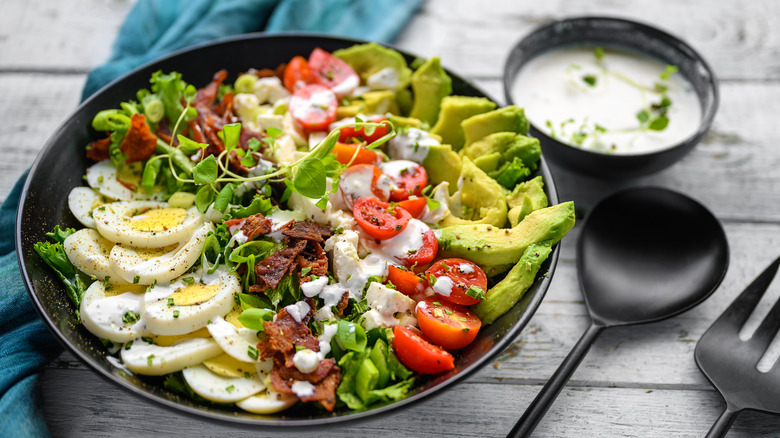
Not every salad needs to meet the criteria of someone on a lower-calorie diet. If adding some crispy chicken or ranch dressing is what it takes to also enjoy some veggies, then we are all for it. We're a big fan of added breaded chicken, creamy dressings like ranch, and a good pinch of Colby Jack cheese to our salad. And that doesn't even include bacon bits, which are always an easy way to upgrade the flavor of any dish. At a local restaurant, our-go salad has a chipotle Caesar dressing — and it's worth it every time. A dressing we make often uses bacon grease as the fat component. Or, perhaps you're not quite comfortable cooking yet; consider, then, canned tuna fish (which still has excellent nutritional value, especially if packed in water) or a similar ingredient.
As we mentioned from the onset, salads can be a tasty and filling way to get tons of health benefits but if, after all these hacks, it still doesn't sound like the perfect dish, then find the ingredient(s) that will do just that for you.

:max_bytes(150000):strip_icc()/EWL-cheeseburger-salad-beauty1-059_preview_maxWidth_4000_maxHeight_4000_ppi_300_quality_100-d0cf2215175045f09c6475c560294644.jpg)
