Showing posts with label leftover. Show all posts

Monday, July 22, 2024

What kind of coffee you want?

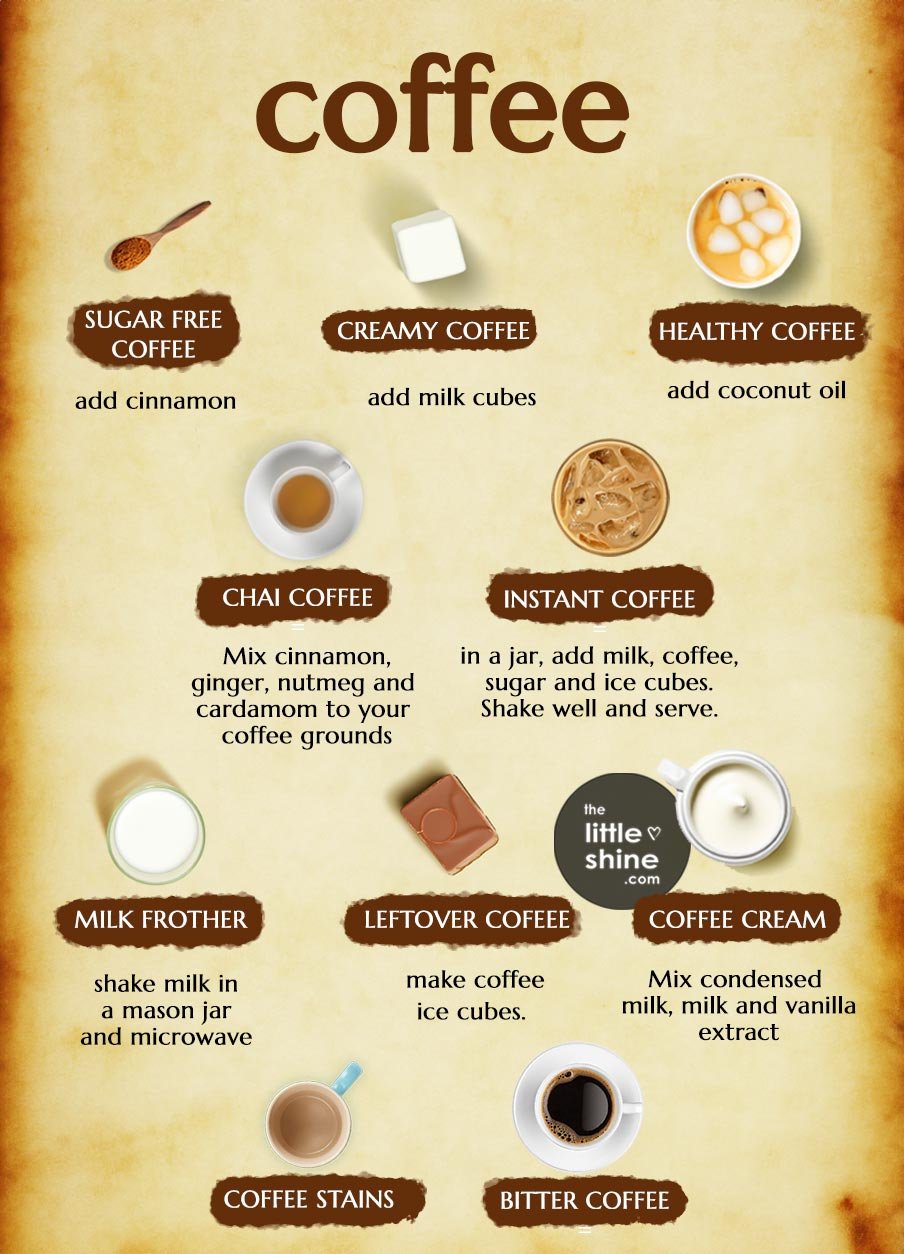
 15 Best Coffee hacks     


https://GSiyers home remedies.blogspot.com     is the latest addition to my blogs.

https://gscrochetdesigns.blogspot.com. one can see my crochet creations  

https://cancersupportindia.blogspot.com. feel free to view for easy, simple and health tips 
 
 https://kneereplacement-stickclub.blogspot.com. for info on knee replacement

Wednesday, June 9, 2021

Kitchen Tips: How Long You Can Keep Leftovers

Food storage is one of the most important kitchen-related subjects because improperly stored food can quickly turn bad and become the source of dangerous diseases. Keep in mind that this doesn’t mean that leftover foods are bad and you should throw away food. It’s actually quite the opposite - eating leftovers is an excellent way to save your precious time and money while also reducing food waste, a serious problem in many developed countries, especially the US.

That said, it’s crucial to know how long different leftover foods can last in your fridge, and when it’s time to part ways with this or that food for your own safety. Learn about exactly that, as well as several useful food storage tips in this article.
 
Which Foods Spoil Faster and Which Last Longer?
The period of time a specific type of food can safely be kept in the fridge and eaten will depend on a variety of factors. While some foods can be safely stored for days, others are more prone to harboring germs and have to be eaten within a day. Preparation also makes a big difference. 
 
Meals that feature a mixture of different foods, like stews, will only last as long as the ingredient with the shortest shelf life. Restaurant leftovers should be typically eaten within 3-4 days, as it's difficult to access the freshness of the ingredients used, with the exception of dishes that contain raw fish that should be eaten within 24 hours. 
 
It’s important to note that some foods will still taste good after the specified time we mention, but this doesn’t mean the food isn’t spoiled, as the process of decay and the spread of bacteria may not show immediately. In terms of their lasting potential, all foods can be divided into 3 main groups: How Long You Can Keep Leftovers slices of pizza and veggies


1. Low-risk foods. 
Things like bread, vegetables, and fruit can be stored in the refrigerator up to 7 days before they go bad. More specifically, bread and foods that are dough-based, like a simple cheese pizza, will stay fresh for 5-7 days, but you must make sure to wrap it thoroughly in plastic or put it in a resealable container to prevent it from drying out. 
 
Fresh fruit and vegetables that have been cut up previously also have a long shelf life - 3-5 days, but things like cucumber, watermelon, tomatoes, and other high-water-content fruit and veggies will typically spoil a bit faster. Store these foods in a sealable bag or container to keep them fresher for longer. Cooked canned or fresh veggies and fruit will likewise stay fresh from 3 to 5 days. 
 
2. Medium-risk foods include most, but not all, cooked grains, like pasta, quinoa, and buckwheat. These will typically stay fresh for about 3 days, and you can also freeze them to extend their shelf life by up to 3 months. Desserts and sweets, like cake and pie, will also typically last for about 3-4 days when refrigerated properly.
 
3. High-risk foods are those that require special care when refrigerated, and will typically not last for more than 3 days. There are several categories of foods on this list, here are the main ones:
 
Cooked rice is probably one of the most surprising high-risk food. Rice should be stored very carefully because it commonly harbors Bacillus cereus, a dangerous food-borne pathogen. This is why you should refrigerate rice no more than 1 hour after cooking and eat it within 3 days.
 
Meat and poultry are also prone to harboring various pathogens, so be careful when storing cooked meat or poultry. Steaks, roasts, whole birds, and chops should be eaten within 3 days. Foods made of ground beef or poultry like cutlets, lasagna, and pasta sauce spoil even quicker - after just 1-2 days. Though it may take longer, nutritionists also suggest to always thaw ground and whole meats in the fridge, and never on the kitchen counter to prevent the spread of pathogens. 
 
Eggs and seafood are also high-risk foods, as both can harbor Salmonella and other pathogens. Cooked eggs and egg salad should be eaten within a day, with the exception of unpeeled boiled eggs, which can stay fresh up to a week. Cooked seafood and fish dishes should be eaten within 3 days, but raw fish and seafood meals, like sushi, should be eaten immediately or kept in the fridge for up to 24 hours. 
 
Soups, stir-frys, and stews that contain meat or fish will usually stay fresh for 3-4 days, but they should be put in the fridge as soon as possible, ideally no longer than 2-3 hours after cooking. If you find it difficult to cool them fast, simply put the pot containing the dish into an ice bath - a sink or large bowl full of cold water and ice - and stir continuously until the food reaches room temperature and can be put in the fridge.

How Do I Know My Food Has Gone Bad?
Your nose is one of the best tools you can use to access your food’s freshness. If the food smells sour or just off, don’t take any chances and just throw it away. Other pointers to look out for are a change of color, as it is the case with guacamole that tends to turn brown and will no longer be enjoyable to eat. Vegetables, fruit, and greens, may also start browning on the edges, whereas meat and seafood can become slimy and sticky to the touch when it goes bad. 
 
Mold of any kind is also a surefire sign that it’s time to toss the food in the trashcan. Lastly, if you happen to reheat the food and take a bite only to realize the taste is stale, rancid, or sour, avoid eating it as well.

To prevent food from spoiling and extend their shelf life, follow these useful tips:  
How Long You Can Keep Leftovers
1. Refrigerate leftovers within 1-2 hours maximum. Keeping foods at room temperature for a long time is a very bad idea, as bacteria and other pathogens thrive at temperatures between 40°F (4°C) and 140°F (60°C). If you're outdoors and the temperature is above 90°F (32°C), you need to put things in the fridge even quicker - no more than 1 hour.
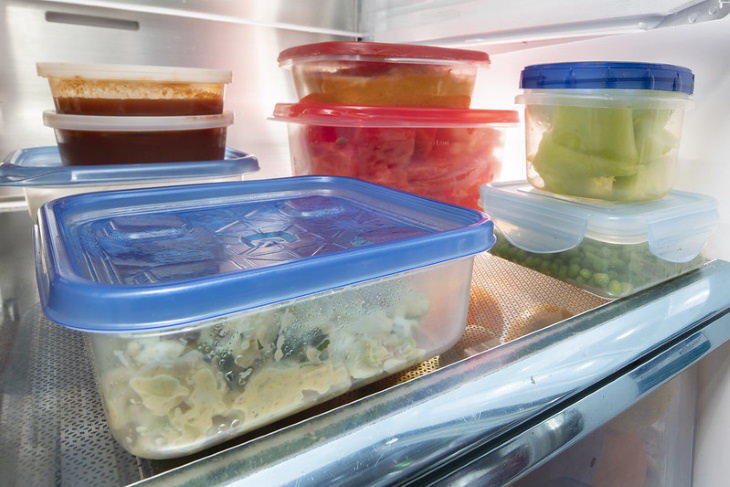
2. Store in shallow containers. Food in shallow containers will cool off quicker and more evenly than in tall ones, so opt for shallow ones. US food storage guidelines also recommend avoiding stacking more than 2 containers on top of one another because this may slow down the registration speed of the middle containers. Lastly, opt for sealable clear containers, jars, or bag, so that you can see which foods you have in the fridge clearly. 
 
Sealing is important to extend freshness and prevent germs from getting in or out of the container. Note that this also means you'll have to transfer improperly packaged foods you got from a takeaway menu or brought from a restaurant.

3. Take advantage of the freezer. Refrigerating foods isn't the best method of preserving food for a long time, as the temperature in the fridge isn't low enough. To extend the shelf life of ready-made foods, soup, bread, and cooked meat included, you can put them in the freezer. Most leftover foods will be safe to eat even after 3 months of being in the freezer! One thing to consider when freezing foods, however, is properly sealed packaging (see the point above) to prevent freezer burn. 
 
4. Whenever possible, store different foods separately. For example, keep rice, a side dish, in a separate container from stewed vegetables or seafood. This way, if one of the foods goes bad, you’ll be still able to utilize the rest. 
 
5. When reheating food, bring them to more than 165°F (74°C) to kill any germs that may have survived in the refrigeration. It is known that some foodborne pathogens, such as Listeria monocytogene can survive cold temperatures. If possible, you can even bring some foods to a boil, especially liquids, e.g. soups, sauces, and gravies, before eating.
https://gscrochetdesigns.blogspot.com. one can see my crochet creations  

https://cancersupportindia.blogspot.com. feel free to view for easy, simple and health tips  
https://kneereplacement-stickclub.blogspot.com. for info on knee replacement


Saturday, January 4, 2020

11 Things Notorious for Clogging Up the Kitchen Sink

A clogged up kitchen sink is never fun, but it happens in most homes, although it's actually preventable. And while we've already warned you not to flush things like coffee grounds and chewing gum down the drain in a previous article, in this post, we'll stress the importance of disposing of common food waste properly. Even your garbage disposal won’t be capable of handling these 11 things if you dump them in your kitchen sink, so make sure to toss them directly into the garbage.

1. Rice
It's just so convenient to rinse rice in the sink, but it turns out that it's also really bad for the pipes, as soft foods, such as pasta and rice, tend to absorb a lot of water and expand in size when they get stuck in the pipes, clogging up the sink. To prevent any rice from escaping into the sink, we recommend using a fine-mesh sieve for rinsing. When it comes to leftover rice in plates and bowls, it's important to clean it away completely before putting these into the sink.


2. Mashed Potatoes
Since mashed potatoes are not solid, you might think it's safe to simply wash away any leftovers in the sink. Unfortunately, this is a common mistake, and starchy foods are often the reason for a clogged-up sink. Starches are sticky like gum and tend to clump up into chucks and cling to the pipes and any other trash particles that will be washed down the sink - a recipe for disaster.


3. Fruit and Vegetable Peels
Fruit and vegetable peels seem like an easy job for the garbage disposal since they're quite soft, but this, too, is a dangerous misconception, as in reality, these peels turn into a sticky paste once they go through the garbage disposal and can not only slow down its blades but also contribute to pipe clogging. Banana peels, in particular, can also be quite stringy, too, so they can tangle the garbage disposal.


4. Eggshells
Eggshells are among the most common culprits behind clogged up sinks, and even relatively small pieces can settle down in the pipes and further accumulate dirt and other small pieces of food waste. The main problem with these is that they're not water-soluble, so once they get into the pipes, they will stay there until dissolved using a chemical cleaner or removed manually.
The main problem is that many people believe that ground-up eggshells can clean pipes, but this is a myth, and using them in a partially blocked sink can result in a complete blockage instead of clearing it out.


5. Fibrous Veggies
Much like banana peels, vegetables like asparagus, celery, and corn husks are all quite stringy, and the fibers they contain can be very dangerous if they get into your garbage disposal and sink, as they can tangle the blades of the garbage disposal and entangle other trash particles in the pipes, resulting in a blocked sink.


6. Bones
Dumping bones into the garbage disposal may be something you've done for ages, but the fact that they didn't clog up the drain immediately doesn't mean it's fine to do so. Plumbers point out that bones can significantly dull the blades of your garbage disposal. Apart from that, the surface of the bones can also be covered in pieces of cartilage, meat and fat, which are widely known to contribute to sink blockages, so just throw all the bones into the trash instead of the kitchen sink.


7. Leftover Grease on the Frying Pan
Speaking of grease, are you in the habit of rinsing down the skillet with warm water right in your sink after frying up some bacon and eggs? If so, this may be the reason why your sink keeps malfunctioning, as sticky grease and oil is the primary cause of a clogged up sink. Instead, we recommend wiping down the frying pan with a paper towel prior to rinsing or cleaning it. This will help remove most of the grease from the surface of the pan.


8. Tea Bags
People who throw used tea bags into the sink, we know you exist. Please know that what you're doing is a recipe for disaster, even if you have the most powerful garbage disposal in the universe. This is not only because tea bags literally contain strings, but also because some tea bags are made of a mesh fabric that is insoluble and will eventually block the pipes. Apart from that, the tea leaves themselves can be quite hydrophilic, which means that they absorb water, so you're risking a pipe blockage even if you're throwing loose leaf tea into your kitchen sink.


9. Food Packaging and Stickers
Food packaging is another threat of your kitchen sink's integrity and functionality, as the vast majority of the various stickers and plastic wrap don't dissolve and end up clogging up your kitchen sink. The worst offenders are all those little stickers you find on fruit and vegetables, with plumbers reporting countless occasions where they were forced to replace an entire section of the pipes because of these seemingly-harmless culprits.


10. Fruit Pits
Like bones, cherry pits and other stones you find in fruit can wreak havoc in your kitchen's plumbing, as they, too, rarely dissolve or get through the pipes without causing a problem. That's why you should always toss the fruit and vegetable pits into the trash and be quick to fetch out any that accidentally made their way into the sink before they move down the drain.


11. Flour
The last item on our list is just flour, which just so happens to be among the worst things you can pour into the sink. Like you surely know yourself, adding water to flour results in a sticky substance we call dough, and the last thing you want is to create a plug of sticky dough in the drain. If you accidentally spill any dough in the sink, quickly wipe it down dry with a towel so that no flour residue gets down the drain.


links for my other 3 blogs-

https://gscrochetdesigns.blogspot.com. one can see my crochet creations  
https://cancersupportindia.blogspot.com. feel free to view for easy, simple and health tips  
https://kneereplacement-stickclub.blogspot.com. for info on knee replacement


Monday, July 14, 2014

Rice cutlets !

Ingredients

left-over rice 2 cups
onion 1 big finely chopped
potato 1 big finely grated raw
green chillies finely chopped to taste
salt to taste
besan  3-4 tbsp
rice flour  3 tbsp
semolina/ rava  3-4 tbsp
oil for frying
ajwain/ carom seeds little

Method
mix all well, flatten into thin cutlets, either you can deep fry/ shallow fry till brown on both sides, serve hot with chutney/ ketchup.
yesterday, I had made this, sorry forgot to take photo, it came out well, the family enjoyed it.


those interested in cancer and health related topics are free to see my blog-

http://cancersupportindia.blogspot.com/


for crochet designs, my blog, those who like a particular design are free to mail me

http://My Crochet  Creations.blogspot.com

For info. about knee replacement, be free to view my blog-

http://knee replacement-stickclub.blogspot.com

Tuesday, June 3, 2014

Stir fired idlis with veges

Ingredients

idlis
onion finely chopped  2
green peas  1/2 cup
carrot diced  1/2 cup
green chillies finely chopped to taste
salt to taste
asafoetida   2 pinches
curry leaves few finely chopped
mustard seeds  1/2 tsp
sesame seeds/ til  1/2 tsp
oil
coriander leaves  1 tbsp

Method

cut idlis into small pieces
blanch carrots and peas and keep aside
heat oil in a kadai/ pan, add mustard seeds, once it splutters, add sesame seeds, once they turn brown and give a nice aroma, add curry leaves, chillies and onion
fry till onion turns brown
add the blanched vegetables
add turmeric  salt and cook for 3 minutes
add the idli pieces and fry till idli pieces are well coated
garnish with coriander leaves ,serve hot

ps- when you're tired of eating plain, or when quite a few idlis are left over, you can change their form to make stir fried idlis, so, it will be eaten in a jiffy !

those interested in cancer & health related topics are free to see my blog-
http://cancersupportindia.blogspot.com/
 
for crochet designs, my blog, those who like a particular design are free to mail me
http://My Crochet  Creations.blogspot.com
 
For info. about knee replacement, be free to view my blog-
http://knee replacement-stickclub.blogspot.com
  

Friday, March 28, 2014

LEFTOVER RICE VADA

INGREDIENTS
for vada
leftover rice  2 cups
salt  3/4 tsp or to taste
black salt 1/4 tsp
green chillies chopped  2
ginger finely chopped  1 tsp
jeera/cumin  1tsp
red chilli pdr.  1 tsp
oil to fry

mash well the rice with all the ingredients, except oil, it should be like a dough, take small amount of the dough, roll it, then flatten it like a vada, deep fry in hot oil till crisp, drain well, keep aside

for topping
thick curds  1 cup
salt 1/4 tsp
black salt  1/4 tsp
beat well

fry some curd chillies 4-5 ( mor milagai till crisp, crush them well)

for seasoning
heat 1 tsp oil, add jeera 1 tsp, methi 1/2 tsp, hing little, haldi 1/4 tsp, chilli pdr. 1/2 tsp, jeera pdr. 1/2 tsp, curry leaves few

to serve

in a deep dish/ bowl, pour some curds, place the vadas, pour some more curds on the vadas, put the seasoning all around, crush the curd chillies on them, put some coriander leaves, serve at once.


those interested in cancer & health related topics are free to see my blog-

http://cancersupportindia.blogspot.com/


for crochet designs, my blog, those who like a particular design are free to mail me

http://My Crochet  Creations.blogspot.com

For info. about knee replacement, be free to view my blog-

http://knee replacement-stickclub.blogspot.com

Thursday, August 22, 2013

LEFTOVER RICE PAKODAS IN KADHI

INGREDIENTS

for pakodis
leftover rice   1 bowl
besan    1/4 cup
salt to taste
chilli pdr  1 tsp or to taste
asafoetida   1/4 tsp
oil for frying

mash all together well, then make small balls, fry in hot oil till golden brown. drain & keep aside.

for kadhi
oil  1 tbsp
mustard seeds  1 tsp
cumin seeds  2 tsp
curry leaves 1 sprig finely chopped
asafoetida  1/4 tsp
onion  1 small finely chopped
ginger-garlic paste  1 tsp
green chillies 2-3 finely chopped or to taste
red chilli 1
fresh coriander leaves  1 tbsp
buttermilk   3 cups
besan   1 tbsp
turmeric pdr.  1/2 tsp

METHOD
heat oil, add mustard once it crackles cumin, then add curry leaves, asafoetida, saute for a minute
add onion, green chillies, red chilli, ginger-garlic paste, fry well, till onion is light brown
add turmeric pdr., add buttermilk, in which besan is well mixed, if too thick, add little water
keep stirring on low flame for it to cook, & thicken, add 1/2 tbsp coriander leaves.
once the mixture is thick, but not too thick, add the fried pakodas, let it simmer for 5 minutes, if the mixture is getting too thick, sprinkle some water, to get the correct consistency.
remove, serve hot with rice/ roti garnished with remaining coriander leaves.


those interested in cancer & health related topics are free to see my blog-

http://cancersupportindia.blogspot.com/


for crochet designs, my blog, those who like a particular design are free to mail me

http://My Crochet  Creations.blogspot.com

For info. about knee replacement, be free to view my blog-

http://knee replacement-stick club.blogspot.com

Saturday, December 31, 2011

Macaroni cutlets !


Ingredients
left over vegetable macaroni 1 cup ( not necessary you need this, but I wanted to use what was left over )

boiled, peeled & mashed potatoes 1 cup ( normally I always have boiled potatoes in my fridge, as when you use your cooker, boil a few potatoes with the skin, push them in the fridge, take it out when needed, this way it comes very handy & doesn't get spoiled for a t least a week !)
ginger 1"
green chilies 5-6
salt to taste
chili pdr 1/2- 1 tsp ( optional)
fresh coriander leaves 1 cup
in case you've any left over kidney beans or green moong dal just grind them with ginger, chilies & coriander, also grind the left over macaroni, without adding any water.

Method
mash all together with salt , chili pdr, little bit of hing, you may add some chana masala pdr., then to bind it you may need, depending on the quantity about 1/2- 1 cup of rice flour & 1/2-1 cup of corn flour.
Heat oil, make small cutlets, of your desired shapes, fry in hot oil, when you lower the heat, then it will take in more oil, or else , it hardly takes in oil when you fry.

Happy eating.

Best wishes to all for a great 2012.


Wednesday, December 28, 2011

Post inflation Mixed Vegetable rice !

I named this post-inflation mixed vegetable rice, because as all of us are facing the financial crunch, right. So with the escalating cost of vegetables, pulses, rice etc, no one wants to waste any food. Very often we're left with wee bit of leftover vegetables- dry or with gravy, some dal etc, we don't feel like dumping it in the garbage, so what to do, as no one wants to eat the same food. So, best option change its form, so the family can share the left overs happily !

Anything left over- some dal, vegetable, sambar, rasam or chundal, to this what you need etc are
onion 1 chopped fine
tomato 1-2 chopped fine
capsicum 1 chopped fine
garam masala 1/2 tsp
oil 1 tsp
ghee 2 tsp
cumin seeds 1 tsp
curry leaves 1 sprig
fresh coriander leaves handful finely chopped
cooked rice as needed

Method
heat a heavy pan, add oil & 1 tsp ghee, add cumin, once it crackles, add finely chopped vegetables & salt needed for the vege, saute well add garam masala pdr, curry leaves, some coriander leaves, fry for another minute, add all the left overs, add water if it is too thick, let it boil well. Add cooked rice, mix well, check for salt, if it isn't spicy enough, add some pepper powder, ghee mix well, serve hot.
We had this for lunch today with some home made fries that you can see.
The fries were dried cluster beans fried, rice sabudana vadams.

ps- you can use any vegetable that your family likes, peas if there isn't peas in the leftovers, potatoes if desired, the choice is yours. This is a good option when you run short of vegetables, when you're tired, or just want to get rid of the left overs, so that you've space in your fridge !

In case anyone wants to know how to make the vadams, please free to mail.
This goes for any recipe as well.

ps- for cancer & other health related info, you can view my blog

http://cancersupportindia.blogspot.com/

Saturday, March 12, 2011

Mixed vegetable rice with leftovers !

Ingredients
anything leftover( kuttu, sambar, curry) as at times, we may have we bit of things left over & at present economic status, none want to waste food/ money, so here is a recipe for that !
onion 1 small       tomato 1    peas ( optional)    capsicum 1   salt to taste      oil 1 tbsp  hing 1/4 tsp
 green chilies to taste depending on how spicy your leftovers are !     ghee/ clarified butter 2 tsp
cumin/jeera 1 tsp         garam masala pdr 1 tsp     fresh coriander leaves  little curry leaves few
 cooked rice 2 cups

Method
1) wash & finely chop vegetables, you may use any other vegetable also if you want.
2) heat oil in a pan/ kadai, add cumin/jeera, once it crackles, add curry leaves, then hing.
3) add onion & other vegetables that you're using, little salt, let these vegetables cook, then add your left overs, garam masala pdr, coriander leaves, add wee bit water, so that it gets mixed well, as it all boils together.
4) Now add cooked rice, salt to taste, add some ghee last mix well, serve hot with papad roasted/ chips & curd, as it makes a complete meal by itself.

Friday, December 17, 2010

Left over dal & onion parantha

this roti was made with left over dal, that was about 1/2 cup, to which I added 1 finely chopped onion, 2 finely chopped green chilies, 2 tbsp fresh coriander leaves finely chopped, salt a little as there was salt in dal, I added wheat flour as needed to make a soft dough. Then rolled it as thin as possible & cooked it on hot tawa or you can use a non-stick flat pan, once lightly cooked on both sides, apply a little ghee/ butter & cook till you get hose brown spots on them.

This can be eaten hot with the onion chutney that I had mailed earlier, or with some pickle & curd.

Even left over " kuttu", i.e., dal with vegetable can be used to make a healthy parantha of your choice.

Thursday, April 23, 2009

Dosai spring rolls- sweet & salty, Vadai doughnut !

Dosai spring rolls-

Sweet – left over dosais, depending on the no. of dosais, 1 –1 ½ cups of scraped coconut, sugar to taste, some roasted nuts & raisins. Maida, again depending on the no. of dosais, ½ -1 cup to make thick batter.

Keep the dosai on a flat plate, mix well all the filling ingredients, spread on dosai, then tightly roll, or better still if the dosai is big, cut into 2, then put the filling & roll. Then dip it well in the thick maida batter & deep fry in medium hot oil.

Ps- dosais shouldn’t be too thin for this.

Salty rolls- left over veg. of make filling by frying lightly some onion, steamed sprouts, finely cut carrots, cauliflower, peas etc. in the same way cut dosai into 2 spread the filling, roll it tight & dip to coat well in thick maida batter & deep fry in medium hot oil.

Vadai doughnut (medu vadai only)

For 1 medu vadai, 2 tsp ghee, 1tsp cashew nuts cut fine fry in ghee, then add about 6-8 tsp of sugar & keep on low flame & keep on stirring till it caramelizes, then roll the vadai in this to coat it well from all sides, you can grate some chocolate on top when still warm as it will get well coated.


Wednesday, April 1, 2009

Sweet coconut bonda

Sweet Coconut bonda- left over idli/dosa batter should be a little thick, same quantity of grated coconut, sugar to taste, nuts & raisins as per choice roasted in ghee. mix the batter with coconut & sugar well, add the nuts, heat oil, it should not be smoking hot, keep it on medium heat whenever you fry any sweet. with wet hands make small balls & fry in hot oil. But as soon as you put the balls, wait till the down part gets slightly golden before you turn, otherwise it can break. Or if the batter is a little thin, you can add some rava/suji, add sugar or if the batter is too thick, you can use some condensed milk too. But only the final batter after mixing all the ing. should not be thin, it should be thicker than the idli batter where you should be able to roll, though the balls may not come absolutely round.

Monday, March 16, 2009

Noodles pakoda

Noodles left over 1 cup, can be/non-veg. Besan 2-3 tbsp. hing pdr. 2 pinch, salt wee bit. mix the noodles with besan, hing, salt, then if needed sprinkle wee bit of water, heat oil, make small pakodas & deep fry in hot oil & drain on paper.

Thursday, March 5, 2009

Left over idli & vadai recipes

Left over Idli recipes-

Idli upma- crumble the idlis, depending on the no. of idlis, one will need 2-3 onions cut fine, green chilies to taste, salt to taste. For seasoning- ½ tsp. mustard seeds, 2 tsp. each of udad & chana dal, hing 2 pinch, curry leaves 1 sprig. In about 2 tbsp oil , add the seasoning, once it brown slightly, add the hing, curry leaves cut fine along with green chilies, onion, fry the onion till transparent, with little salt, then add the crumbled idlis, roast for a while.

Idli gulabjamuns- idlis 4, maida 2 tbsp, elaichi pdr. ½ tsp/ sugar syrup should be watery one, not like one string, oil to fry. Crush the idlis well, add maida mix well along with elaichi pdr. elaichi pdr. will remove the sour taste of idlis. Sprinkle few drops of water if you can’t roll the mixture. Make soft balls & fry in medium hot oil. You may put some nuts or sugar candy in between the balls before frying. Once light brown remove & put in sugar syrup, bring to boil, simmer for 3-5 min. let it soak for 30 min.

Idli rasgullas- idlis 3, rice flr 1 tbsp, ealichi pdr ½ tsp. mix all these well, adding few drops of water. Don’t make the balls too hard. Put in hot sugar syrup ( not too thick), while it is cooking, keep putting syrup on the balls to soak well. Let it simmer for 5-7 min.

Idli kulambu- idlis 4-5 cut into ¼ each to fry lightly in oil. 1 big onion cut fine, 2 tomatoes cut fine, green chilies to taste, dhania pdr. 2 tsp, chilli pdr. tot aste, haldi ¼ tsp. after frying idlis in little oil, remove, in the same oil do the seasoning- with mustard seeds, udad dal , chana dal, methi seeds, hing, ginger & garlic paste. Then fry the onion, add the tomatoes, add salt & fry, add the pdrs. & fry well. Add enough water ( 2 –3 cups), let it boil well & thicken slightly, add the fried idlis, remove & garnish with fresh dhania.

Idli fritters- idlis cut into 1” long pieces. Besan 1 cup, hing 2 pinch, salt to taste, omam & ginger pdr ½ tsp each/ make a batter with all these, heat oil. Soak the idli pieces in the batter for 10 sec. & then fry golden on both sides.

Vadai kulambu- paruppu vadai ( not medu vadai) 3-4, cut into small pieces & fry crisp in little TIL oil. Remove & keep, this can be stored long too if fried well. Left over sambar 3-4 cups. In the same oil, add the sambar 2 cups water let it boil well, adding little salt. Once it boils, add the vadais, let it cook for some time. Garnish with fresh dhania.

Idli bonda Morkulambu

Idlis 3, green chilies to taste, rice flour 1 tbsp, green coriander little cut fine, bind all these well, add few drops of water if necessary. Grind together grated coconut 2-3 tbsp, 1 tsp jeera, 3-4 green chilies. g For seasoning mustard seeds, udad dal, once the dal is golden, add the ginger garlic paste 1 tbsp, fry well, add the ground masala fry well, add curd 2 cups, water 1 cup, mix well, let it boil, add salt to taste, simmer, add the idli balls, let it boil for 2-3 min. remove.