Showing posts with label leafy greens. Show all posts

Wednesday, December 17, 2025

Salad-Bag Pasta


Ingredients

500 g pasta (penne, fusilli or farfalle)

2 garlic cloves

60 g almonds

250 g leafy greens (watercress, spinach or rocket)

125 g extra-virgin olive oil

4 tbsp vegan Parmesan

3 tbsp pumpkin seeds

3 tbsp sunflower seeds

Salt and black pepper

Method

Cook pasta in salted water. Reserve.

 Blend with olive oil and Parmesan to form a green sauce.

Toss pasta with sauce, heat gently, and serve topped with seeds.


https://gscrochetdesigns.blogspot.com. one can see my crochet creations  

https://kneereplacement-stickclub.blogspot.com. for info on knee replacement

https://cancersupportindia.blogspot.com  for info on cancer and health related topics

https://GSiyers home remedies.blogspot.com   is the latest addition to my blogs


Friday, July 18, 2025

Step-by-Step Guide to Washing Vegetables Properly

To ensure safe consumption, follow these cleaning methods diligently:

1. Initial Rinse Under Running Water


Begin by thoroughly rinsing all vegetables under clean, running water. This step helps remove loose dirt, surface-level pesticides, and some microbial presence. Avoid soaking vegetables at this stage, as stagnant water can reintroduce contaminants.

Note: For leafy greens, gently separate the leaves to ensure water reaches all parts.

2. Soaking in Salt or Vinegar Solution


After the initial rinse, soaking vegetables in a natural cleansing solution is advisable. You may choose one of the following:

  • Salt Water: Dissolve 1 tablespoon of salt in 1 liter of water. Soak the vegetables for 10–15 minutes. This helps draw out hidden insects and remove certain microbial layers.
  • Vinegar Solution: Mix 1 part white vinegar with 3 parts water. Soaking vegetables—especially those with smooth surfaces like tomatoes and bell peppers—can help eliminate pesticide residue and kill bacteria.

Avoid using strong chemical disinfectants, especially if they are not food-grade, as they may leave behind harmful residues.

3. Cleaning Leafy Greens Separately


Leafy vegetables such as spinach, coriander, and fenugreek require special attention. These often trap mud and tiny insects between the leaves. After the salt/vinegar soak:

  • Rinse each leaf individually if possible.
  • Swirl the greens in clean water and lift them out instead of draining, to leave the dirt behind.
  • Pat dry with a clean kitchen towel or allow them to air dry before storing.

4. Handling Root Vegetables

Items like potatoes, carrots, beets, and turmeric often come with heavy soil deposits. For these:

  • Scrub the surface using a brush under running water.
  • If the skin is to be retained, soak briefly in warm salt water to loosen debris.
  • Dry completely before storing to prevent fungal growth.

Safe Storage After Cleaning

Once cleaned, vegetables must be stored properly to retain freshness and avoid post-wash contamination.

  • Dry thoroughly: Moisture promotes microbial growth. Use a clean cloth or allow air drying.
  • Store in breathable packaging: Paper towels or perforated storage bags help regulate humidity.
  • Avoid airtight plastic: Especially for leafy greens, which spoil faster in sealed environments.

 Frequently Asked Questions 

Q: Should I use packaged vegetable wash solutions?
A: Commercial vegetable washes may be effective, but check labels for food-safe, non-toxic ingredients. Homemade salt or vinegar solutions are usually sufficient and safer for routine use.

Q: Is hot water better for cleaning vegetables?
A: No. Hot water can damage the texture and nutrient profile of most vegetables. Use room temperature or lukewarm water for effective cleaning.

Q: Can I wash and store vegetables in advance?
A: While leafy greens can be washed and stored if dried thoroughly, most vegetables are best washed just before use to maintain texture and shelf life.

Final Thoughts

The monsoon season, while beneficial to agriculture, also presents clear hygiene challenges when it comes to fresh produce. By following proper washing techniques and storage practices, you significantly reduce the risk of food-borne illness. This is not merely a matter of habit—during the monsoon, it becomes a vital part of kitchen hygiene.

Make informed choices. Prioritize cleanliness. Let what reaches your plate nourish you safely.


https://gscrochetdesigns.blogspot.com. one can see my crochet creations  

https://kneereplacement-stickclub.blogspot.com. for info on knee replacement

https://cancersupportindia.blogspot.com  for info on cancer and health related topics

https://GSiyers home remedies.blogspot.com   is the latest addition to my blogs



Tuesday, November 26, 2024

8 Ways to Reduce Waste and Use Any Almost-Spoiled Produce

While more often than not we buy the produce we need with the intention of eating them over the next few days, something always ends up sitting around, until it has turned moldy, slimy or has shriveled. At this point, our only option would be to toss it in the trash (along with the money that we've spent on it too). But, what solution are we left with? Should we stop buying more produce? While this may be an option, your other alternative would be to produce a gourmet meal with your almost-spoiled produce. Not only will it save you from having to throw away food, you will also save money, and discover some palatable dishes along the way.

Spoiled Food
One of the best ways to handle this crispy vegetable is to roast it. The high, dry heat draws the sugars to the surface, creating a crispy edge and sweet flavor.

Here's How: Preheat the oven to 450°F. Meanwhile chop the broccoli into even portions and coat with olive oil. Roast until it has turned golden brown and tender. This will roughly take about 10 to 20 minutes. Cooked this way, the broccoli will be good enough to eat for a further five days in the fridge. As an alternative, you can use the cooked broccoli to make a soup. 
 
Will Last: 5 days 
 
Also works with: Potatoes - You can also employ any one of these alternative uses for potatoes instead.


Spoiled Food

Upon purchasing your leafy greens, take a moment to store them well. These 3 methods will keep your greens crisp for over a week. If the majority of your leaves appear as though they are about to spoil, your best bet will be to juice them. 
 
Here's How: Even if you do not have a juicer on hand, you can use your blender to juice your kale or Swiss chard. To make it all the more appetizing, blend your leafy greens with an apple and some water. Then strain out the pulp - or, if you prefer, you can leave the pulp in. 
 
Will Last: 1 day - enjoy immediately.


Spoiled Food
Packed with a wide range of vitamins and minerals, cucumbers are certainly a delicious and nutritious addition to a salad or sandwich. However, when they are on the verge of spoiling, they may not look as appetizing. Thankfully, this common vegetable is far more useful than you could ever imagine - check out these alternative uses for cucumbers.

Here's How: Slice the cucumber and sprinkle well with salt and sugar, leaving it to sit until the sugar and salt have dissolved. Douse it with a 50-50 mix of water and vinegar (opt for a mild vinegar like rice vinegar). Store in the fridge. Allow the flavor to develop 1 to 2 days before serving. 
 
Will Last: 1 month
 
Also works with: Onions.
 
 
Spoiled Food 
Lemons can prove to be very useful, these 20 handy tips will ensure that you maximize their usefulness. Or, you can use them in an infusion to make a flavored vodka. 
 
Here's How: Shred the lemon peel and steep it for two weeks in plain vodka. Your homemade spirit can now be used to serve up a cocktail the next time your friends come over. If vodka is not to your liking, you can infuse the lemon peel in a jug of water. The only difference is that the water will pick up the lemon flavor in just a couple of hours. 
 
Will Last: Indefinitely - if using vodka - or 3 days if using water 
 
Also works with: Cucumber, hot chilies and ginger


Spoiled Food
A fantastic way to save zucchini that is on the verge of spoiling is to grate it. 
 
Here's How: Use a grater to shred your zucchini. Sauté the zucchini in some olive oil alongside a shredded onion and a garlic clove. As you stir fry add a beaten egg to the mix, a bit of flour and some bread batter. Once you have attained a clumpy consistency, form into small patties and fry up into tasty fritters. 
 
Will Last: 5 days 
 
Also works with: Carrots - they can be prepared in the same way.
 

Spoiled Food

This bright green vegetable is a spring favorite. Asparagus boasts a long list of health benefits too. 
 
Here's How: If your asparagus is on the verge of spoiling, one of the best ways to use it is to wrap it, alongside other vegetables, in a tortilla. Sauté chopped asparagus with some garlic, cumin and hot sauce for a flavorful vegetarian taco filling. You may also toss a beaten egg into the pan and scramble, then fold the ingredients into a corn tortilla and top with salsa. 
 
Will Last: 1 day - enjoy immediately


Spoiled Food
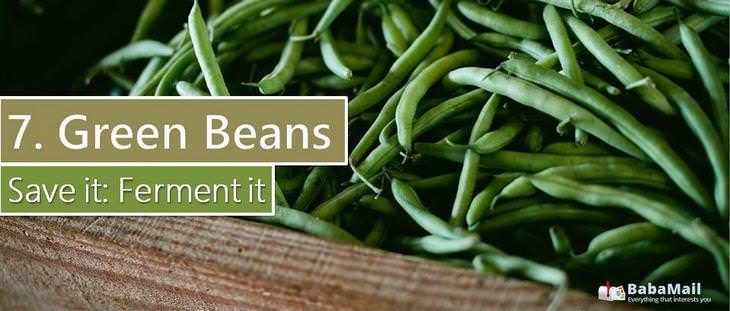
While fermentation may sound like a complicated process, it is not all that hard to create. 
 
Here's How: Chop the green beans into even one inch-pieces and put them in a pint jar, leaving 2 inches at the top. Cover with brine (adding 1 1/2 teaspoons of sea salt to 2 cups of filtered water). Make sure the beans are submerged. Throw a clean kitchen towel over the top and leave to sit at room temperature for three to seven days. Your fermented green beans will last for one year in the fridge and will give your body a good dose of probiotics every time you snack on them. 
 
Will Last: 1 year


Spoiled Food
There's no better way to use almost-spoiled vegetables. 
 
Here's How: Cook a chopped onion in butter or olive oil. Add a couple of cups of chopped veggies and cover with stock or water. Simmer until the vegetables are tender then purée in a blender. Season with salt and pepper. This will give you a creamy texture. Add a bit of chopped parsley just before serving. 
 
Will Last: 1 week


https://gscrochetdesigns.blogspot.com. one can see my crochet creations  

https://kneereplacement-stickclub.blogspot.com. for info on knee replacement

https://cancersupportindia.blogspot.com  for info on cancer and health related topics

https://GSiyers home remedies.blogspot.com   is the latest addition to my blogs.

Sunday, September 8, 2024

Watercress Tacos

 If you love your tacos, tuck away some watercress in your next dish. 

 watercress

Here's How: Proceed with your usual taco recipe, but instead of using iceberg lettuce, top your tacos with watercress instead. This leafy green is especially paired well with chicken.  OR tofu, chickpeas, quinoa, mushrooms, lentils


https://gscrochetdesigns.blogspot.com. one can see my crochet creations  

 https://kneereplacement-stickclub.blogspot.com. for info on knee replacement

 https://cancersupportindia.blogspot.com  for info on cancer and health related topics

 https://GSiyers home remedies.blogspot.com   is the latest addition to my blogs.

Saturday, March 16, 2024

11 ways to increase bone density naturally

Low bone density can increase the risk of fracture. People can increase their bone density through strength training, dietary choices, weight management, and other strategies.

Bone density changes over time. Throughout childhood, adolescence, and early adulthood, the bones absorb nutrients and minerals, gaining strength.

However, as a person enters their late 20s, they reach their peak bone mass, meaning they will no longer gain bone density.

The bones may lose density as a person continues to age. After menopause, in particular, a person becomes susceptible to osteoporosis. Osteoporosis can weaken the bones so much that they can break easily.


1. Weightlifting and strength training

Studies show that weightlifting and strength training can help promote new bone growth and maintain existing bone structure.

A review of exercise and bone density in people with osteoporosis suggests that weight bearing aerobic exercise alone can limit bone mass loss, while strength and resistance exercises can increase muscle and bone mass density.

Review authors highlight that strength and resistance exercises are site-specific. They only increase muscle and bone mass density in areas the exercises stimulate.

Benefits of weight and strength training include

  • increased bone mineral density
  • increased bone size
  • protection against bone loss
  • improved balance and coordination
  • increased muscle mass

Vegetables provide important vitamins, minerals, and fiber. A review highlights the importance of an overall balanced diet low in processed foods for bone health. However, the review authors suggest further research is necessary.

Research in a review highlights a positive association between bone mass density and fruit and vegetable consumption, which may be due to vitamin intake.

The authors also highlight research suggesting vitamin C intake may improve bone health and protect against osteoporosis. They list the following vegetables as good sources of vitamin C:

  • potatoes
  • green or red peppers
  • broccoli
  • Brussels sprouts

Another source suggests that consuming fewer than five servings of fruit or vegetables per day increases the risk of hip fractures.


Monday, February 26, 2024

Don't Ignore the Expiry Dates for These Foods

Think a sniff test or a quick glance can always tell you if food is off and should be thrown away? Think again! Looks and smells can sometimes be deceiving, which is why the expiration dates that are stamped on packaging can guide you and help prevent illness. Below are ten foods that you should never consume once the expiration date has passed.


1. Egg Substitutes
Expiration Dates
A carton of eggs has a little more leeway than their boxed substitutes, but both need to be consumed in a timely manner. So, if you’re debating whether to finish off that two-week-old carton of whites – don’t! It’s safe to keep eggs in the fridge for three to five weeks if they’re in a shell, but for egg substitutes, you only have about 3-5 days on average once they’re open. If they’re unopened then you have about 10 days.


2. Soft Cheeses  
Harder cheeses such as cheddar or Gouda have a longer shelf life because it’s more difficult for mold and bacteria to permeate them. Once opened, these cheeses can last up to 6 months in the fridge. However, softer cheeses such as goat cheese, ricotta, or cream cheese are more susceptible to mold and bacteria and should be thrown away at the first sign of spoiling or once the expiration date has passed. As a general rule, soft cheeses last about a week in the fridge once opened. 
 
 
3. Jarred Condiments
Expiration Dates

It might seem like spreads and sauces last forever, but just because they’re in a glass jar tucked away in the fridge, doesn’t mean they’re protected from bacteria. Once the lid has been opened, the safety seal is broken, and the condiment should be consumed in a timely fashion. Furthermore, when we make sandwiches, for example, we dip our knife into the spread container and wipe it on the bread and then dip it back into the container. By doing this, you’re putting some of that bacteria back into the container. Jarred condiments tend to have more exposure to bacteria and therefore they can lead to foodborne illnesses if not trashed at the appropriate time. If you notice water floating on the top, some discoloration, or weird smells, it’s safer to just throw it out. 
 
 
4. Cold-Pressed Juice  
Green juices might be filling up your social media feeds each day, but they shouldn’t find a permanent home in your fridge. Cold-pressed or raw juices are incredibly popular among the health-conscious since they’re full of nutrients, but it’s important to consume them very soon after buying. Unlike typically processed juices which undergo pasteurization to destroy harmful bacteria and increase shelf life, these raw juices are not pasteurized, making them much more prone to contamination by bacteria. 
 
 
5. Fresh Meat Expiration Dates
When it comes to fresh meat, you’re usually dealing with a “sell by” date, which tells the store the last day it can keep that product out for sale. So, what does this mean for you? Well, you either need to eat it or freeze it when you get home. 
 
6. Ground Meats 
Ground meats should be eaten or frozen within two days of purchase. This applies to beef, turkey, pork, lamb, and any other type of ground meat. Since it’s ground, the bacteria that were originally present on the surface might be mixed throughout the meat, increasing your risk of contracting food poisoning or another illness. 
 
 
7. Fish
Fish are no less prone to bacteria than meat and should be consumed in one or two days after purchase. Otherwise, Whole Foods advises tightly wrapping it in moisture-proof freezer paper or foil and putting it in the freezer. 
 
 
 8. Fresh Berries  
Whether you buy them from the store or farmer’s market, berries have a short lifespan. Raspberries and strawberries are only good for about three days after purchase, while blueberries can last a couple of days longer in the fridge. After that, they turn mushy and become susceptible to a bacteria called cyclospora cayetanensis, which can cause bloating, diarrhea, vomiting, and other food poisoning symptoms. 


9. Leafy Greens
Expiration Dates
Yup, even those packaged ones that are pre-washed. Leafy greens have the potential to carry bacteria such as E. coli because they’re touched by so many hands. For your own safety, wash all types of greens before eating them and never consume them after the date on the packaging. 


 10. Sprouts  
Sprouts are grown in warm climates, which makes them ideal breeding grounds for bacteria right off the bat. Eat them past their ideal date (about two days after purchase) and your risk of getting sick increases. If you’re already sick or pregnant, avoid them altogether.


https://gscrochetdesigns.blogspot.com. one can see my crochet creations  

https://cancersupportindia.blogspot.com. feel free to view for easy, simple and health tips  

https://kneereplacement-stickclub.blogspot.com. for info on knee replacement

https://GSiyers home remedies.blogspot.com     is the latest addition to my blogs
.

Saturday, September 30, 2023

9 Foods You Are Washing Incorrectl

 People who place a high value on their health know how important it is to wash their food thoroughly well. While the process is simple - turning on a faucet and rinsing your food, there are a few nuances that are essential for you to remember. Below are 9 products we wash incorrectly:

1. Frozen fruits and veggies
9 foods to wash well
While frozen fruits and vegetables tend to save us more time in the kitchen - no chopping required - before freezing, vegetables are washed with water. However, most people do not wash frozen products before using them, which is fine if they are being cooked at a high temperature. But for al dente vegetables, they should be washed thoroughly to get rid of the dirt and bacteria.


2. Rice
 Rice, particularly long grain rice, should be rinsed 3 to 4 times before cooking. The main danger lies not in the dust but in the starch covering rice. The starch is what causes the rice to clump together, making it look unappetizing. Other starchy grains like corn or wheat grains should be rinsed until the water runs clear.


3. Mussels and oysters
9 foods to wash well
All seafood in shells, including mussels and oysters, should be thoroughly rinsed - even if you buy the frozen packet, as they are full of sand and grit. 
 
 
 4. Milk and dairy products 
 The packaging of milk, yogurt, and other liquids should all be washed before opening. Thousands of customers touch these items, pick them up and read the information on the labels. As soon as we open a bottle, the bacteria from people who have previously handled the container can easily be passed on. 
 
 
5. Fish
Unless you are going to eat fish raw, there is no need to wash it as high temperatures all bacteria. Furthermore, if you rinse raw fish, there is a risk of spreading the bacteria all around your kitchen. Bear in mind that after handling the fish, you should wash your hands, the cutting board and the knife. 
 
 
6, Cabbage and cauliflower
Cabbage must be washed thoroughly no matter what type of cabbage it is. Cauliflower, which comes from the same family as the cabbage should be cleaned well, in all its nooks. To cook red or white cabbage, remove the upper two layers as they tend to hide dirt and dust. To get rid of bugs and bacteria put the cabbage in the sink and fill with water, adding some vinegar and leave for a couple of minutes. Then rinse with clean water. 


7. Canned beverages
9 foods to wash well
Don't gulp a can of soda without washing it or wiping it down first. Cans travel in dusty trucks and are handled by many people. In fact, it's all the better if you pour the contents from the can into a glass. 
 
 
 8. Lettuce and all leafy green veges
Greens are extremely tasty and healthy. But when preparing lettuce, don't forget to rinse it first. To get rid of sand or dirt in the leaves, you need to tear the lettuce and leave it to soak in cold water for a couple of minutes. Once you take the lettuce out, place in a colander or on a clean kitchen towel and let it dry. 
 
 
9. Apples and grapes
9 foods to wash well
Apples, like most fruits, need to be thoroughly rinsed. Studies show that if you soak fruits in water and baking soda for 12 minutes, the majority of the chemicals will be washed away. 
 
 
10. Strawberries
One of the expensive fruit, doesn't last long, but here is a trick,  remove all the greens, take vinegar 1 part and 2 parts water, wash the strawberries well. Then keep in a colander for the water to drain out, then if you store in the fridge, it lasts long without getting spoiled.


https://gscrochetdesigns.blogspot.com. one can see my crochet creations  

https://cancersupportindia.blogspot.com. feel free to view for easy, simple and health tips  

https://kneereplacement-stickclub.blogspot.com. for info on knee replacement

https://GSiyers home remedies.blogspot.com     is the latest addition to my blogs.