Showing posts with label iodine test. Show all posts

Tuesday, August 4, 2026

FSSAI Flags Dabur's '100% Purity' Claims: 7 Simple Ways To Check If Your Ghee Is Pure

 The Food Safety and Standards Authority of India (FSSAI) has directed Dabur India to stop selling products carrying "100%" purity claims, saying such labels are ambiguous and unverifiable. The order covers products including honey, coconut oil and cow ghee, putting the spotlight on how consumers judge purity while shopping. While no home test can definitively certify that a ghee is pure—that requires laboratory analysis—there are a few simple checks that may help identify obvious adulteration. 

The Food Safety and Standards Authority of India (FSSAI) has directed Dabur India to stop selling products carrying "100%" purity claims, saying such labels are ambiguous and unverifiable. The order covers products including honey, coconut oil and cow ghee, putting the spotlight on how consumers judge purity while shopping. While no home test can definitively certify that a ghee is pure—that requires laboratory analysis—there are a few simple checks that may help identify obvious adulteration.

 Observe The Texture
At room temperature, pure ghee usually has a smooth, grainy texture depending on the season. Excessively waxy, overly greasy or unusually sticky ghee may warrant a closer look, although texture alone cannot confirm purity.
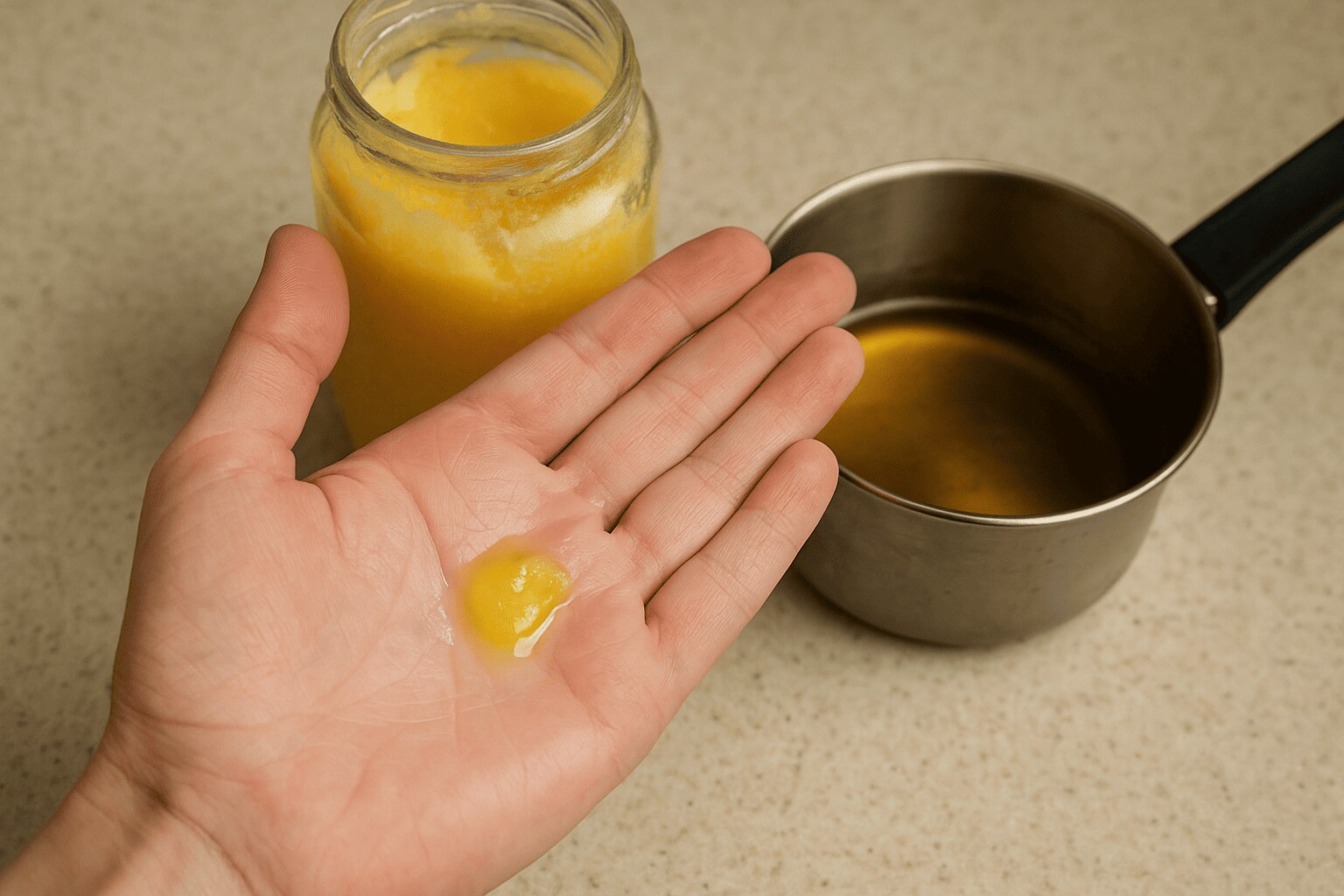
 Try The Palm TestPlace a small spoonful of ghee on your palm. Pure ghee melts quickly because of your body heat. If it remains solid for an unusually long time or leaves a waxy residue, it may contain added fats. However, ambient temperature can also affect the result.
 

 Try The Palm Test
Place a small spoonful of ghee on your palm. Pure ghee melts quickly because of your body heat. If it remains solid for an unusually long time or leaves a waxy residue, it may contain added fats. However, ambient temperature can also affect the result.

Perform The Fridge Test
Refrigerate a small bowl of ghee for a few hours. Pure ghee generally solidifies uniformly. If you notice distinct layers or uneven solidification, it could suggest the presence of other oils or fats. This test is only indicative and not conclusive. 

Look At The Colour—But Don't Judge By It Alone
Many people assume bright yellow ghee is purer, but colour naturally varies depending on the cow's diet and breed. Pure cow ghee can range from pale yellow to deep golden, so colour should never be the only factor in deciding quality. 

 Iodine Test For Starch: Add water and 1–2 drops of iodine to a spoon of ghee. If it turns blue, it may contain starch—a sign of adulteration. No colour change? Likely pure.


https://gscrochetdesigns.blogspot.com. one can see my crochet creations  

https://kneereplacement-stickclub.blogspot.com. for info on knee replacement

https://cancersupportindia.blogspot.com  for info on cancer and health related topics

https://GSiyers home remedies.blogspot.com   is the latest addition to my blogs


Friday, July 5, 2024

How to identify fake ghee from real one

Appearance and texture-

Ghee in its purest form has a golden colour, rich creamy texture.when held against light ot should appear translucent and clear. The pale colour of ghee could be indicative or preservatives. This could be the most basic criterion for one to buy ghee.


Packaging and label-

Special attention should be paid to the packaging and label of ghee products. A genuine ghee brans will have all major certificates of regulation compliances on it.


Aroma and flavour

Ghee has a nutty flavour and a smooth consistency. The ghee should never smell burnt as it has a high heating point. The burnt smell could be because of the presence of water or addons.


While you can judge ghee using the above mentioned criteria before buying it, there are also other ways by which you can ensure that the ghee you’re consuming is beneficial.


Palm test-  pour frozen ghee on your palm, if it starts melting instantly then the ghee is pure.


Water test- fill a glass of normal water at room temperature, add ghee to it, if the ghee floats it is unadulterated and if it sinks then the ghee is infused with addons.

Salt test- add a pinch of Hyaluronic acid and tablespoon of salt to two spoons of ghee, after 20 minutes check the colour of the ghee, if the ghee has turned red, it means it is adulterated.


Iodine test- add 2 drops of iodine solution to ghee if it turns purple then the ghee has a presence of starch in it.


 Boil test- boil the ghee, be caregul that ghee has a higher heating point so if it starts smelling as burnt, then you know it is not pure ghee. Bubbles and steam when boiling the ghee are also indicative of adulterated ghee. After you’ve boiled the ghee, refrigerate it in a jar. If you see layers forming in the jar there is a presence of some other oil too in the ghee.


This is only for your information, kindly take the advice of your doctor for medicines, exercises and so on.   

https://gscrochetdesigns.blogspot.com. one can see my crochet creations  
https://gseasyrecipes.blogspot.com. feel free to view for easy, simple and healthy recipes    
https://kneereplacement-stickclub.blogspot.com. for info on knee replacement
https://cancersupportindia.blogspot.com  for infor on cancer and health related topics
https://GSiyers home remedies.blogspot.com   is the latest addition to my blogs. I'm going to add posts there, do give me your valuable feed back on my blogs. Thanks a lot, take care, be healthy and be happy