 has directed Dabur India to stop selling products carrying "100%" purity claims, saying such labels are ambiguous and unverifiable. The order covers products including honey, coconut oil and cow ghee, putting the spotlight on how consumers judge purity while shopping. While no home test can definitively certify that a ghee is pure—that requires laboratory analysis—there are a few simple checks that may help identify obvious adulteration.")
The Food Safety and Standards Authority of India (FSSAI) has directed Dabur India to stop selling products carrying "100%" purity claims, saying such labels are ambiguous and unverifiable. The order covers products including honey, coconut oil and cow ghee, putting the spotlight on how consumers judge purity while shopping. While no home test can definitively certify that a ghee is pure—that requires laboratory analysis—there are a few simple checks that may help identify obvious adulteration.
Observe The Texture
At room temperature, pure ghee usually has a
smooth, grainy texture depending on the season. Excessively waxy, overly
greasy or unusually sticky ghee may warrant a closer look, although
texture alone cannot confirm purity.
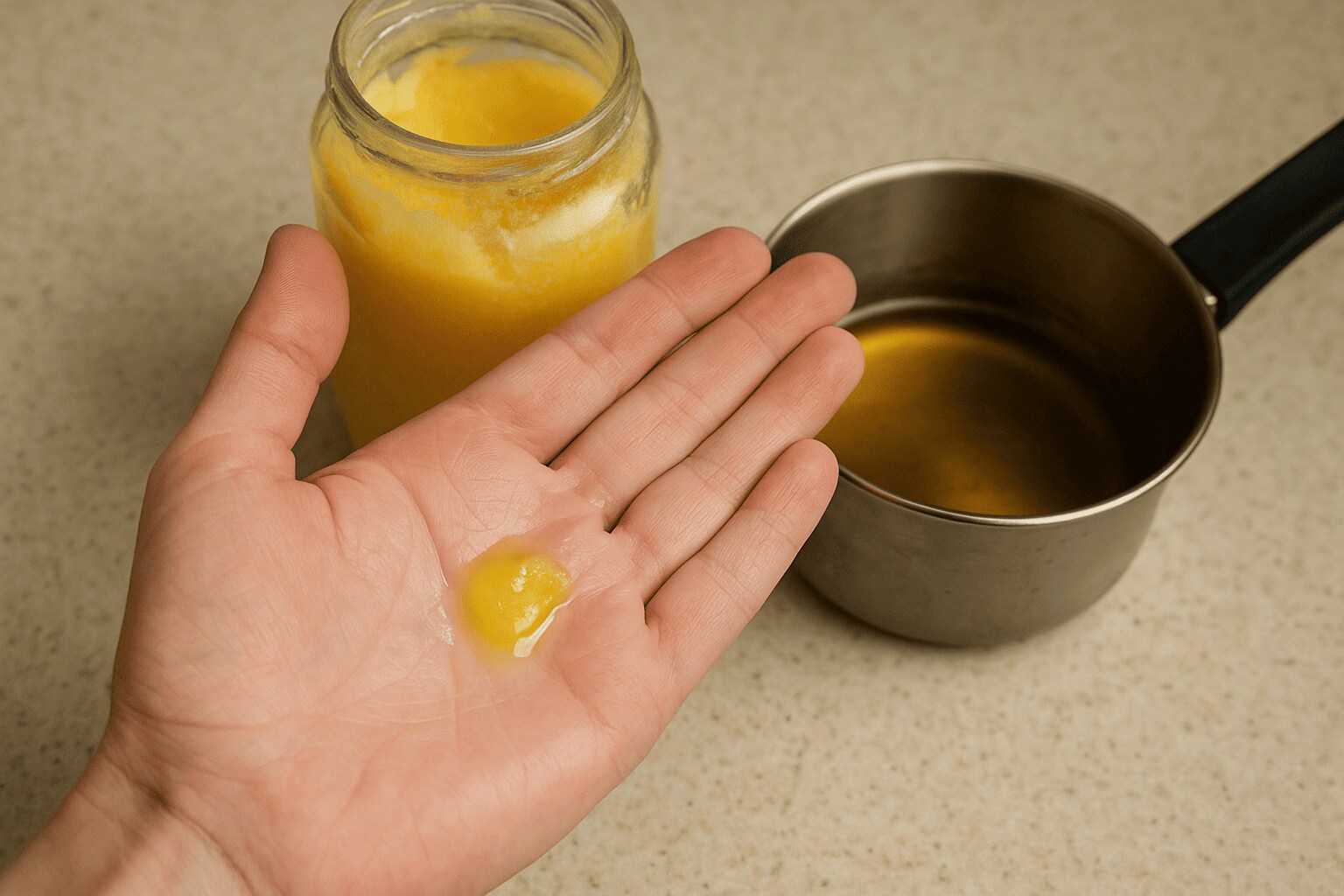
Try The Palm Test
Place a small spoonful of ghee on your palm. Pure
ghee melts quickly because of your body heat. If it remains solid for an
unusually long time or leaves a waxy residue, it may contain added
fats. However, ambient temperature can also affect the result.
Perform The Fridge Test
Refrigerate a small bowl of ghee for a few
hours. Pure ghee generally solidifies uniformly. If you notice distinct
layers or uneven solidification, it could suggest the presence of other
oils or fats. This test is only indicative and not conclusive.
Look At The Colour—But Don't Judge By It Alone
Many people assume
bright yellow ghee is purer, but colour naturally varies depending on
the cow's diet and breed. Pure cow ghee can range from pale yellow to
deep golden, so colour should never be the only factor in deciding
quality.
Iodine Test For Starch: Add water and 1–2 drops of iodine to a spoon of ghee. If it turns blue, it may contain starch—a sign of adulteration. No colour change? Likely pure.