Ingredients
For dough
The recipes posted here are very simple, with no hard & fast rule, as I love to cook a variety but with ease. My dishes are such that it is nutritious & easy to cook. Of course one can always change the ingredients according to one's taste & availability. Do let me know which type of recipes are preferred, or in case you've any queries too. Feel free to comment.
Ingredients
For dough
Give the usual rice kheer a lighter twist with chia seeds. Soak two tablespoons of chia seeds in unsweetened milk or an unsweetened, fortified plant-based alternative. Add cardamom, a pinch of saffron and a little cinnamon, then refrigerate for a few hours until the mixture thickens.
You can add a small amount of an appropriate non-nutritive sweetener if needed. Top with a few chopped almonds or pistachios before serving. Chia seeds provide fibre, but the milk and any toppings still contribute to the overall carbohydrate count.
If you enjoy the creamy richness of shrikhand, you don’t necessarily have to skip it. Swap full-fat, sweetened yoghurt for plain, unsweetened Greek yoghurt or hung curd. Whisk it with a little cardamom, saffron and a diabetes-appropriate non-nutritive sweetener. Refrigerate until chilled and finish with a few chopped pistachios or almonds.
Ingredients
1 liter full cream milk
1/2 cup sabudana (soaked in water for 2 hours)
1 to 2 tsp ghee
1/2 cup sugar
1/2 tsp cardamom pdr
15 to 20 chopped dry fruits
4 to 5 strands of saffron
Preparations
Heat the ghee in a heavy bottom pan and roast the makhana till it turns crunchy. Crush or chop these into smaller pieces and set aside.
Boil the milk in the same pan and add the drained sabudana to it. Stir continuously for 5 minutes so that it does not stick to the bottom. Stir in the roasted makhana, saffron strands and cardamom powder.
Cook this on a low flame till it thickens and then go in with the
Serve with some more added dry fruits and saffron strands.
The base is simple. It uses 300 grams of digestive biscuits, crushed and mixed with 40 grams of melted butter. A quarter teaspoon of cardamom powder goes in with them, which gives the crust a warm, familiar mithai flavour before the filling is even added.
For the filling, he uses 500 grams of cream cheese and 200 millilitres of whipping cream, with one tablespoon of milk to loosen things up. Six to seven strands of saffron and another quarter teaspoon of cardamom powder give it that classic Indian dessert aroma. Condensed milk is added to taste, so the sweetness can be adjusted to suit whoever is eating it.
This is the part that sets the dish apart. The boondi starts with a batter of 100 grams of besan, 150 millilitres of water and a pinch of saffron. The batter is dropped into hot ghee, where it fries into tiny golden pearls. Instead of a sugar syrup, he makes one with 60 grams of condensed milk and 150 millilitres of water, and the boondi soaks in it. The result is the same soft, sweet texture people expect from motichoor, minus the sugar. The finished boondi is then layered or piled on top of the chilled cheesecake.
Motichoor ladoo is one of the most recognisable Indian sweets, and cheesecake is a dessert most people already know well. Putting them together makes sense because both lean on richness and gentle sweetness. The tang of cream cheese balances the sugary boondi, while saffron and cardamom tie the two halves together so the dish feels like one idea instead of two.
The texture contrast matters as well. A smooth, cold filling against soft, syrupy pearls gives every bite a bit of variety, and the crisp biscuit base underneath adds a third layer.
The reel has picked up around 6,000 likes and 245 comments so far. Many people said they had never seen this combination before but loved the creativity. One commenter called it their first time seeing a motichoor cheesecake and said they loved it. Others suggested layering in even more boondi, or trying citrus versions with lemon, orange or pineapple, and even a peppermint twist. A fair number of people simply asked for the link to the sweetener, which shows how much interest there is in sugar-free dessert options right now.
Because the recipe is built from separate parts, it is easy to adapt. The base, filling and boondi can each be prepared ahead and put together just before serving, which makes it a practical choice for festive gatherings where guests are watching their sugar intake. It is also a good example of how familiar Indian flavours can be reworked into new formats without losing what makes them special.
Ingredients
3 cup maida /All purpose flour
1 cup melted ghee
100 grams yogurt
1+1/4 cup sugar
2+1/2 cups milk (liquid)
a pinch of saffron
2 tbsp lukewarm milk
1/2 tsp cardamom powder
3+1/2 tsp baking powder
1/2+1/4 tsp baking soda
1 cup finely chopped nuts
1/3 cup of roughly chopped nuts (for topping)
Preparations
Preheat your oven to 180°C and grease a large cake tin with ghee or line it with parchment paper.
Soak a pinch of saffron in 2 tbsp of lukewarm milk for 5 minutes until it releases a rich yellow color and aroma.
In a bowl, combine the all-purpose flour, baking powder, and baking soda. Sift or whisk together thoroughly to ensure even aeration, then set aside.
In a large mixing bowl, combine the melted ghee and sugar. Stir well until the sugar dissolves. Add the yogurt and 2½ cups of milk, whisking continuously until smooth and fully emulsified.
Gradually fold the sifted dry ingredients into the wet mixture until no dry flour remains. Add the prepared saffron milk, cardamom powder, and 1 cup of finely chopped nuts. Gently fold until evenly distributed (do not over-mix).
Pour the batter into the greased cake tin. Smooth the top with a spatula and sprinkle the ⅓ cup of roughly chopped nuts over the surface.
Bake at 180°C for 60 to 65 minutes, or until a skewer inserted into the center comes out clean.
Allow the cake to cool in the tin for 15 minutes before transferring it to a wire rack to cool completely. Slice and serve.
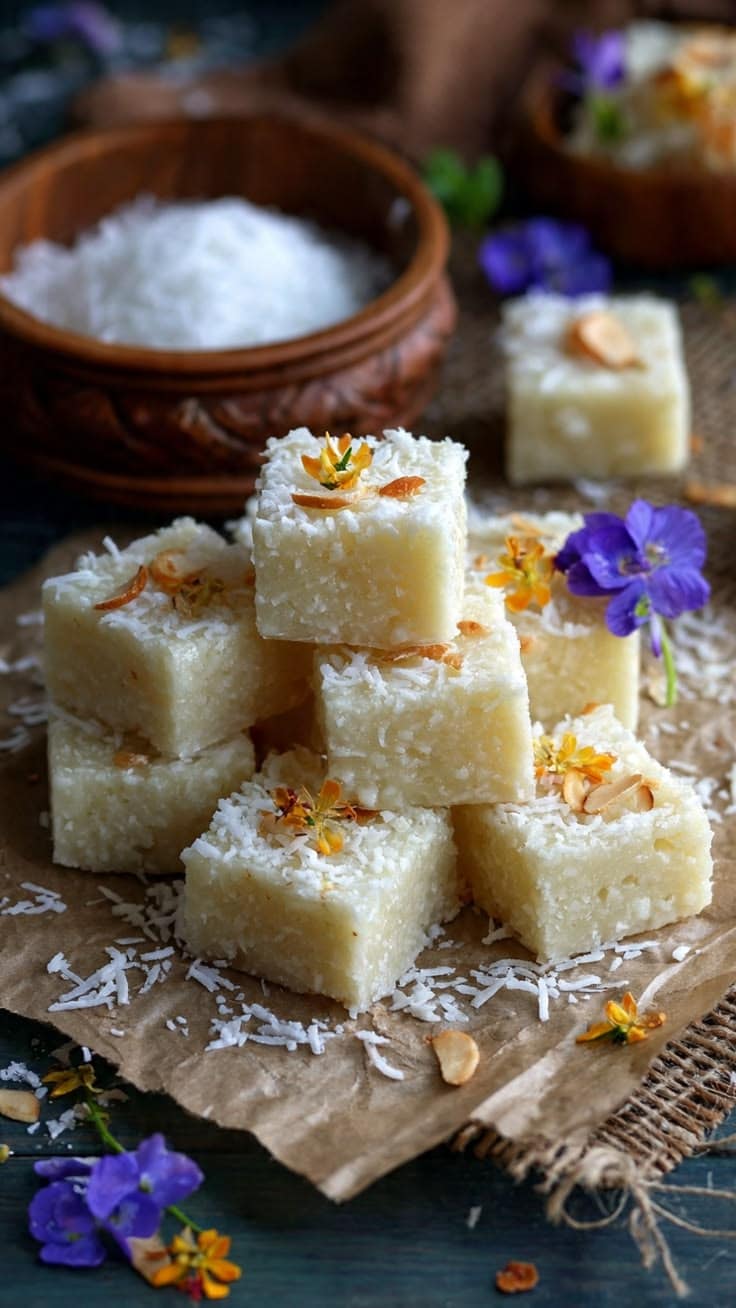
Ingredients :
* Fresh grated coconut – 1 cup
* Khoya/mawa – ½ cup
* Sugar – ⅓ cup
* Saffron – 8–10 strands
* Warm milk – 1 tbsp
* Cardamom powder – ½ tsp
* Ghee – 1 tsp
* Pistachios – for garnish
Method :
1. Soak saffron in warm milk for 10 minutes.
2. Heat ghee and lightly roast the coconut.
3. Add khoya and cook for 2–3 minutes.
4. Add sugar, saffron milk and cardamom.
5. Cook until thick and glossy.
6. Cool slightly, shape into modaks and garnish with saffron and pistachios.
Ingredients
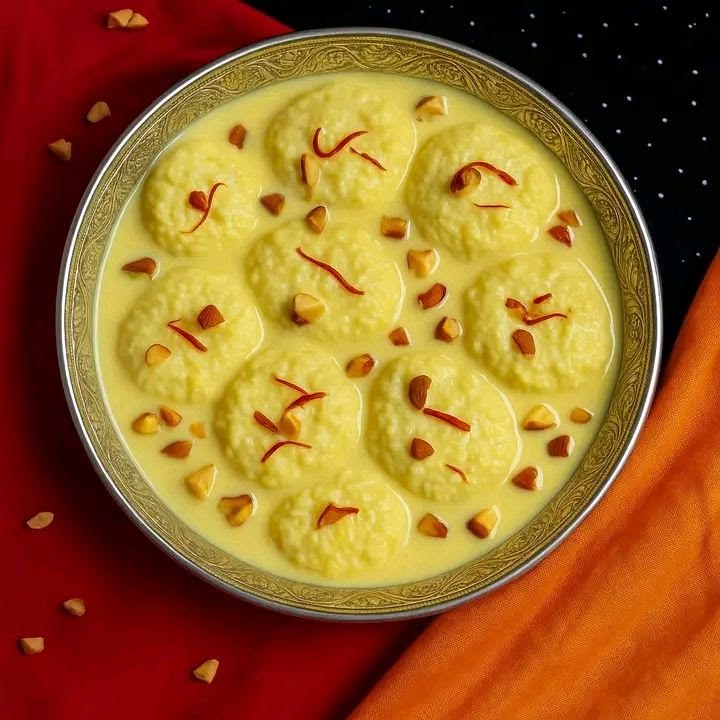
To make Semolina Balls
Kodo millet semolina -1/4 cup
Milk 1 cup
Ghee 1 tsp
Sugar 1/4 cup
To make Rabdi
Milk 1 cup
Water 1/3 cup
Fresh Mango purée -1/2 cup
cardamom pdr – 1 tsp
Sugar 2tbsp
Chopped Pistachios ,almonds and saffron – as needed for garnishing.
Method
In a pan add the milk, ghee sugar and once it boils add the kodo millet semolina and cook it for 5-7 min until it separates the pan.
Then transfer it to a plate and apply ghee in handsand roll the cooked mixture into balls and flatten it and keep aside.
For the rabdi , in a pan add milk, water, sugar,elaichi and mix nicely.
Now add the flattened semolina balls and cook covered for 10 min.
Add the mango purée to the milk mixture and give a quick boil.
Switch off the stove. Leave it aside for few minutes for the balls to soak nicely.
Garnish with pistachios, almond and saffron.
Traditional Panjiri flavours get a contemporary makeover in these bite-sized truffles. Made with roasted makhana, ragi, nuts, seeds and warming spices such as sunth and cardamom, these treats retain the familiar character of Panjiri while offering a modern presentation.
Makes approximately 20–24 small truffles
Ingredients
For the Roasted Base
Roasted makhana – 1 cup
Ragi flour – ½ cup
Almonds – ½ cup
Cashews – ½ cup
Pistachios – ¼ cup
Melon seeds (magaz) – ¼ cup
Pumpkin seeds – ¼ cup
Flaxseeds, lightly roasted – 2 tbsp
Desiccated coconut – 2 tbsp
Ghee – 2–3 tbsp
For the Spice Blend
Dry ginger (sunth) powder – 1½ tsp
Cardamom powder – ½ tsp
Grated nutmeg – a pinch
Saffron – a few crushed strands, optional
Black pepper – a tiny pinch, optional
For Sweetness and Binding
Choose one:
8–10 soft Medjool dates, or 12 regular soft dates
Additional warm ghee – 2–3 tbsp, as needed for binding
For Finishing
Roasted makhana powder
Finely chopped pistachios
Toasted pumpkin seed crumble
Dried rose petals
Edible silver leaf, optional
Method
1. Roast the Ragi
Heat 1 tablespoon ghee in a heavy-bottomed pan. Add the ragi flour and roast over low heat for 8–10 minutes, stirring continuously until aromatic. Set aside.
2. Roast the Nuts and Seeds
Roast the makhana separately until crisp.
Lightly roast the almonds, cashews, pistachios, melon seeds, pumpkin seeds, flaxseeds and desiccated coconut until fragrant.
Allow everything to cool slightly.
3. Grind
Pulse the roasted makhana, nuts and seeds into a coarse mixture.
Avoid grinding everything completely smooth—a little texture gives the truffles a more interesting bite.
4. Combine the Ingredients
Combine the roasted ragi flour and coarse nut-and-seed mixture.
Add sunth ( dry ginger pdr), cardamom, nutmeg, saffron and black pepper, if using. Mix thoroughly.
5. Sweeten and Bind
For the date version: Blend the soft dates into a smooth paste and knead them into the warm mixture. Add a little ghee if needed.
For the jaggery version: Add the powdered jaggery and 2–3 tablespoons warm ghee. Mix until the mixture holds together when pressed between your fingers. Add a little more ghee only if necessary.
6. Shape
Take small portions of the mixture and roll them into bite-sized truffles.
7. Finish
Roll the truffles in roasted makhana powder or finely chopped pistachios.
Finish with pumpkin seed crumble, dried rose petals and a small piece of edible silver leaf, if desired.