Showing posts with label roasting. Show all posts

Friday, July 7, 2023

7 Types of Tomatoes You’ve Never Seen Before

Although commonly used and referred to as vegetables in culinary applications, all tomatoes are actually the fruits of the Solanum lycopersicum plant. While you may be familiar with the round or globe varieties, there is actually a wide range of tomato types available.

Beyond their delectable taste, whether consumed raw or included in various dishes like sauces, stews, soups, salads, and dips, tomatoes offer impressive health benefits. They are well-known for their lycopene content, which not only gives them their vibrant red color but also serves as a potent antioxidant. Additionally, tomatoes provide essential nutrients such as vitamin C, folate, potassium, vitamin K, and fiber, further contributing to their positive impact on health.
 
Tomatoes undergo selective breeding to achieve various characteristics such as color, taste, size, and appearance. While each tomato variety may possess distinct traits, they share two fundamental features: a common lineage tracing back to the Aztecs and belonging to the nightshade family. 
 
If you're interested in exploring different tomato varieties, here are some popular options to consider. While most can be found in regular grocery stores, there are a few unique varieties that may require a visit to your local farmers' market during the tomato season.

1. Cherry tomatoes
raw, juicy, grapeTypes of Tomatoes, Cherry tomatoes
Cherry tomatoes taste vibrant and sweet, possibly due to their small size, which intensifies the flavor. These tomatoes have high water content and burst with juice when bitten into. They vary in size, ranging from the tip of a thumb to a golf ball. While red is the most common color, cherry tomatoes can also be found in shades of green, purple, yellow, and even nearly black. 
 
Cherry tomatoes are usually consumed raw to fully experience their delightful texture and juicy sweetness. They can be added to salads, salsas, or vegetable platters. When cooked, such as through roasting or sautéing, cherry tomatoes develop a more robust and profound flavor. However, they are not considered the ideal choice for making tomato sauces.  
 
2. Grape tomatoes
Types of Tomatoes, Grape tomatoes
As the name suggests, grape tomatoes are similar in appearance and size to grapes. Grape tomatoes have a denser, chewier, and more substantial texture compared to cherry tomatoes. They offer a delightful blend of sweetness and tanginess, and their long shelf life surpasses that of cherry tomatoes. Additionally, their tougher and thicker skin makes them less delicate and more convenient for transportation. 
 
Given their meaty texture, grape tomatoes are an excellent addition to pasta, salads, and vibrant side dishes. They can be enjoyed raw as a snack or cooked through methods such as roasting or sautéing. 
 
3. Pear tomatoes 
Types of Tomatoes, Pear tomatoes
 Pear tomatoes, also called teardrop tomatoes, are heirloom tomatoes (open-pollinated varieties that have been passed down through several generations of family). These little delights, known for their oblong shape, have a gentle and predominantly sweet taste. The yellow varieties are the most common, but there are also red and orange ones. Toss them into salads or savor their freshness straight from the vine. 
 
They are particularly appealing to home farmers due to their high yield. Once these tomatoes yield fruit, you can expect a consistent and plentiful crop of pear-shaped tomatoes throughout the season.
 
 4. Beefsteak tomatoes
Types of Tomatoes, Beefsteak tomatoes

Beefsteak tomatoes, sometimes known as beef tomatoes, are a huge variety of grown tomatoes that can grow to be around 4-6 inches across and weigh up to 1 pound (453.5 g) or more. They have prominent ribs and contain multiple small seed compartments. These tomatoes have a firm, juicy, and meaty flesh that maintains its shape even when thinly sliced. 
 
These round and succulent tomatoes are particularly well-suited for use as toppings on burgers and sandwiches. To truly appreciate the unmatched taste of beefsteak tomatoes, it is highly recommended to indulge in them during the summer when they reach their pinnacle of flavor.

5. Plum tomatoes
Types of Tomatoes, Plum tomatoes
Plum tomatoes, also known as Roma or paste tomatoes, are distinguished by their odd oval shape that resembles a kiwi. Because of their meatier texture, fewer seeds, and lower water content as compared to other tomato types, they are often used for canning and are highly recommended for sauce-making. 
 
In addition to their prevalent use in sauces, plum tomatoes can also be employed in recipes that require a tomato's textural qualities without overwhelming the dish with its flavor. 
 
6. Green tomatoes
Types of Tomatoes, Green tomatoes
According to Farm Flavor, there are two types of green tomatoes: ones that are unripe red tomatoes and ones that will stay green throughout their entire fruiting cycle (which are typically heirloom varieties). The green tomatoes you find on restaurant menus are generally the former. 
 
Green tomatoes are harvested intentionally before ripening or are fruits that did not end up ripening by the end of the growing season. 
 
Unripe green tomatoes are used in various dishes. Fried green tomatoes, for example, are popular in the southeastern United States. They are sliced, breaded with cornmeal, then fried. They’re also excellent for canning and preparing sauces. These tomatoes are tangy and slightly sour, so they impart a unique flavor and color to dishes. One common use of green tomatoes is to make relish, a condiment for sandwiches and meats. When cooked, green tomatoes retain their shape, making them excellent for pickling. 
 
Keep in mind that green tomatoes that are not yet fully ripe have higher alkaloid levels than ripe ones, making them harder to digest. Consuming unripe tomatoes raw can potentially lead to gastrointestinal problems, so it is advisable to avoid eating them in their unripe state.


7. Vine-ripened tomatoes
Types of Tomatoes, Vine-ripened tomatoes
Vine-ripened tomatoes are sold while still attached to the vine they grew on, which helps extend their shelf life. Tomatoes that are allowed to fully ripen on the vine offer a more robust aroma and higher levels of antioxidants than those ripened off the vine. These tomatoes have a delightful flavor profile characterized by sweetness, juiciness, and a fresh taste. It is recommended to keep the stems intact on on-the-vine tomatoes until they are ready to be used in the kitchen. 
 
While you can gently detach the tomatoes from the stem and slice them for various culinary uses such as sauces, salads, sandwiches, burgers, and canning, you also have the option to leave the tomatoes on the vine for roasting.


https://gscrochetdesigns.blogspot.com. one can see my crochet creations  

https://cancersupportindia.blogspot.com. feel free to view for easy, simple and health tips  

https://kneereplacement-stickclub.blogspot.com. for info on knee replacement

https://GSiyers home remedies.blogspot.com     is the latest addition to my blogs.
Sunday, December 22, 2019

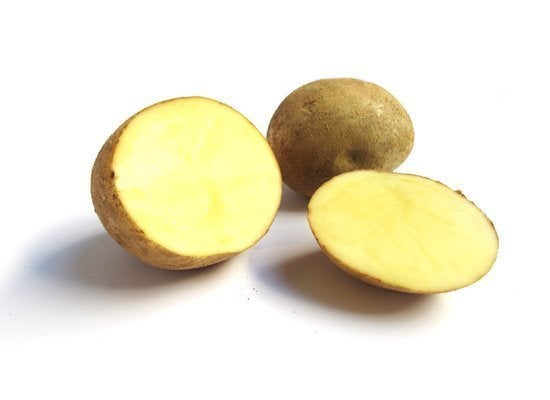
Uses of different types of potatoes.


There are more than 4,000 varieties of native potatoes, mostly found in the Andes. They come in many sizes and shapes. There are also over 180 wild potato species. Though they are too bitter to eat, their important biodiversity includes natural resistances to pests, diseases, and climatic conditions.
 
Potatoes fall into two important categories that impact the outcome of your dish: starchy and waxy (plus a category that lies somewhere in between those two).
Starchy: Like the classic Idaho or Russet, these potatoes are (obviously) high in starch and low in moisture. They're fluffy, making them great for boiling, baking and frying, but they don't hold their shape well, so they should be avoided in dishes like casseroles, gratins and potato salads.
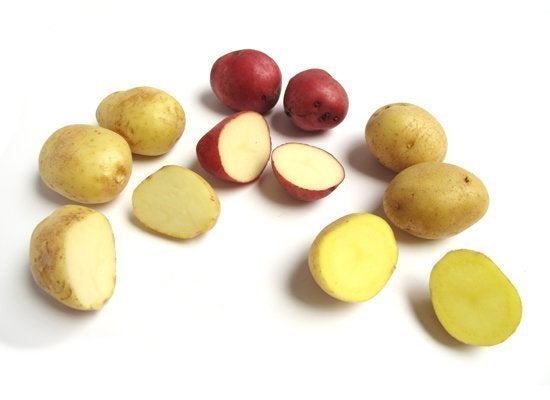
Waxy: Like Red Bliss or New Potatoes, these have a low starch content and are often characterized by a creamy, firm and moist flesh that holds its shape well after cooking. They're typically great for roasting, boiling, casseroles and potato salads.
All-Purpose: These potatoes have a medium starch content that fall somewhere in between the starchy and waxy potatoes. They're a true multi-purpose potato, and therefore can be used for just about any cooking application. A classic example is the Yukon Gold.

Once you know which type of potato you need for your particular dish, you can be as creative as you'd like when choosing varieties at the market. For example, if you're thinking of making a potato gratin, you know you're looking for a firm, waxy potato -- you can choose from a bright blue Purple Peruvian, a yellow Inca Gold, or any other waxy variety.
Here are 13 of our favorite potatoes, and everything you need to know about them.
1.Yukon Gold -- All Purpose
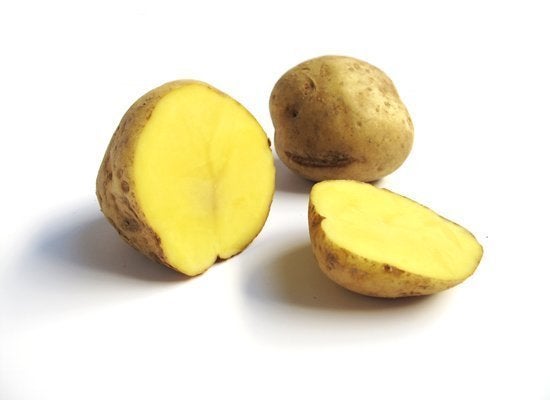
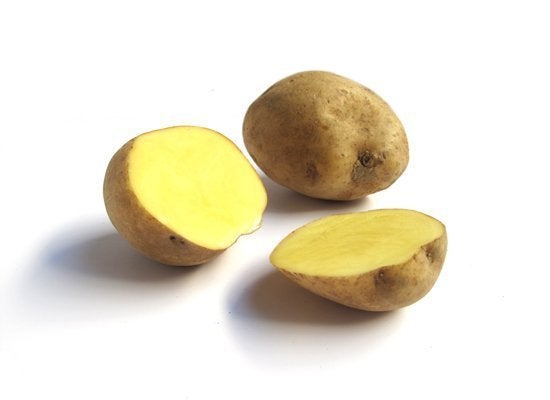
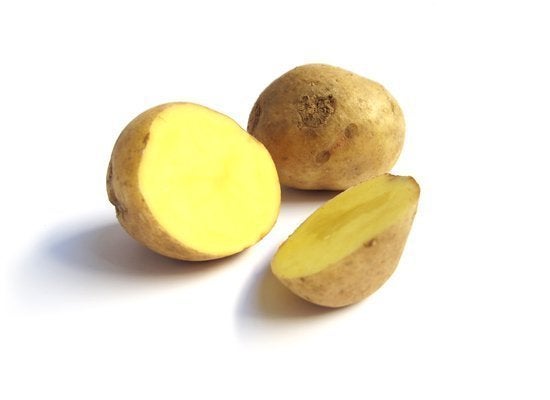
Yukon Gold potatoes have finely flaked yellowish-white skin with light yellow flesh. They're bright, vegetal and slightly sweet, with a smooth, slightly waxy texture and moist flesh. They're best for boiling, baking and making French fries. They'll also stand up well to grilling, pan frying and roasting.

2. Purple Peruvian -- All Purpose
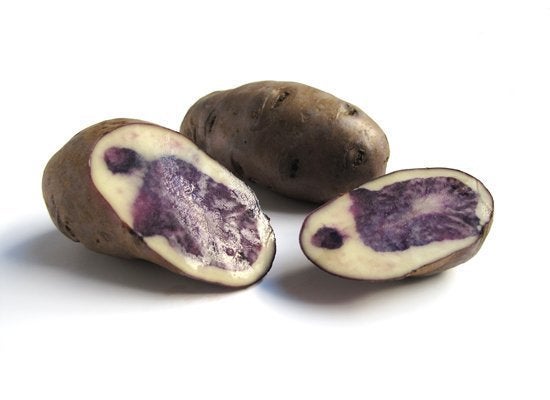
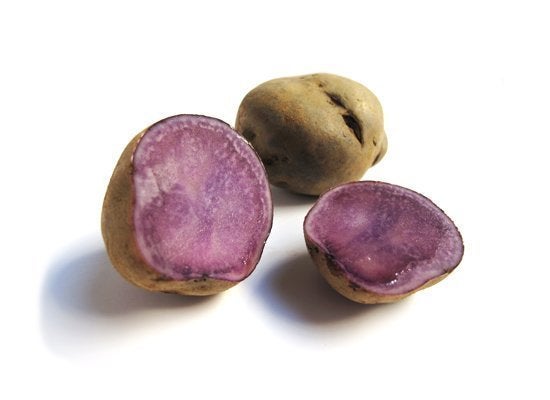
Purple Peruvian potatoes have deep purple skin and flesh. The flesh is either uniform throughout or marbled with white and deep, inky purple. They're earthy and slightly nutty, with an almost buttery aftertaste. They have a dry and starchy texture and are best for boiling, baking, roasting, frying and grilling, although they should work in all dishes and preparations.
3.Idaho Russet -- Starchy
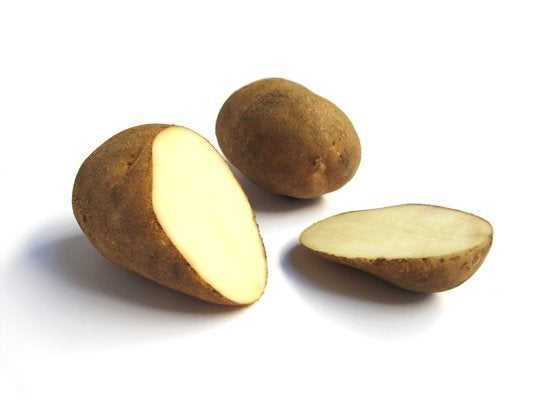
Idaho Russet potatoes are russet-skinned with white flesh. They're what we typically imagine when we think of potatoes. They have a neutral potato flavor, a fluffy, creamy and soft texture, and are best for baking, mashing and making French fries. They're also very absorbent, so are great paired with butter and cream -- think mashed potatoes. Just don't try using Idaho Russets for potato salads, gratins or any dish that requires the potatoes to hold their shape.
4.Katahdin -- Starchy
Katahdin potatoes are your French fry potatoes. They have smooth skin with yellowish flesh, and a classic potato flavor. They're fluffy, creamy, smooth and soft, and best for boiling, baking and, most importantly, making French fries. They're not great for potato salads, gratins potatoes or any dish that requires the potatoes to hold their shape.
5.Red Bliss -- Waxy
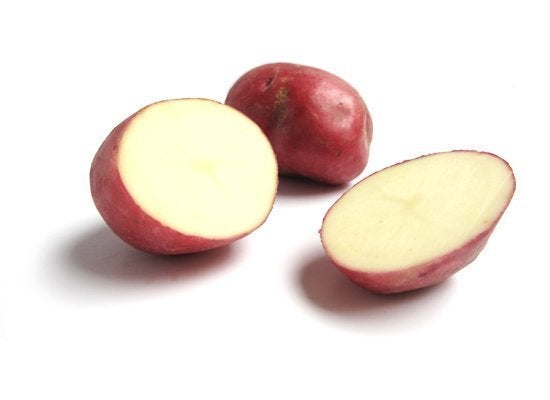
Red Bliss potatoes have bright red skin with creamy white flesh. They're slightly bitter, and have a firm, moist and waxy texture. They're best for soups, stews, boiling, roasting, potato salad and casseroles, and worst for mashing.
6. New Potatoes -- Waxy

New potatoes are defined as any type of potato that's harvested young, before its sugars have fully converted to starch. You can get many different types of them. They're small and round with thin skin, and depending on the type, they may vary in color. They're sweet, firm, creamy and very waxy. Use them for boiling, steaming, roasting or in soups, but don't use them for baking.
7. Adirondack Blue -- Waxy
Adirondack Blue potatoes have purple skin and bright blue-purple flesh that fades to a shade of blue when mashed, and deepens in shade when roasted. They have an earthy, rich and nutty flavor, and a firm, creamy and apple-like texture. They're great for mashing, baking, boiling, steaming, potato salads, casseroles or gratins, and worst for soups.
8. Adirondack Red -- Waxy
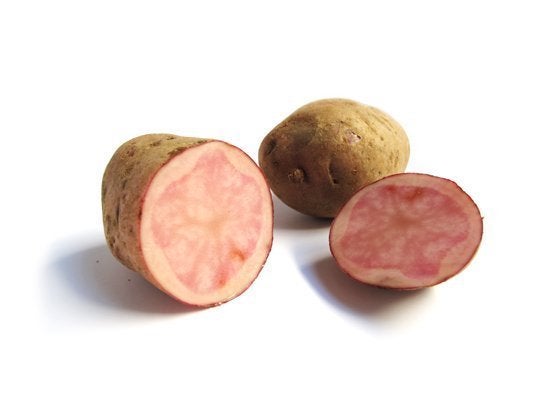
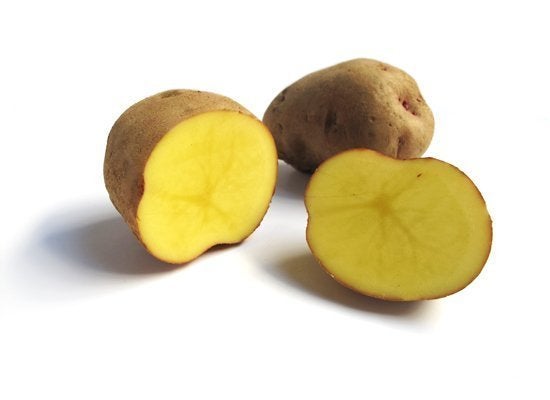
Adirondack Red potatoes have red skin with pink to red flesh that's either opaque or in a starburst pattern. Their color fades with boiling, but fades only slightly to a shade of mauve after other methods of cooking. They're slightly sweet, with a moist, meaty and waxy texture. Use them for boiling, mashing, pan frying and microwaving, but don't use them in soups.
9.Fingerling -- Waxy
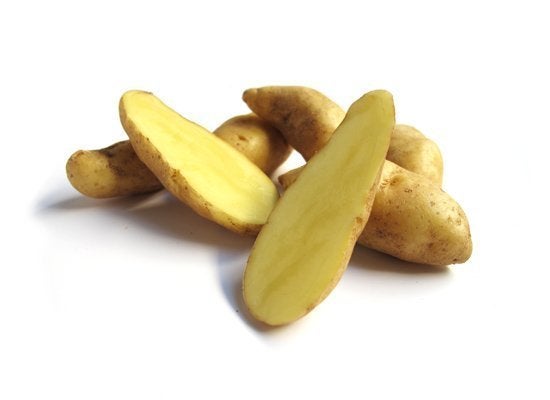
Fingerlings are two to three inches long and thin (finger-shaped, duh) with thin, buff-yellow skin and light yellow flesh. Their flavor is mild, nutty and earthy, and their texture firm and moist. They're great for boiling, baking, roasting and potato salads, and bad for soups. 
 
10. Carola -- Waxy
Carola potatoes are oblong with yellow skin and yellow flesh. They have a strong, classic potato flavor with earthy and buttery notes. They have a firm, creamy and waxy texture, and are best for grilling, roasting, boiling, steak fries, potato salads, casseroles and gratins. Don't use them in soups.
11.Inca Gold -- Waxy
Inca Gold potatoes have golden skin, yellow flesh and a round dumpling shape. Their earthy and nutty flavor and creamy, smooth and firm texture makes them great for roasting, mashing, boiling, potato salads, casseroles and gratins. They're worst for soups.
12.Rose Gold -- Waxy
Rose Gold potatoes have rose-red skin and yellow flesh. They're mild and earthy, firm and moist, and best for baking, steaming, boiling, potato salads, casseroles and gratins. Just don't try to mash these guys.
13.Purple Viking -- Waxy
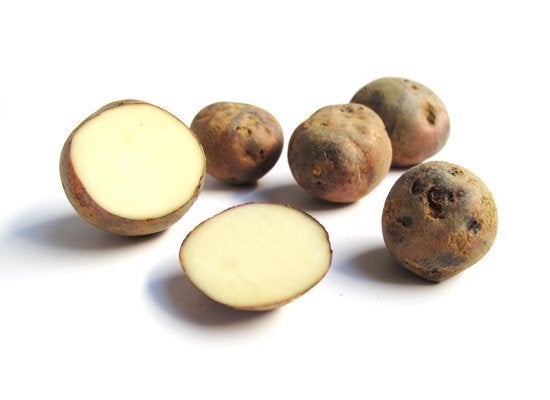
Purple Viking potatoes are small in size with dark purple skin and white flesh. They're meaty, slightly sweet and buttery, and have a creamy and moist texture. They're best for baking, roasting, boiling, potato salads, casseroles and gratins, and worst for soups.
 
Simple uses of some common potatoes
image.png 
links for my other 3 blogs-

https://gscrochetdesigns.blogspot.com. one can see my crochet creations  
https://cancersupportindia.blogspot.com. feel free to view for easy, simple and health tips  
https://kneereplacement-stickclub.blogspot.com. for info on knee replacement


Sunday, August 18, 2013

HEALTHY COOKING AND EATING HABITS

If you want to slim down by year end or simply want to get healthy, you don't have to adopt a stringent lifestyle or stay away from your favourite dessert.

Instead, you just have to modify your basic recipes and change your cooking methods. A Dr. shares some easy ways to cut calories and burn fat, with these simple cooking techniques.

Healthy cooking tip # 1:
Keep your fats to a minimum. Dr. says, 'you don't have to completely stay away from fats, just keep it to a minimum. Also, choose unrefined natural fats like nuts, seeds, fish soy, olives and avocados, because they contain omega-3 fatty acids, which are very beneficial for a healthy body.

Healthy cooking tip # 2:
Use skimmed milk or cow's milk instead of full fat milk. If you want to indulge in some curd or yoghurt, choose those made from skimmed milk.

Healthy cooking tip # 3:
Include more stir-fry recipes in your diet: Stir-fried vegetables cook quickly and retain their crunch (and associated nutrients). Saute or stir-fry without oil in a good non-stick skillet or wok. Simply heat your skillet before adding the food. You may need to add a tablespoon or more of water or broth to prevent sticking and stir often. Covering the pan will also help the vegetables cook faster.

Healthy cooking tip # 4:
Modify your cooking style to baking, braising, broiling and grilling, poaching, roasting, sauteing, steaming and stir-frying. All these methods are very healthy and safe.


Healthy cooking tip # 5:
Modify or eliminate recipes that include butter or those that need you to deep fry or saute the ingredients in animal fat, because this can cause great harm to your health.

Healthy cooking tip # 6:
Use non-stick cooking pans, as you don't have to use a lot of oil and butter to cook a meal.

Healthy cooking tip # 7:
Want to cut down on the amount of fat you use while cooking, then using cooking spray (a spray form of an oil as a lubricant, lecithin as an emulsifier) or apply a small amount of oil with a pastry brush.

Healthy cooking tip # 8:
Instead of randomly adding salt to your food, first taste your food. Add a splash of olive oil, vinegar or lemon juice close to the end of cooking time or to cooked vegetables - it can enhance flavours in the same way as salt does.


Healthy cooking tip # 9:
Instead of using oil, trying cooking in liquids like stock, wine, lemon juice, vinegar or just water. All these variants are very healthy and you will reduce your oil consumption.

Healthy cooking tip # 10:
Eat more fish, which is high in protein, low in fats and loaded with essential omega-3 fatty acids.

Healthy cooking tip # 11:
Use low-fat yoghurt, low-fat milk, evaporated skim milk or cornstarch instead of using cream in sauces or soups.

Healthy cooking tip # 12:
To minimise your intake of salt, choose fresh or frozen vegetables, since canned and pickled vegetables tend to be packed in salt, which can led to high blood pressure.

Healthy cooking tip # 13: 

Remove chicken skin and trim the fat from meat, to cut calories and be healthy.

Healthy cooking tip # 14:
If you want to brown, your veggies then put them in a hot pan and spray them with oil. This reduces the amount of oil that vegetables absorb during cooking. Another option is to first cook in the microwave, then grill them for a minute or two.

Healthy cooking tip # 15: 

Reduce your use of soy sauce, tomato sauce and processed sauces and condiments, for dressing, because they contain high levels of salt.


Healthy cooking tip # 16:
Replace oil or margarine while baking: Mashed or pureed tofu can replace oil when baking. Flax meal can also be used to replace all or some of the oil in a recipe. The substitution ratio is three parts flax seed meal for every part oil or fat you are replacing. For example, for 15 mL (1 Tbsp) of fat to be replaced, use 45 mL (3 Tbsp) of flax seed meal. Baked goods with flax as a fat replacer tend to brown more quickly than regular recipes. Apple sauce may be used in cakes, cookies, and other sweet baked goods to replace oil or margarine.

Healthy cooking tip # 17:
To minimise your salt intake, avoid salt-laden processed foods like flavoured instant pasta or noodles, canned or dehydrated soup mixes, chips and salted nuts.

Healthy cooking tip # 18:
To minimise the loss of water-soluble vitamins, scrub vegetables rather than peel them, as many nutrients are found close to the skin. Microwave or steam vegetables instead of boiling them. If you like to boil vegetables, use a small amount of water and do not over boil them.


Healthy cooking tip # 19:
Use of herbs and spices: Culinary herbs are leafy plants that add flavour and colour to all types of meals. They are also rich in health-protective phyto-oestrogens. In many cases, herbs and spices can replace the flavour of salt and oil.

Healthy cooking tip # 20:
Herbs are sparingly flavoured, in order to retain the taste, add them to your cooking in the last few minutes.


Tip # 21
Avoid using food colours, ajinomoto while cooking, as these are carcinogens  that means can cause cancer.

Tip # 22
Always wash thoroughly, then cut vegetables just before you start cooking, as they won't lose their nutrients.

Tip # 23
When you use curry leaves, which are rich source of Vitamin E, good for skin & hair, make sure that you chop them fine, fry in minimum oil, as they're fat soluble Vitamins, so vitamins get absorbed & people won't discard them, than when used whole for seasoning.

Tip # 24
Adding baking soda while frying, makes you lose Vitamin B from the food, better to use some corn flour or rice flour or semolina to make foods crispier.


ps- this is only for information, always consult you physician before having any particular food/ medication/exercise/other remedies.


ps- those interested in recipes are free to view my blog-

http://gseasyrecipes.blogspot.com/


for info about knee replacement, you can view my blog-


http://Knee replacement-stick club.blogspot.com/


for crochet designs


http://My Crochet Creations.blogspot.com/