Ingredients
For the sticky rice
- 1 kg. Thai sticky rice
- 800 ml. coconut cream .
- 150 g. sugar
- 1 tsp. salt
- For the mango
- Sweet yellow mangoes
- 100 g. yellow mung beans – optional
For the coconut cream topping
- 200 ml. coconut cream
- 1/3 tsp. salt
Really good quality coconut cream (or canned or box coconut milk) and really juicy sweet mangoes are the key to making this Thai mango sticky rice recipe.
Sticky rice
Thai sticky rice sweetened with sugar and coconut cream is a popular base for many different Thai desserts, and it’s highly important for this mango sticky rice recipe.
If you have an Asian supermarket available, look for Thai sticky rice, or Thai glutinous rice, or sometimes it’s called Thai sweet rice (it’s much different from regular jasmine rice, and different from Chinese sweet rice).
To make sticky rice, you can use my Thai sticky rice recipe. However you’ll want to pre-rinse it even more thoroughly to remove all the outer starch on each grain of rice before steaming it
I washed the rice about 6 times to begin with, lightly rubbing the rice together to scratch off most of the starch. And then I allowed the rice to soak in water for 6 hours. This is the one step where it’s best to think ahead before you start this mango sticky rice recipe so you have time to soak the rice.
Once you’ve rinsed the rice six times, when you add water again, the water should be clear, not milky from the starch. If it’s milky, rinse it a few more times.
Once your sticky rice has soaked for about 6 hours, drain it, and it’s time to steam it.
You can use any kind of steaming method you’d like, but just make sure the sticky rice is placed somewhere above steam in a pot, and covered.
I used the Thai / Laos traditional basket steamer and steamed the sticky rice for about 15 minutes.
While your sticky rice is steaming, you can get started on the coconut cream sugar mixture.
For this recipe you’re only going to want to use coconut cream, which in Thai is called hua kati . It’s the richest and most butter thick coconut milk, so it’s higher in fat and just an amazing thing.
In a medium sized sauce pan, add 800 ml. of the coconut cream, and stir it in circular motions, just in one direction (make sure you just stir in one direction or the coconut cream could start to curdle).
Immediately add 150 g. sugar, and 1 tsp. of salt, and keep stirring gently on the heat, making sure the sugar completely dissolves.
As soon as the coconut cream comes to a boil and the sugar is fully dissolved, turn off the heat.
Mix the coconut cream with the hot steamed sticky rice
Your sticky rice should still be steaming hot, and dump the whole lump of sticky rice into a heat proof mixing bowl.
Take the coconut cream sugar mixture, and start by first adding a couple spoons and delicately mixing it into the sticky rice.
Keep adding more spoons (spoon by spoon) and stirring, but you want to gradually add the coconut cream so that it remains sticky but doesn’t get mushy.
You’ll use all the coconut cream, but add it little by little and mix, until it’s all soaked up by the sticky rice.
When you’re finished, you should almost have a sticky grain pudding like texture, and the rice should be shining and glistening because of all that healthy coconut fat.
At this point the sticky rice is already to be eaten, make sure you taste test it, it should be a bit sweet, and very rich and coconut-y tasting, with just a hint of a saltiness to bring out the taste of everything.
Cover your sticky rice or it will get crusty
When you make this mango sticky rice recipe, if you’re not planning to eat the sticky rice immediately, it’s best to cover it in a plastic bag or plastic wrap so that it doesn’t get dried out or crusty.
Normally in Thailand this type of sticky rice is not refrigerated or it will damage the texture and taste, so it’s usually eaten within a few hours of being prepared. It will still work to refrigerate it, but it won’t be nearly as good.
Toppings
Finally, these are both optional, but they are commonly accompanied with mango sticky rice in Thailand: extra coconut cream and crispy mung beans.
For the extra coconut cream, take the remaining 200 ml. of coconut cream, put in a pot on medium heat, add a pinch of salt, and stir gently until it boils. Then put into a bowl to serve alongside your sticky rice mango.
For the yellow mung beans (you buy yellow mung daal), put a wok or frying pan on the stove on low heat, and dry fry the mung beans for a few minutes, stirring them continuously until they start to turn slightly golden and get more crispy.
Mangoes
Mango sticky rice wouldn’t be complete without mango, and for this mango sticky rice recipe you’ll need perfectly ripe mangoes that are silky in texture (not the stringy mangoes)
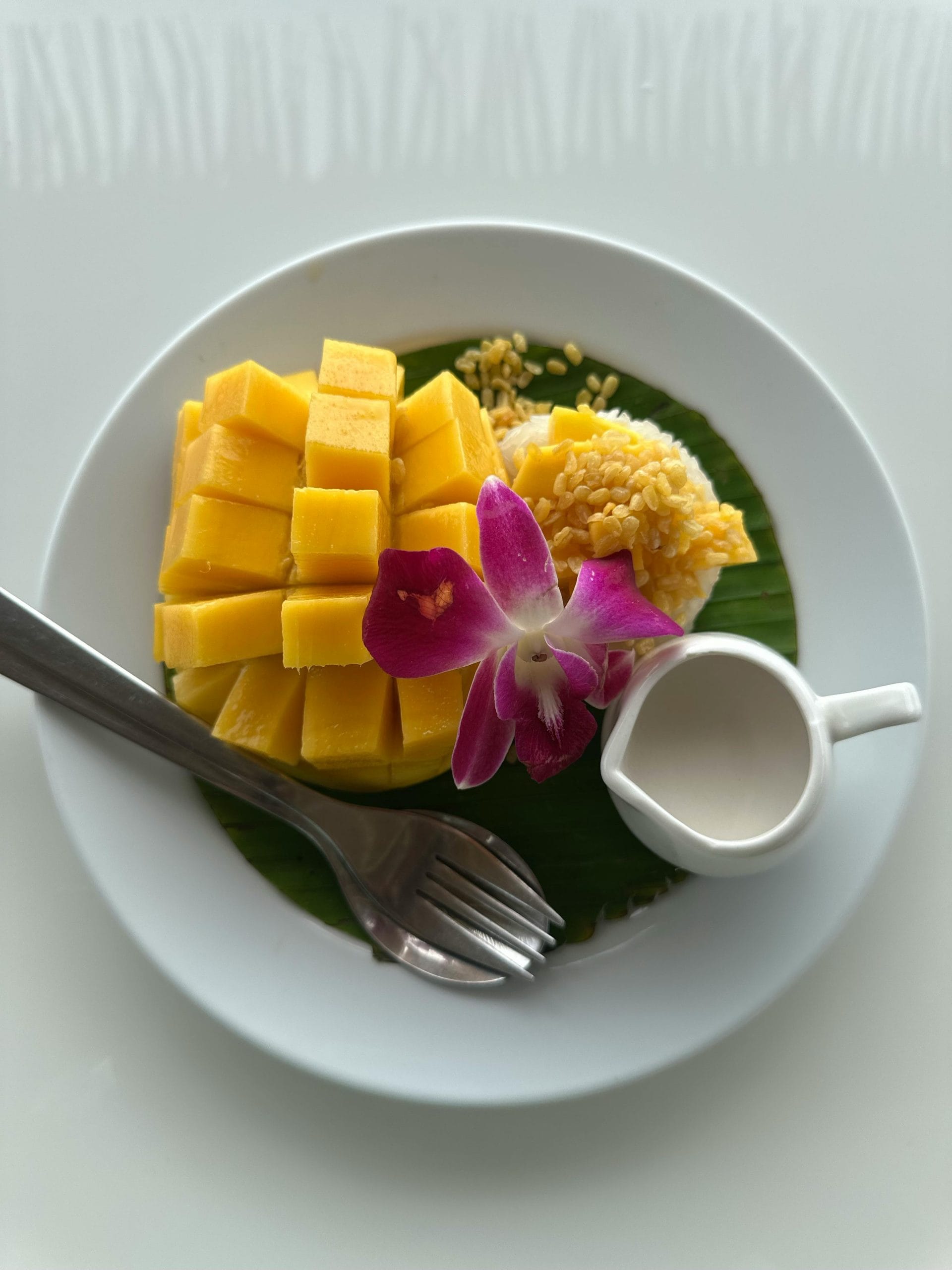
Combining it all
Once you have all your components for this Thai mango sticky rice recipe ready, it’s time to dish out a plate.
Put some coconut sticky rice down on the base of a plate or bowl, slice on a fresh mango, sprinkle on some crispy mung beans, and finally serve the extra coconut cream on the side.
The recipe for sticky rice might make in total about 10 – 15 portions, and you can really add as much or little mango to each plate as you have, or as you like.
https://gscrochetdesigns.blogspot.com. one can see my crochet creations
https://kneereplacement-stickclub.blogspot.com. for info on knee replacement
https://cancersupportindia.blogspot.com for info on cancer and health related topics
https://GSiyers home remedies.blogspot.com is the latest addition to my blogs

No comments:
Post a Comment