You know those stickers that are found on
fruits and vegetables in grocery stores across the world? If you have
ever bought produce from a grocery store, you’ll definitely know the
ones that we are talking about. These stickers usually have a barcode on
them for scanning and a PLU code, which helps the friendly cashier
identify what type of fruit or vegetable you’re buying.
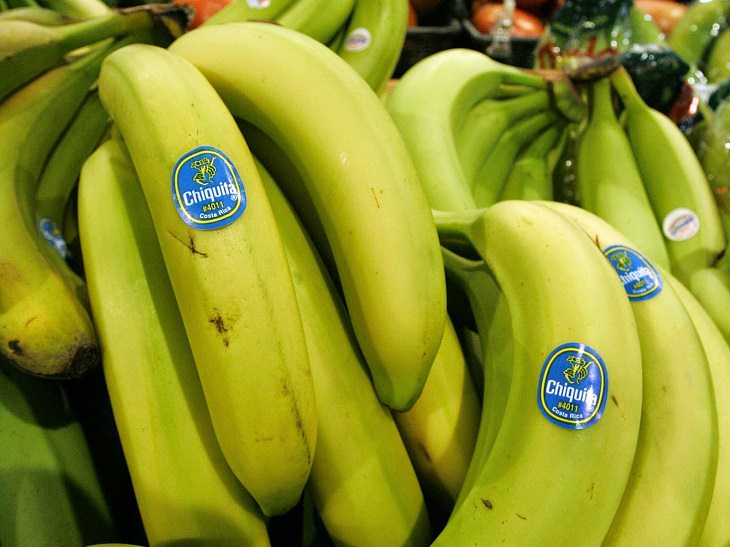
However, these unassuming stickers are more
informative than you’d think. While the PLU is the “price lookup”
number and identifies your fruit or vegetable, it also helps to identify
something else: how the particular produce was grown. By reading this
code, you can tell if the fruit has been genetically modified, grown
organically, or produced using chemical fertilizers, herbicides, or
fungicides. That’s right, the story about where your fruit comes from
has been right under your noses all along – you just have to know how to
analyze the labels and PLU number. This is actually a lot easier than
you’d imagine.
Below are some of the basics of what you need to know. This is then
followed up with an informative video that will provide you with more
information.
1. If the PLU only consists of four numbers, this means that the produce
was grown conventionally or “traditionally” with the use of pesticides.
The four letters (or only four in this case) of the PLU code simply
indicate what type of food you are buying. For example, all bananas are
labelled with the code 4011.
2. If the PLU consists of five numbers, and the first number is 8, this
indicates that the produce has been genetically modified. These fruit
and vegetables have been created in an unnatural way, and cannot be
found in nature. A genetically engineered banana would be 84011.
3. If the PLU consists of five numbers, and the first number is 9, this
tells you that the produce has been grown organically and has not been
genetically modified. An organic banana would be 94011.
Interestingly enough, the glue used to attach the stickers to the food
is considered food-grade, but the stickers themselves are not safe to
consume.
If you’re looking to be super aware of what fruits and vegetables have
been treated with pesticides and which have not, you should check out
the homepage for the Environmental Working Groups. The EWG have compiled
two lists to help consumers identify which produce is generally cleaner
and which produce have been tampered with; as well as the "Clean
Fifteen", and the "Dirty Dozen".
The top 5 for the “Clean Fifteen” produce are:
1. Avocados
2. Sweet corn
3. Pineapple
4. Cabbage
5. Sweet Peas (Frozen)
The top 5 for the “Dirty Dozen” produce are:
1. Strawberries
2. Apples
3. Nectarines
4. Peaches
5. Celery
T