From salad to pasta to stew, garlic is essential in practically every
savory dish, so it’s one of those kitchen staples you never want to run
out of. If you’re one of many people who shy away from buying garlic in
bulk for fear of it spoiling too quickly, know that you could be just
keeping it in the wrong place.
When stored properly, a whole head of garlic will last you for up to 6 months. So if you find that the garlic you buy never lasts you more than a few weeks, you’ll certainly benefit from reading through our guide to garlic storage. With these tips and tricks, your garlic will not only last you for months, but it will also retain its pungency and flavor.
How long can you expect garlic to last?
The shelf life of garlic ranges from just one day to up to 6 months. Why
the huge difference, you ask? It all depends on whether or not the
garlic has been separated, peeled, and chopped. Under prime storage
conditions, an intact head of garlic will stay good for half a year, but
an unpeeled garlic clove separated from the bulb will not last beyond
2-3 weeks. Peeled garlic has an even shorter lifespan - no more than a
week. And lastly, chopped or minced garlic should ideally be used up
right away, as it won’t last you even a day in the fridge.
Not sure if your garlic is still good to use? Fresh and flavorful garlic clove has a light cream color and a glossy exterior. It is also firm and plump-looking.
If the garlic clove is soft, matte, and closer to yellow than white, it’s well past its prime. Any discoloration, such as brown or gray spots, is a sign of decay. Such a garlic should be discarded immediately.
Sprouted garlic, on the other hand, is usually fine to use. All you need to do is cut the clove in half and remove the green sprouted core. Make sure to use up sprouted garlic as quickly as you can because sprouting reduces flavor.
Set yourself up for success
The way you store garlic makes a tremendous difference in its expected
shelf life too. But before we go down that path, there’s one preliminary
step that’s no less significant. The first step to successful garlic
storage is knowing how to choose a high-quality head of garlic.
When shopping for garlic, pick it up and give it a firm squeeze. A fresh head of garlic should be heavy and have no give. As garlic ages, it loses its juiciness and becomes lighter, softer, almost rubbery. If you squeeze the garlic and notice that the cloves have shrunk, it’s probably really old. Don’t buy it. Also, make sure that the skin of the garlic is intact and there are no signs of mold (especially at the bottom near the root).
Know how to store every kind of garlic - whole, peeled or crushed
As you already suspect, keeping the whole head of garlic intact is the
approach for long-term storage. But this isn’t always possible.
Sometimes, you peeled or minced a few extra cloves than you ended up
using in your cooking, and there are ways to preserve them too. For your
convenience, the storage tips are divided into three sections - one for
each kind of garlic.
1. A whole head of garlic and unpeeled garlic cloves
This is the most sustainable and easy storage method. A whole head of
garlic can be stored in any cool, dry place. Your pantry, kitchen
cupboard, basement, or even a dark corner on the countertop are all
great candidates. The ideal storage temperature for garlic is between
60° and 65°F (15-18°C), but it’s not a hard-and-fast rule, and most
people just store garlic at room temperature. Avoid storing garlic in
the fridge. This may sound counterintuitive, but cold temperatures can
actually make garlic sprout or shrink faster.
Choose any small basket, a paper bag, a mesh or fabric pouch, or a
garlic keeper for the best storage. A garlic keeper is a small pot with
holes in the sides and in the lid that provide ventilation (see image
above). Resist storing garlic in plastic bags - the lack of ventilation
will speed up decay.
When it comes to unpeeled garlic cloves, the storage suggestions remain identical. However, we recommend using up any lone garlic cloves within a few weeks. Once separated from the bulb, the garlic’s lifespan decreases to just 2-3 weeks.
2. Peeled garlic
Peeled a few too many garlic cloves? No worries. You don’t need to throw away the excess, just read on. You actually have quite a few options.
If you cook often and will be able to use up the leftover garlic cloves
within a week, just place them in a small container or a jar and store
them in the refrigerator. Peeled garlic tends to lose its flavor quite
rapidly, so make sure that you use it up as fast as you can.
In case you peeled way more garlic than you can use up in the near
future, you can easily freeze it for several months. Note that, upon
defrosting, the texture of the garlic will not be the same, but it will
still preserve its flavor. You can use frozen garlic cloves in cooked
dishes like soups, stews, and pasta with great success.
The best way to freeze peeled garlic cloves is to spread them on a plate or a baking sheet, give them an initial freeze, and only then transfer them to a container or freezer bag for long-term storage. This way, the cloves won’t stick together, and you’ll be able to use them up one by one.
The last but certainly not the least way to extend the shelf life of
peeled garlic cloves is to pickle them. It mellows down their flavor,
but this makes pickled garlic an excellent ready-made topping for
salads, dips, and stir-fries. Certainly, the easiest way to make pickled
garlic is to submerge whole garlic cloves in a jar filled with vinegar
and salt and keep them in the back of the fridge for weeks or even
months.
3. Minced or crushed garlic
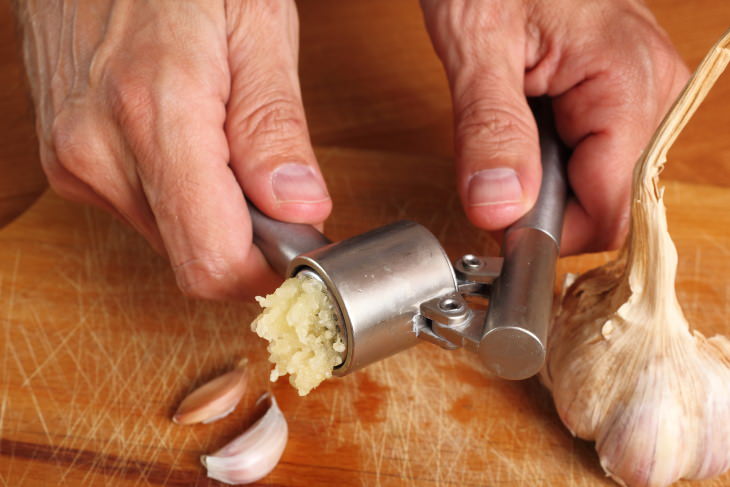
Even leftover minced or crushed garlic can be salvaged. You can refrigerate it in a container or jar for a day or less, but note that it will likely become a bit mushy, so it’s better to use it in cooked dishes to mask the texture.
Important! Avoid storing uncooked minced garlic in oil, even if refrigerated. The mixture creates a habitat for bacteria called Clostridium botulinum that causes botulism, a rare but potentially deadly illness that damages the nervous system. Store-bought minced garlic in oil has preservatives that prevent botulism, so they’re safe to use.
You can also freeze minced garlic. Just pack it into an ice cube tray,
let it freeze solid, and then decant the garlic cubes into a container
or bag for easy storage. Frozen minced garlic usually lasts for at least
2-3 months.
Bonus! Make dried garlic in the oven
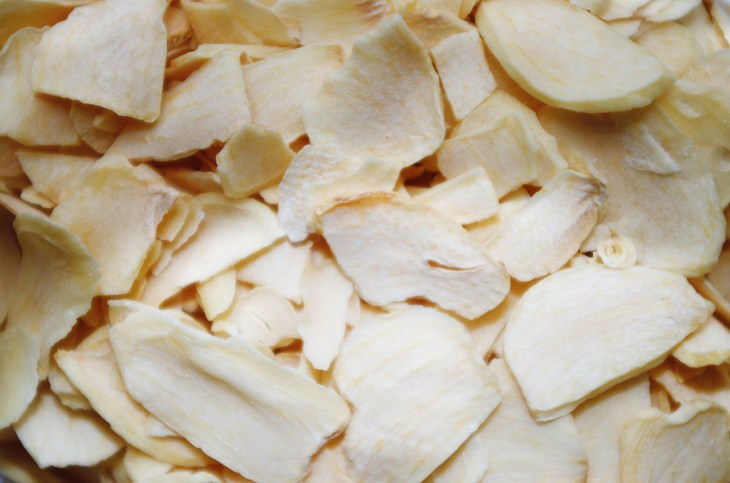
With its caramelized taste and crispy texture, dried garlic can elevate any savory dish. You can use it as a topping or add it to cooked dishes, so it’s an extra fun way to use up leftover peeled garlic cloves.
1. Start by slicing garlic into thin pieces. The thinner, the better.
2. In the drying step, you can either use a dehydrator or your trusty oven. Just spread the sliced garlic on a lined baking sheet and bake at 115°F (45°C) for 30 minutes. The garlic should be golden brown and crisp.
3. Let the dried garlic cool off completely, and then transfer it into a jar or container.
You can store dried garlic at room temperature for many months.
Now you're ready to never lose a morsel of garlic again! We hope you
learned something useful. If so, please share this post with others.
I read that if you keep whole garlic in a paper bag with punched holes, it will last for months. It does work, I've been doing it, keeping the packet in a shelf.