Friday, November 20, 2026

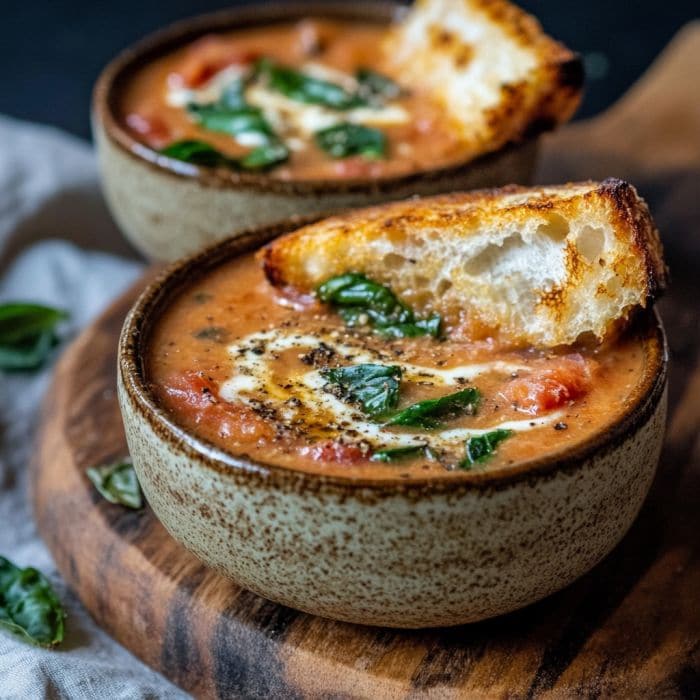
Classic Roasted Tomato Basil Soup

 Classic Roasted Tomato Basil Soup: Roast ripe tomatoes, garlic cloves, and onions with olive oil until caramelized, then blend smoothly with vegetable broth and fresh basil. This velvety, tangy classic delivers deep winter warmth and bright herbal aroma using minimal, everyday kitchen ingredients. 

Ingredients

  • For the roasted tomatoes
  • 3 pounds plum tomatoes, cut in half
  • 8 cloves garlic, peeled
  • 3 tbsp olive oil
  • Freshly ground salt and pepper
  •  
  • For the caramelized onions:
  • ½ tbsp olive oil
  • 2 yellow onions, thinly sliced
  •  
  • Additions to the soup:
  • ½ cup packed basil leaves
  • ½ tsp dried oregano
  • 1-2 cups water or vegetarian broth, depending on how thick you want the soup
  • Freshly ground salt and pepper, to taste
  •  
  • Optional add ins:
  • Light/Regular coconut milk for a creamy vegan soup
  • Whole dairy milk/heavy cream for a creamy texture
  • Parmesan cheese, for a tangy, flavor enhancing flavor
  • A tablespoon or two of butter, for richer flavor


Preparations

  • Preheat oven to 400 degrees F. Line a large baking sheet with parchment paper. Place halved tomatoes and garlic cloves on the baking sheet and drizzle with 3 tablespoons of olive oil. Generously season with salt and pepper. Roast in the oven for 40-45 minutes.
  •  
    While the tomatoes are roasting, you can make the caramelized onions: Add 1/2 tablespoon olive oil to a large pot and place over medium heat. Add the onion slices and stir to coat the onions with olive oil. Cook, stirring occasionally. Check onions every 5-10 minutes until they have completely caramelized and turned golden in color. This ususally takes 20 minutes.
  •  
    Once tomatoes and garlic are done roasting, allow them to cool for 10 minutes, then add them to a food processor or high powered blender and blend until smooth. Next add basil and caramelized onions and blend again. Alternatively you can add the tomatoes to the large pot and use an immersion blender. It's really just about what you have available to you.
  •  
    After blending, transfer back to pot, turn to medium low heat and add in oregano, vegetarian broth and salt and pepper to taste. From there you can add in any additional add-ons you want (as listed in the ingredients). Allow tomato soup to simmer 10 minutes before serving. To serve, garnish with Parmesan cheese and serve with grilled cheese, if desired. Serves 4.
  •  

    Note-  you can with a fine mesh strainer if that's what you prefer.

    Store it: store any leftover soup in an airtight container in the fridge for up to 4-5 days. Reheat it on the stovetop or in the microwave.  

    https://gscrochetdesigns.blogspot.com. one can see my crochet creations  

    https://kneereplacement-stickclub.blogspot.com. for info on knee replacement

    https://cancersupportindia.blogspot.com  for info on cancer and health related topics

    https://GSiyers home remedies.blogspot.com   is the latest addition to my blogs
     

    Thursday, November 19, 2026

    Paneer Roll

     Ingredients

    For dough 

    2 cups maida

    ½ tsp salt

    1 tsp ghee

    warm water for kneading

    oil greasing 

    For Stuffing

    ½ cup thick curd

  • 1 tsp chilli pdr
  • ¼ tsp jeera pdr
  • ½ tsp garam masala
  • 2 tsp kasturi methi, crushed
  • ½ tsp salt
  • 2 tsp oil
  • 1 cup paneer, cubed
  • 2 tbsp oil
  • 1 inch ginger, finely chopped
  • 5 cloves garlic, finely chopped
  • 1 small onion, sliced
  • ½ capsicum, sliced
  • 1 small tomato, sliced
  •  
  • For making wrap
  • green chutney 

    onion sliced

  • cabbage, shredded
  • tomato sauce
  • chaat masala
  •  
  •  
  • Preparations
  •  
  • in a large plate, take 2 cups maida, ½ tsp salt and 1 tsp ghee. Mix well.
  • Add warm water and knead until you have a smooth dough.
  • Grease with oil, cover and rest for 20 minutes.
  • To prepare paneer stuffing, take ½ cup thick curd, 1 tsp chilli powder, ¼ tsp cumin powder, ½ tsp garam masala, 2 tsp kasturi methi, ½ tsp salt and 2 tsp oil.
  • Mix well, ensuring all the spices are thoroughly combined.
  • Add 1 cup paneer, and mix well. Marinate for 20 minutes.
  • Heat 2 tablespoons of oil in a pan and add 1 inch of ginger and 5 cloves of garlic. Saute well.
  • Also, add ½ onion, ½ capsicum, ½ tomato and stir fry.
  • Now add the marinated paneer and cook until well done.
  • Cook till the oil separates, and the paneer stuffing is ready.
  • To prepare the wrap, once the dough has rested well. Kead again.
  • Pinch a ball-sized piece of dough and roll it out thin.
  • Spread oil and maida.
  • Now fold a zig-zag to create layers. Also, roll the spiral and tuck it inside.
  • Dust with maida and roll gently, slightly thick.
  • Cook in a hot pan by spreading a little oil.
  • Roast on both sides till they turn golden and slightly crunchy.
  • To prepare the wrap, spread green chutney on the roti.
  • Also, place 2 tbsp of prepared paneer stuffing.
  • Top with onion, cabbage, tomato sauce, chaat masala and coriander.
  • Roll the Paneer Roll tightly and wrap it with baking paper.
  •  
  •  
  •  

    https://gscrochetdesigns.blogspot.com. one can see my crochet creations  

    https://kneereplacement-stickclub.blogspot.com. for info on knee replacement

    https://cancersupportindia.blogspot.com  for info on cancer and health related topics

    https://GSiyers home remedies.blogspot.com   is the latest addition to my blogs

  • Instant Avil/ Poha Vadai

    Ingredients

  • 1 cup poha / avil, thick
  • ¼ cup curd thick
  • ¾ tsp salt
  • ½ onion, finely chopped
  • 1 green chilli, finely chopped
  • ½ tsp ginger paste
  • few curry leaves, finely chopped
  • 2 tbsp coriander leaves finely chopped
  • 2 tbsp rice flour
  • oil for frying
  •  

    Preparations

  • place a sieve and rinse 1 cup poha with enough water.
  • transfer the washed poha into a large bowl.
  • add ¼ cup curd, ¾ tsp salt and mix well.
  • rest for 10 minutes or until poha softens well.
  • mix and mash well making sure the poha is softened.
  • add ½ onion, 1 green chilli, ½ tsp ginger paste, few curry leaves and 2 tbsp coriander leaves, mix well forming a dough.
  • Next add 2 tbsp rice flour and mix well absorbing excess water.
  • pinch a ball sized dough and flatten slightly.
  • deep fry in hot oil keeping the flame on medium.
  • stir occasionally, making sure the vada is cooked uniformly.
  • fry until it turns golden brown and crisp.
  • drain off over kitchen paper to remove excess oil.
  • enjoy poha vada with tomato sauce or coconut chutney along with a cup of hot coffee / tea.
  •  


    https://gscrochetdesigns.blogspot.com. one can see my crochet creations  

    https://kneereplacement-stickclub.blogspot.com. for info on knee replacement

    https://cancersupportindia.blogspot.com  for info on cancer and health related topics

    https://GSiyers home remedies.blogspot.com   is the latest addition to my blogs

    How to Pick the Best Produce That Will Last You the Longest at Home

    Sometimes we buy fruits that seem on the verge of being ripe, in hopes that they will ripen at home and thus last us longer. But sometimes, we are disappointed to find out that the days go by, and our fruits aren't ripening! Not only that, but they skip the ripe stage straight to being spoiled. What a bummer. In this article, you'll find 7 fruits that ripen after picking and 7 fruits that don't, as well as some tips for how to make ripening fruits last longer.

    Fruits That Ripen After Picking 

    Bananas

    A no-brainer. We've all seen bananas either ripen nicely to then quickly turn brown or, more frustratingly, start developing brown spots before even turning nice and yellow. To avoid that, don't purchase bananas that are 100% green. Look for a first hint of ripening on them.

    If you'd like them to ripen even quicker, keep them in a paper bag. If your banana has many brown spots, now is the time to move it to the fridge for another 3 days or peel it, slice it and freeze it. 

    Avocados
    Avocados
    Avocados are another fruit that is picked before it's ripe. If they're rock hard, keep them in a perforated paper bag with an apple. The ripening process will accelerate significantly, so make sure to not forget them in that bag. You can label it. 

    If the avocados aren't rock-solid, but not quite ripe yet, and you need them now, here's an instant-ripening tip: cut the avocado in half and throw the pit. Wrap each half in a microwave-safe plastic wrap and microwave on high for 2 minutes. Run under cold water to stop the cooking. Use as normal! 

    Peaches
    Peaches
    In the store, make sure your peaches are a little fragrant. Just like bananas and avocados, keeping peaches in a paper bag will accelerate the ripening process. For that time in the bag, keep them on the counter. Once they ripen, store them in the fridge.

    Plums 

    Unlike any other fruit on the list, the taste of plums does not change as they ripen! They only turn softer. When in the store, look for ones that aren't rock solid but aren't too soft as well: if they're too soft, they're past their time. 

    Cantaloupe
    Cantaloupe
    A good melon will feel heavy for its size. Make sure they're only slightly fragrant too when shopping for one. A scent too strong means the cantaloupe is days away from going bad- about one or two.

    Blueberries

     This one came as a surprise for us as well! Blueberries will only ripen after picking if they're picked when they're blue. Look for that signature blue-grey tone, and when you arrive home give them a vinegar bath to make them last longer. Here's how: Mix one cup vinegar for every three cups of water, wash thoroughly and make sure they're dry before storing them in the fridge. 

    Tomatoes 

    Tomatoes will continue to ripen off the vine under the right conditions only. If they're too cold they won't ripen. Meaning, of course, it's best to keep them on the countertop. The paper bag trick will work here as well, but keep in mind that sometimes the color of the tomato won't change for a deeper red if it wasn't red in the store.

    Fruits That Don't Ripen After Picking 

     These are the fruits that you should buy when ripe and make sure to store well for the best value. 

    Strawberries, Cherries, and Grapes

    If they look faint in the store, leave them in the store. Sadly, they won't change color ever. The bright shiny ones will be best. Keep them in the fridge. They will taste sweeter if they're allowed to come to room temperature before eating. A vinegar bath will work here as well in prolonging the life of these fruits.

    Pineapple

    These are a bit tricky because their color is not an indicator of ripeness. Your hint will be in the texture and the leaves: they should be green, and the pineapple itself should feel firm. It should also be slightly fragrant at the base. Don't worry if the leaves pull out easy; this means nothing. To store, cut the leaf head and store the pineapple upside down. 

    Watermelons

    Watermelons

    Look for that yellow spot on the watermelon as a sign of ripeness. the skin should be dull and the weight should be heavy for the size- even if it's a small species. Brown spots, webbing, or scarring are also good signs of ripeness. Unsliced it will last 2 weeks in the fridge. 

    Apples
    The fruit that seems to last ages! Many companies tend to coat apples with either a synthetic shine or, even worse, a thin layer of wax. This is for many reasons, the main one being protecting the skin. Try slightly scraping the skin with a knife to see if there's a wax coating. Pouring boiling water will melt the skin away, or you can simply peel it right before eating. Keep them in the fridge. 

    Citruses
    Citruses
    All citrus fruits should be picked when they're at their peak of ripeness. You can weigh them in your hand and give them a little squeeze to feel if they're full of juice or spongy. Leave the light spongy ones at the store, and store your lush heavy citruses in the fridge.


    https://gscrochetdesigns.blogspot.com. one can see my crochet creations  

    https://kneereplacement-stickclub.blogspot.com. for info on knee replacement

    https://cancersupportindia.blogspot.com  for info on cancer and health related topics

    https://GSiyers home remedies.blogspot.com   is the latest addition to my blogs


    Delicious Microwave Potato Chips

     What You Need 

    • A potato 

    • Salt 

    • Pepper 

    • A potato/vegetable peeler 

    • A long thin wooden stick 

    • Olive oil

     • A microwaveable bowl 

    • A microwave 

    • Kitchen roll

    Directions  

    1. Using the peeler, slice the potato into chip sized slices, making sure they are thin enough to become crispy. 

    2. Now fill the bowl with water and give the slices a good wash. 

    3. Remove the water and dry the slices of potato, placing them on sheets of kitchen roll. 

    4. Put the potato slices in the now dry bowl and sprinkle them with olive oil. Then give them a good mix. 

    5. Now put your potato slices onto the stick, like a kebab. 

    6. Rest the points of the stick onto the sides of the bowl, and season the potato slices with salt and pepper. 

    7. Then put them in the microwave while still resting on the bowl. You should cook them for 4 to 8 minutes. 

    8. Take them out and check that they are crispy. Give them a minute to air away any moisture. Then place them in a bowl for serving.


    https://gscrochetdesigns.blogspot.com. one can see my crochet creations  

    https://kneereplacement-stickclub.blogspot.com. for info on knee replacement

    https://cancersupportindia.blogspot.com  for info on cancer and health related topics

    https://GSiyers home remedies.blogspot.com   is the latest addition to my blogs


    Can't Escape Air Pollution? Nutritionist Reveals 4 Foods That Can Protect Your Health

    A nutritionist highlights four food groups—Vitamin A-rich foods, Vitamin C-rich foods, ginger and turmeric, and Vitamin E-rich foods—to help counter oxidative stress and inflammation linked to air pollution.

    s air pollution levels keep rising across Indian cities, much of the public-health advice comes in the form of reducing outdoor exposure, wearing suitable masks, and using indoor air purifiers. But can the food that we consume also help the body cope with the effects of polluted air?

    According to senior nutritionist and author Ishi Khosla, nutrition deserves a place in the conversation.

    “Tiny particulate matter in polluted air, particularly PM2.5, can penetrate deep into the lungs and trigger oxidative stress and inflammation. Some particles can also pass into the bloodstream, affecting organs beyond the respiratory system.  When foreign toxic material enters the body, the immune system responds. If this exposure continues, it can contribute to persistent, low-grade inflammation,” Khosla says.

    “Every cell in the body depends on nutrition. What we eat can influence how well the body maintains its defences and responds to stress,” she adds.

    While research is growing on whether certain nutrients can modify the health effects of air pollution, the evidence is still developing.  Khosla observes that although there is no replacement for breathing clean air and reducing exposure to pollutants, good nutrition and a healthy gut can help the body fight the hazardous effects.

    Here is how your kitchen can be a tool in the fight.

    Load up on antioxidants

    Air pollution can increase the production of free-radicals, which are unstable molecules that can damage cells. This process, known as oxidative stress, is one way particulate matter may harm the body.

    Antioxidants help the body manage oxidative stress. Vitamins C and E, carotenoids, and other plant compounds are found in many everyday foods. Khosla recommends eating a wide range of colourful fruits and vegetables rather than relying on a single so-called superfood, stating, “Good choices include amla, guava, oranges, lemons, papaya, carrots, pumpkin, sweet potatoes, tomatoes and green leafy vegetables. Nuts and seeds also provide vitamin E and other beneficial compounds."

    A 2025 study published in Frontiers in Public Health, which analysed data from more than 200,000 Indian children, found that higher intake of certain antioxidant nutrients was associated with lower risks of acute respiratory infections and anaemia in children living in areas with greater pollution exposure.

    Include omega-3 fatty acids

    Omega-3 fatty acids have anti-inflammatory properties and may help regulate inflammatory processes in the body. Fatty fish such as sardines, salmon, and mackerel are sources of omega-3. For vegetarians, walnuts, flaxseeds and chia seeds are useful plant sources.

    The practical advice is simpler: include omega-3-rich foods as part of a balanced diet.

    Don't neglect gut health

    Khosla also emphasises the role of the gut microbiome, the community of microorganisms living in the digestive tract, in overall health and immune function. The gut and immune system are closely connected. A fibre-rich diet  and fermented foods support beneficial gut bacteria. “Traditional Indian foods such as idli, dosa, kanji, ambli, fermented rice and fresh fermented pickles can support gut health by providing beneficial microorganisms,” Khoshla notes.

    They may help maintain a healthy balance of gut bacteria, support digestion and contribute to immune function. Whole grains, pulses, beans, vegetables, fruits, nuts and seeds provide fibre that gut bacteria use.

    Khosla adds that gut health is important because it influences immunity and inflammation, stating, “The gut microbiome helps regulate the immune system and maintain the gut barrier, which prevents harmful substances from entering the bloodstream. An imbalance in gut bacteria (dysbiosis) can weaken this barrier and trigger immune responses, contributing to inflammation. A diverse, fibre-rich diet helps support a healthier microbiome and balanced immune function.”

    Choose foods that support an anti-inflammatory diet

    A dietary pattern built around vegetables, fruit, whole grains, pulses, nuts and seeds provides a range of nutrients and plant compounds that support general health.

    She also advocates what she calls a rainbow diet, incorporating fruits and vegetables of different colours. “Their pigments contain phytonutrients and bioflavonoids, some of which have antioxidant and anti-inflammatory properties."

    The emphasis should be on variety. Different fruits and vegetables supply different nutrients and plant compounds, making a diverse diet more useful than depending on one supposed miracle food.

    Khosla advises reducing dependence on highly processed foods and foods with excessive sugars, trans fats, and poor-quality fats, and choosing fresh, varied meals wherever possible: "Eat wholesome food, even when eating outside. As far as possible, eat seasonal and local foods."

    What should an everyday diet look like?

    Khosla says she works on a framework “based on three Ps, five Fs and six Ss.”

    The three Ps are planning, prioritising protein, and protective foods.

    First, planning: Plan your food intake, meal timings, and grain selection.

    Second, prioritise protein: Have protein-rich meals at least twice a day. This can be animal or plant protein, but it should ideally come from wholesome foods rather than processed protein isolates.

    Third, protective foods: Dedicate at least one meal to protective foods, ideally including two or more.

    She recommends what she calls the six Ss: soups, salads, sprouts, steamed vegetables, sattu and smoothies.

    She also emphasises five Fs: fermented foods, fiber, good fats, fasting, and phytonutrients.

    Her broader advice is to prioritise protein, vegetables and wholesome foods rather than making grains the dominant component of every meal and she recommends to add "at least one meal should include some of these protective foods."

    A practical Indian diet during peak pollution

    Khosla advises starting the day with fermented foods or a fermented drink, depending on what suits you. Include nuts and seeds for healthy fats, and leafy vegetables, salads, and fruits for fiber and phytonutrients in breakfast.

    “Prioritise protein and vegetables in your meals and include these in at least two meals. Grains also need careful consideration as their selection, quantity, and timing matter. Depending on the individual, you can include grains in the morning or at lunchtime,” she notes.

    Adequate water intake is also important for general health. “A bit of jaggery can help, so can traditional foods like Chawanprash,” claims Khoshla.

    Taking antioxidant supplements during pollution season may seem appealing- if the food doesn’t provide adequate nutrition, taking supplements like vitamin C and omega-3 can be beneficial.

    A food plan can be adapted to individual dietary needs, preferences and medical conditions-older adults and people with diabetes or other chronic conditions may need specific adjustments. “The nutritional argument becomes particularly important for children, whose lungs and immune systems are still developing,” she insists.

     Food is not a substitute for clean air

    Khosla's central message is that nutrition can support the body's normal antioxidant and immune functions, but it cannot shield against toxic air.

    The most important measures remain reducing exposure: avoid outdoor exercise when pollution levels are high, keep windows closed during severe pollution episodes, use an appropriately sized HEPA air purifier indoors where possible, and wear a well-fitting particulate respirator when outdoor exposure is unavoidable.

    A balanced diet, Khosla insists, is one part of protecting health during pollution season. It should complement, not replace, efforts to breathe cleaner air.


    https://gscrochetdesigns.blogspot.com. one can see my crochet creations  

    https://kneereplacement-stickclub.blogspot.com. for info on knee replacement

    https://cancersupportindia.blogspot.com  for info on cancer and health related topics

    https://GSiyers home remedies.blogspot.com   is the latest addition to my blogs

    A Simple Meal

     A  veg hot dog is a meat-free hot dog made primarily from plant proteins, vegetables, or legumes, served in a hot dog.

    Don't get put off by the title of this dish - this stew packs serious flavor. 

    To Make:  

    1. Simmer three chopped potatoes along with a chopped onion in three tablespoons of vegetable oil over medium heat. 

     2. Add four tablespoons of tomato sauce and allow to warm. 

    3. Next, throw in four sliced hot dogs and half a cup of water. Cook until the potatoes are nice and soft.

    https://gscrochetdesigns.blogspot.com. one can see my crochet creations  

    https://kneereplacement-stickclub.blogspot.com. for info on knee replacement

    https://cancersupportindia.blogspot.com  for info on cancer and health related topics

    https://GSiyers home remedies.blogspot.com   is the latest addition to my blogs