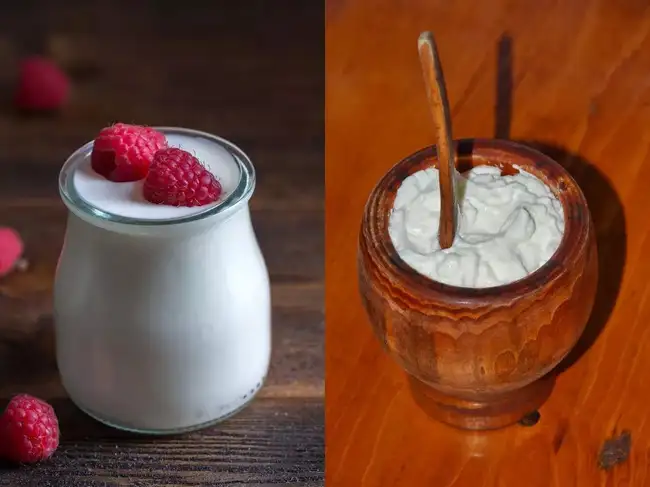
Curd, commonly known as dahi in India, is a daily staple in many households. From a simple bowl with meals to lassi, raita and marinades, it plays a central role in Indian diets. In recent years, Greek yoghurt has also gained popularity, especially among fitness-focused and urban consumers. While both are fermented dairy products and often seen as interchangeable, they differ in how they are made, how they taste, and how they affect health.
How dahi and Greek yoghurt are made
Traditional Indian dahi is prepared by adding a small amount of existing curd or a natural acidic agent to warm milk and letting it ferment at room temperature. The process is simple, natural and varies slightly from home to home. Greek yoghurt, on the other hand, starts as regular yoghurt but goes through an extra step. After fermentation, it is strained multiple times to remove whey, which makes it thicker and more concentrated.
This additional straining is the key reason Greek yoghurt looks and feels very different from home-set curd.
Texture, taste and nutritional differences
Dahi has a softer, thinner consistency and a mild flavour. This makes it easy to blend into Indian dishes, whether savoury or sweet. Greek yoghurt is thicker, denser and more filling, with a sharper tang. Its texture works well in dips, smoothies, desserts and as a substitute for cream in cooking.
Because of these differences, dahi fits naturally into traditional Indian recipes, while Greek yoghurt is often used in high-protein snacks and Western-style meals.
Both dahi and Greek yoghurt provide probiotics, calcium and protein. However, their nutritional profiles are not identical. Data from the USDA and the Indian Food Composition Tables (IFCT 2017) show that Greek yoghurt contains significantly more protein, roughly around 10 grams per 100 grams, compared to about 3 grams in dahi. This makes Greek yoghurt more satisfying and useful for muscle repair and weight management.
Dahi generally contains slightly more calcium. Greek yoghurt is lower in carbohydrates and lactose because much of the whey is removed during straining, which can make it easier to digest for some people. Fat content depends largely on whether full-fat or low-fat milk is used, and in this area, both can be similar.
According to the National Institutes of Health (NIH), both dahi and Greek yoghurt support gut health, digestion and immunity due to their probiotic content. Greek yoghurt’s higher protein content makes it popular among those focused on fitness and weight control. Dahi, because it ferments naturally, may contain a wider mix of beneficial bacteria, which some research links to better gut diversity. Regular intake of either has been associated with a lower risk of type 2 diabetes and heart disease.
Cost and which one should you choose?
In India, dahi remains the more affordable and accessible option. It can be made at home with minimal effort and no special equipment. Greek yoghurt is often more expensive and is usually sold as a premium product, particularly outside major cities. Making Greek yoghurt at home is possible, but it requires extra straining and time.
Harvard Health Publishing notes that both options can be healthy, depending on individual needs. Greek yoghurt may suit those aiming for higher protein intake, weight loss or muscle recovery. Dahi stands out for its affordability, cultural relevance and everyday digestive benefits. Rather than viewing them as rivals, including both in a balanced diet can offer variety and nutritional advantages, allowing people to choose based on their goals, taste preferences and lifestyle.
Both dahi and Greek yoghurt are versatile in the kitchen, but their culinary uses differ due to texture and taste. Dahi’s mild flavour and softer consistency make it ideal for Indian dishes like curries, marinades, lassi, and raita, blending seamlessly into both sweet and savoury preparations. Greek yoghurt’s thicker, creamier texture allows it to replace cream in recipes, be used in dips like tzatziki, or feature in high-protein smoothies and desserts.
https://gscrochetdesigns.blogspot.com. one can see my crochet creations
https://kneereplacement-stickclub.blogspot.com. for info on knee replacement
https://cancersupportindia.blogspot.com for info on cancer and health related topics
https://GSiyers home remedies.blogspot.com is the latest addition to my blogs

No comments:
Post a Comment